


Introduction
Nonprofit organizations serve as essential providers of social goods and services, often filling gaps left by markets and governments (Chang & Tuckman, 1991). Their effectiveness, however, depends heavily on maintaining financial integrity and public trust (Archambeault et al., 2015; Burt, 2014). When fraud occurs, it undermines organizational legitimacy, diverts critical resources away from service delivery, and weakens stakeholder confidence (Archambeault et al., 2015; Harris et al., 2017). For nonprofits that rely on donations, grants, and volunteer support, the reputational damage caused by fraud can be even more devastating than the financial losses themselves, threatening long-term viability (Greenlee et al., 2007; Lamothe et al., 2022).
The study of nonprofit fraud has increasingly emphasized the role of governance structures and internal control systems (Archambeault et al., 2015; Boland et al., 2020; Harris et al., 2017). Policies such as transparent compensation procedures, conflict-of-interest safeguards, and whistleblower protections, alongside financial oversight mechanisms like independent audits and audit committees, are widely regarded as core defenses against misconduct (Harris et al., 2017). A growing body of empirical research demonstrates that organizations with robust governance practices are less likely to experience fraud, highlighting the importance of accountability and oversight as central features of nonprofit management. Yet most of this research has been conducted in relatively stable contexts, leaving unanswered questions about how effective these safeguards remain when organizations are confronted with extraordinary challenges.
Diverse crisis environments provide a critical lens for revisiting these issues. Unlike routine operating environments, crises impose simultaneous shocks that heighten vulnerabilities: revenue streams may contract, demands for services may surge, and oversight systems may be disrupted or deprioritized (Chen, 2022). Financial crises can intensify resource pressures, natural disasters often lead to sudden inflows of emergency aid that are difficult to monitor, and human-caused crises—such as scandals, conflict, or systemic governance breakdowns—may erode norms of accountability (Bottan & Perez-Truglia, 2015; Chen, 2022; Chen et al., 2016; Gibelman & Gelman, 2001). These dynamics increase the likelihood that opportunities for misconduct expand at precisely the moment when organizations are least equipped to respond.
The COVID-19 pandemic represents a particularly important case for examining these dynamics. Nonprofits faced unprecedented financial and operational stress, including service suspensions, donor fatigue, and heightened community needs (Gulliver-Garcia et al., 2021). At the same time, emergency funding streams expanded rapidly, often with limited monitoring and oversight, thereby creating new risks of mismanagement or misappropriation (Gulliver-Garcia et al., 2021; Herrero & Kraemer, 2022). Against this backdrop, it becomes essential to ask whether internal control systems—normally protective against fraud—remained effective under the extraordinary conditions of the pandemic, or whether their preventive power was weakened.
This study examines the relationship between internal control systems and nonprofit fraud in the crisis context of COVID-19. Using Internal Revenue Service (IRS) Form 990 data from 2020 to 2022, we investigate how governance policies, audit systems, and organizational characteristics shaped the likelihood of reported fraud. The contribution of this research is twofold. First, it advances theoretical understanding by situating nonprofit fraud within a crisis framing, showing how governance mechanisms function when pressures and vulnerabilities are amplified. Second, it provides policy-relevant insights for nonprofit leaders, regulators, and funders, emphasizing the need to design accountability frameworks that are resilient not only under normal conditions but also during systemic shocks.
The remainder of this paper is organized as follows. The next section reviews existing scholarship on nonprofit fraud, internal controls, and crisis contexts, leading to the development of hypotheses. We then present our data and empirical models, followed by an analysis of the results. The paper concludes with a discussion of the findings, their implications for theory and practice, and directions for future research.
Backgrounds and Hypotheses
Fraud in nonprofit organizations undermines financial integrity, damages public trust, and diverts limited resources away from mission-oriented activities (Archambeault et al., 2015; Burt, 2014). Although fraud is often associated with the for-profit sector, research indicates that nonprofits are similarly vulnerable (Gibelman & Gelman, 2001; Harris et al., 2017). Fraud in nonprofits generally appears in three forms: asset misappropriation, corruption, and financial statement manipulation (Archambeault et al., 2015; Wells, 2014). Among these, asset misappropriation—defined as the unauthorized use or diversion of organizational resources—is the most prevalent, accounting for nearly 40 percent of reported cases (ACFE, 2021).
The fraud triangle framework highlights three drivers of fraud: pressure, opportunity, and rationalization (Cressey, 1973, 2017). In nonprofits, pressure is often rooted in resource scarcity, dependency on donations and grants, and high service demands (Chang & Tuckman, 1991; Harris et al., 2017). Rationalization occurs when staff or volunteers justify misappropriation as “necessary” to sustain operations or “harmless” due to limited oversight (Archambeault & Webber, 2018; Suyanto, 2009). Opportunity, however, is the factor most directly shaped by organizational design (Archambeault & Webber, 2018; Cressey, 2017). Weak oversight, inadequate segregation of duties, and insufficient auditing allow access to resources and reduce the probability of detection (Archambeault et al., 2015; Chen et al., 2016). Scholars have consistently found that organizations with stronger governance and accountability mechanisms are less vulnerable to fraud (Boland et al., 2020; Harris et al., 2017; Lamothe et al., 2022).
Crises exacerbate all three elements of the fraud triangle but in different ways depending on crisis type. Financial crises intensify “pressures” by shrinking revenues (Bowman, 2011; Trussel, 2023). Natural disasters often expand “opportunities” by generating sudden inflows of relief funds and stretching oversight systems (Chen, 2022). Man-made crises, such as scandals or violent events, can reshape “rationalizations” by shifting perceptions of acceptable behavior (Albrecht et al., 2010; Bottan & Perez-Truglia, 2015). The COVID-19 pandemic uniquely combined these dynamics: revenues declined due to service suspensions, large-scale government relief disbursements created opportunities for misuse, and survival imperatives fostered rationalizations for bending rules (Maher et al., 2020). Recent studies note that crises not only exacerbate fraud risks but also test the resilience of accountability systems (Ling & Roberts, 2023; Misener et al., 2024; Suyanto, 2009). Accordingly, examining fraud during the pandemic provides a valuable opportunity to extend the literature on nonprofit governance and crisis management.
Internal controls are institutionalized systems of policies and oversight designed to safeguard resources, ensure compliance, and promote reliable reporting (Petrovits et al., 2011; Robertson & Whittington, 1997). In nonprofits, governance and audit mechanisms constitute the backbone of internal controls (Renz et al., 2023). Board independence, conflict-of-interest rules, whistleblower protections, and transparent compensation policies are widely recognized as practices that limit opportunities for fraud (Chen et al., 2016; Cornforth & Brown, 2014). Similarly, independent audits, financial reviews, and audit oversight committees reinforce transparency, enhance detection capacity, and build external confidence (Core et al., 2006; Harris et al., 2017).
In the United States, nonprofit accountability has been increasingly institutionalized through IRS Form 990, which requires the disclosure of governance and audit practices (IRS, 2024). Governance-related disclosures include conflict-of-interest, whistleblower, and document retention policies, procedures for board review of Form 990, compensation-setting practices, and other accountability measures. Audit-related disclosures include whether the nonprofit undergoes an independent audit, a financial review, and whether an audit oversight committee exists. Scholars have noted that these disclosures serve as practical proxies for nonprofit accountability and internal control robustness (Harris et al., 2017; Lamothe et al., 2022; Renz et al., 2023).
Empirical research broadly suggests that stronger governance structures and auditing mechanisms are associated with lower risks of fraud in nonprofit organizations, although the effects vary across contexts. Harris et al. (2017) find that effective governance practices—such as active board monitoring, adoption of conflict-of-interest policies, and regular audits—are negatively related to the likelihood of asset diversions in U.S. charities. Complementing this research, Abu Khadra & Delen (2020) report that board independence, federal audits, and the engagement of external accountants substantially reduce the probability of asset diversions disclosed on Form 990. Greenlee et al. (2007) similarly emphasize that weak internal controls and limited oversight create vulnerabilities, recommending that boards adopt antifraud measures beyond annual financial statement audits. Duguay (2024) further shows that the presence of financial audits can directly prompt nonprofits to implement governance reforms, such as whistleblower protections and stronger oversight of CEO compensation, thereby constraining managerial opportunism. From a different angle, LeClair (2019) highlights the problem of “soft corruption,” where donated resources are misused without clear legal violations, and demonstrates that independent boards and external audits are among the most effective safeguards. Finally, Uygur & Napier (2024) emphasize that “trusting indifference” among donors and beneficiaries weakens informal social controls, underscoring the need for formal governance systems. Collectively, this body of research indicates that governance and audit mechanisms, while not foolproof, play a crucial role in reducing opportunities for misconduct, reinforcing accountability, and sustaining both organizational legitimacy and stakeholder trust.
Despite this evidence, gaps remain. Much of the literature has examined internal controls under normal conditions, rather than during periods of systemic disruption. Studies of disaster relief nonprofits highlight accountability concerns following natural disasters, but empirical research linking fraud prevention to governance systems during crises is still limited (Chen et al., 2016). The COVID-19 pandemic thus provides a unique setting to test whether internal controls continue to function effectively when pressures, opportunities, and rationalizations are simultaneously heightened. Accordingly, in this study, we operationalize robust governance systems as the presence of eight governance mechanisms disclosed in IRS Form 990, and robust audit systems as the presence of three audit mechanisms. These definitions allow us to evaluate whether governance and audit systems mitigate fraud risks during crises by reducing opportunities for asset diversion while also indirectly influencing organizational culture.
Based on the literature and the fraud triangle framework, we propose the following hypotheses:
-
Hypothesis 1. Nonprofit organizations with robust governance systems (all eight governance mechanisms) are less likely to report asset diversions in times of crisis.
-
Hypothesis 2. Nonprofit organizations with robust financial audit systems (all three audit mechanisms) are less likely to report asset diversions in times of crisis.
Empirical Methods
To test our hypotheses, this study focuses on U.S. nonprofit organizations that reported fraud between 2020 and 2022. This period includes the key phases of the COVID-19 pandemic. The data was sourced from Form 990 from the U.S. IRS, the primary public financial disclosure document for nonprofit organizations in the U.S. Nonprofits are required to file this form electronically on an annual basis. The IRS makes these tax filings publicly available in eXtensible markup language (XML) file format, including detailed financial data, governance information, and disclosures related to fraud (IRS, 2024). Due to the structured nature of the XML data, I developed a custom python script to extract and analyze the relevant information from these files efficiently. This process allowed for a comprehensive examination of the fraud reports made by nonprofits over the study period.
This study considers asset misappropriation as a form of nonprofit fraud.1 The IRS requires nonprofit organizations to report significant asset misappropriation in Form 990 filings (IRS, 2024). We use organizations’ responses to Part VI, Section A, Question 5 of IRS Form 990—“Did the organization become aware during the year of a significant diversion of the organization’s assets?”—as a proxy for nonprofit fraud. This question is designed to capture significant asset misappropriation, such as fraud, that may have occurred during the reporting year. Therefore, organizations that answer “Yes” to this question are considered to have reported fraud for this study.
The IRS mandates nonprofit organizations to report on their governance policies and audit systems through Form 990, an internal control mechanism. Governance policy practices include (1) Form 990 transparency: providing the governing body with a complete copy of Form 990 before submission. (2) Conflict of interest policy: implementing a written policy to address potential conflicts of interest. (3) Annual disclosure of conflicts: officers, directors, and key employees must disclose potential conflicts annually. (4) Policy monitoring and enforcement: regularly monitoring and enforcing compliance with established policies. (5) Whistleblower policy: establishing a written policy to protect whistleblowers. (6) Document retention and destruction policy: creating a policy for the retention and destruction of documents. (7) Compensation process for key individuals: reviewing compensation for top executives with independent approval and comparability data. (8) Compensation process for other key employees: similarly reviewing and approving compensation for other officers. These elements are outlined in Part VI of IRS Form 990 under the “Governance Policies.” Nonprofit organizations must indicate whether they have implemented these practices by responding with “Yes” or “No” on the form. Organizations that implement all of these practices are considered to have a robust internal governance system and are assigned a code of 8.
The audit system focuses on financial management and reporting practices, which include: (1) Independent compilation or review: having financial statements compiled or reviewed by an independent accountant. (2) Independent audit: an independent accountant audits financial statements. (3) Audit oversight committee: establishing a committee responsible for overseeing the financial statement audit and selecting an independent accountant. These practices, detailed in Part XII of IRS Form 990 under “Financial Statements and Reporting,” serve as indicators of a strong financial audit system. Organizations that implement all of these practices are assigned a code of 3.
Additional explanatory variables are considered to explore the factors influencing fraud in nonprofit organizations, including the composition of the board, organizational characteristics, and financial conditions.
One of the key elements of governance is the role of the board of directors. The study includes two important control variables to measure board composition: size and independence. Board size refers to the total number of members on the board, while board independence is operationalized as the proportion of voting members on the board who are independent according to IRS Form 990 guidelines. Specifically, independent board members are those who (1) are not compensated as employees, (2) do not have related-party transactions with the organization, and (3) are not family members of other board members or executives (Brown & Guo, 2010; IRS, 2024). This definition captures independence as the absence of financial or familial ties to the organization’s management. These variables are critical for assessing the board’s governance capacity, as larger boards can provide more diverse perspectives, potentially enhancing decision-making (Brown & Guo, 2010). In contrast, more independent members may reduce conflicts of interest and improve the organization’s accountability (Boland et al., 2020).
Organizational characteristics are also included as control variables. Size and age represent organizational characteristics (Chang & Tuckman, 1991). Total assets measure the size of the organization.2 The number of employees reflects an organization’s operational capacity, as larger workforces typically offer more oversight, which can reduce the risk of fraud. Additionally, whether the organization is family-related is considered, as family-linked organizations may be more vulnerable to fraud than those without such relationships (Albrecht et al., 2010). To account for geographic location, organizations are categorized based on whether they are in urban or rural areas. We control for sector differences by adding national taxonomy of exempt entities (NTEE)-code (major group) dummies to each specification.
Organizational characteristics are also included as control variables. Size and age represent organizational characteristics (Chang & Tuckman, 1991). Total assets measure an organization’s size, and the number of employees captures operational capacity and oversight, which can help reduce fraud risk. We also code whether the organization is family-related, given evidence that family links can heighten fraud vulnerability (Albrecht et al., 2010). Geographic location is captured with an urban–rural indicator. In addition, to account for sectoral heterogeneity across mission domains, we include NTEE code controls in all specifications.
The organization’s financial condition is another key factor that can influence fraud risk. Government grants offer financial stability and external oversight, which lower the risk of fraud and support the long-term sustainability of nonprofit organizations (Chang & Tuckman, 1991; Trussel & Parsons, 2007). Donative dependence, or the extent to which an organization relies on donations, can affect financial stability. Organizations that depend heavily on donations may be more vulnerable to fluctuations in donor contributions (Lecy & van Slyke, 2013). Finally, the debt ratio, which measures financial health, is included. Nonprofits with high debt levels may face greater financial pressure, especially during crises, making them more susceptible to fraud (Chang & Tuckman, 1991). Detailed descriptions of the variables are provided in Table 1.
I reviewed Form 990 filings from all nonprofit organizations between 2020 and 2022 to identify those that reported fraud. According to the results, among the 274,352 organizations that submitted Form 990, 640 reported frauds. In contrast, the number of organizations that did not report fraud during this period is substantially higher, which makes a simple comparison between these two groups potentially susceptible to statistical underestimation. To address this issue, the study employs propensity score matching to pair organizations that reported fraud with those that share similar characteristics, such as size, age, and organizational type (NTEE-code). This matching technique enhances the statistical soundness of the comparison by controlling for potential confounders. The characteristics of these two distinct groups of organizations are presented in Table 2.
The dependent variable, nonprofit fraud, is analyzed using binary logistic regression due to its dichotomous nature. This variable is coded as 1 when an organization experiences significant asset misappropriation and 0 when no such incident occurs. Independent variables (such as internal control systems) and control variables (such as organizational size, age, and type) are incorporated into the logistic regression model to predict the likelihood of a nonprofit organization experiencing fraud. By including these control variables, the analysis accounts for potential confounding factors, allowing for a more accurate estimate of the influence of internal control systems on the likelihood of fraud occurrence. The model used for the analysis is as follows:
In this equation, P represents the probability that a nonprofit organization will report fraud as a significant asset diversion, β0 is the constant, and βk is the slope coefficient, which in this case would include factors such as governance (e.g., governance policies, financial audit systems, and organizational characteristics, and μ is the representation of the random error).
Results
Fig. 1 displays the annual count of reported nonprofit fraud incidents from FY 2017 to 2022, aggregating them into two periods: pre-COVID (FY 2017–2019) and post-COVID (FY 2020–2022). Reported incidents rose from 367 in the pre-period to 640 in the post-period—an increase of 74.4%—and the annual series likewise shifts upward (2017–2019: 126, 124, 117; 2020–2022: 191, 208, 241). Although descriptive, this pattern is consistent with our premise that the pandemic amplified conditions associated with fraud—pressure, opportunity, and rationalization-for U.S. nonprofits.
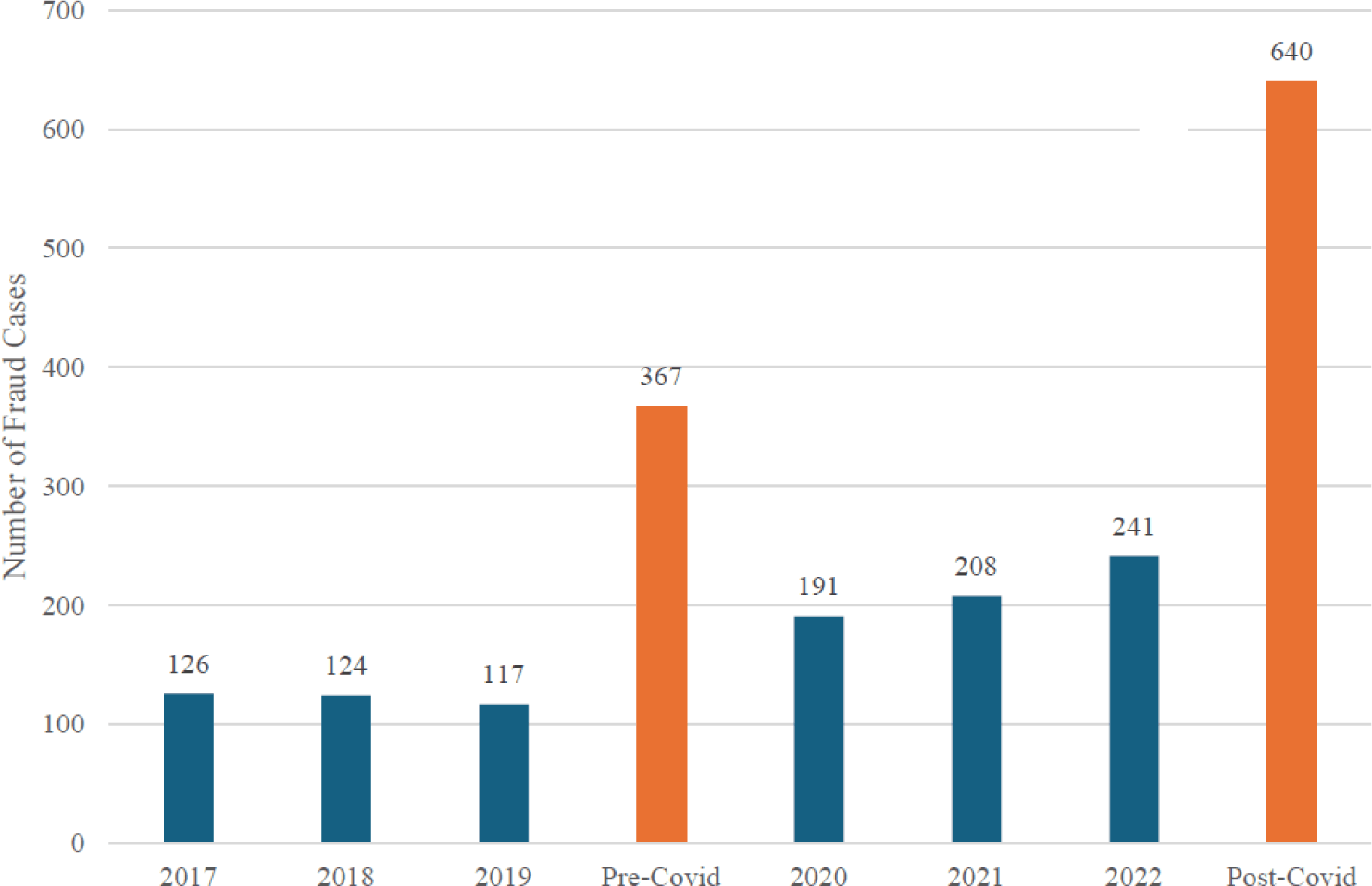
Table 2 displays the descriptive statistics comparing nonprofit organizations that reported asset misappropriation with those that did not. Significant differences were observed in various governance, financial audit systems, and organizational characteristics. Nonprofits reporting asset misappropriation tend to have lower levels of governance policies (p=0.000), Form 990 transparency (p=0.043), policy monitoring (p=0.006), and whistleblower policies (p=0.004), indicating weaker governance structures. They were also less likely to have transparent compensation processes for both the CEO (p=0.000) and other employees (p=0.000), as well as weaker financial audit systems, including independent audits (p=0.000) and audit oversight committees (p=0.001). Regarding organizational characteristics, those reporting fraud had smaller board sizes (p=0.085) and lower levels of board independence (p=0.025), as well as higher debt ratios (p=0.001) and a greater incidence of family relations (p=0.043). Other characteristics, such as organization age, size, and location, showed no significant differences.
Table 3 shows the results of the logistic regression analysis examining the relationship between nonprofit asset misappropriation and internal control systems during the pandemic. Governance policies consistently demonstrate a negative relationship with nonprofit asset misappropriation across all models. Specifically, organizations that adopt more governance policies tend to have a lower chance of misappropriation, as indicated by the consistently negative and statistically significant coefficients in all models. The odds ratios remain below 1, confirming that a greater number of governance measures significantly decreases the likelihood of fraudulent activity. Financial audit mechanisms also help reduce nonprofit asset misappropriation. In models 2 and 3, the coefficients for financial audit systems are negative and statistically significant, with odds ratios of 0.732 and 0.802, respectively. These results indicate that organizations with stronger financial audit practices are less likely to encounter fraudulent activities, emphasizing the importance of formal oversight.
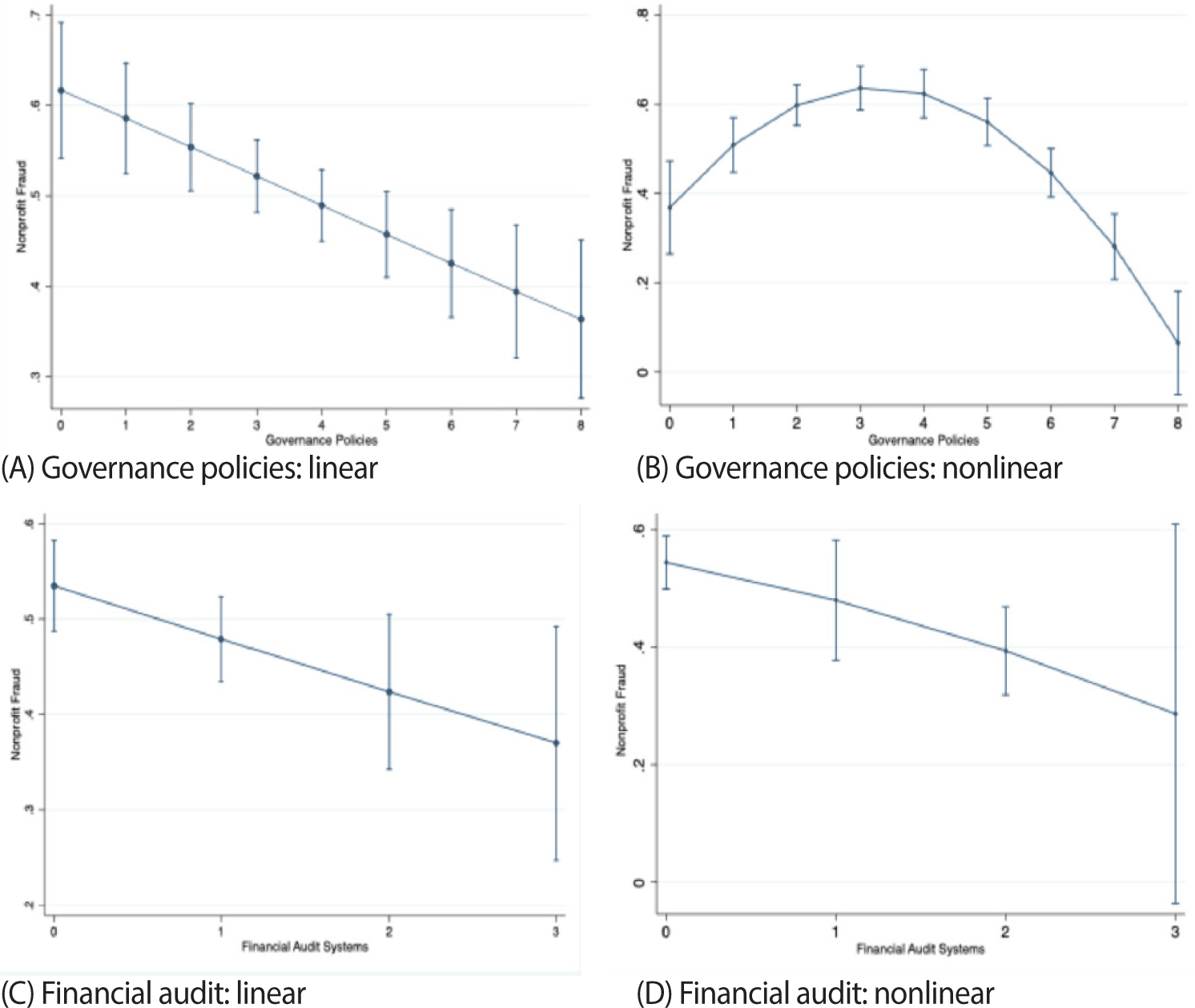
Fig. 2 further demonstrate the marginal effects of governance policies and financial audit mechanisms on the likelihood of asset misappropriation. In the linear specifications, each additional governance policy is associated with an approximately constant reduction in predicted fraud across the 0–8 range, and each incremental enhancement in financial audit systems similarly yields a roughly constant decrease. In the quadratic specifications, governance policies exhibit an inverted-U pattern, with a turning point around 3–4 policies. Beyond this threshold, additional policies produce sharply larger risk reductions, consistent with a detection-first, prevention-later dynamic. For financial audit systems, the quadratic fit suggests bigger marginal reductions at the highest level (2 → 3), although the wide confidence band at that endpoint warrants cautious interpretation. Overall, the figures indicate monotonic preventive effects under linear assumptions and threshold-type gains under quadratic assumptions, reinforcing the substantive conclusion that stronger internal controls are associated with a lower risk of misappropriation.
To address the concern that our equal-weight index treats all governance components as equally important, we re-estimated the models using a data-driven composite from principal components analysis (PCA) of the internal-control items. Table 4 summarizes the regression results using this PCA approach: when entered separately, governance policies are negatively associated with fraud (model 1: −0.037, p<0.01) and financial audit systems are likewise negative and significant (model 2: −0.055, p<0.01); when included jointly (model 3), both effects remain negative and statistically significant (−0.027, p<0.05 and −0.043, p<0.05, respectively), indicating that policy adoption and audit strength contribute independently to reduced fraud risk. In short, the PCA-weighted specification corroborates the original findings: stronger internal controls—whether captured by a theory-neutral PCA score or by disaggregated policy and audit measures—are robustly associated with lower fraud incidence.
To probe sectoral heterogeneity, we re-estimated the fraud model separately for five nonprofit types (AR, arts/culture; ED, education; HE, health; HU, human services; OT, Other; Table 5). Two regularities emerge. First, policy-based internal controls are strongly associated with lower fraud in education (coef.=−0.476, p<0.01) and human services (coef.=−0.142, p<0.05), but not in arts/culture or health. This pattern is consistent with sectoral production functions: ED/HU tend to feature decentralized, people-intensive delivery and frequent client/volunteer contact, where standardized authorization, custody, and reconciliation procedures directly curb asset leakage, whereas AR/HE often operate under dense external compliance regimes (e.g., licensure, accreditation, payer audits) that can substitute for incremental gains from additional policy checklists, attenuating within-sector policy coefficients. Second, financial audit arrangements are significantly protective in the residual other category (coef.=−0.337, p<0.05). However, they are imprecisely estimated elsewhere, which is plausible if the dominant fraud mix varies by mission and if within-sector variation in audit intensity is limited. Overall, the direction of governance effects aligns with the main models. However, the magnitudes differ by mission domain, underscoring the need for sector-tailored bundles of procedural safeguards and assurance mechanisms.
Table 6 further unpacks the relationship between specific governance policies, financial audit systems, and nonprofit asset misappropriation. Policy monitoring and enforcement (coef.=–0.452, p<0.05) and compensation processes for other employees (coef.=–0.540, p<0.05) exhibit negative and significant effects, suggesting that they reduce the risk of fraud. Independent audits (coef.=–0.547, p<0.05) remain a strong predictor of lower fraud likelihood, with an odds ratio of 0.583. These results highlight the critical importance of robust monitoring processes and independent audits.
Regarding organizational characteristics, organizational age and size show consistent associations with fraud vulnerability. Older organizations are less likely to experience asset misappropriation (coef.=0.008 in model 1, p<0.10), though this marginal finding warrants cautious interpretation. Larger organizations are significantly less likely to report asset misappropriation, which may be attributed to their greater capacity for oversight and stronger internal controls. The debt ratio emerges as a robust predictor, with coefficients that are positive and significant at the 1% level (coef.=0.893 to 0.989), indicating that higher financial pressure substantially increases the risk of fraud. Family relations within organizations also increase the likelihood of fraud. Coefficients are positive and statistically significant across models, with odds ratios above 1 (coef.=0.404, p<0.10; coef.=0.431, p<0.05). While the evidence is somewhat mixed across models, the consistent direction of effects suggests that family ties present governance challenges, meriting careful consideration.
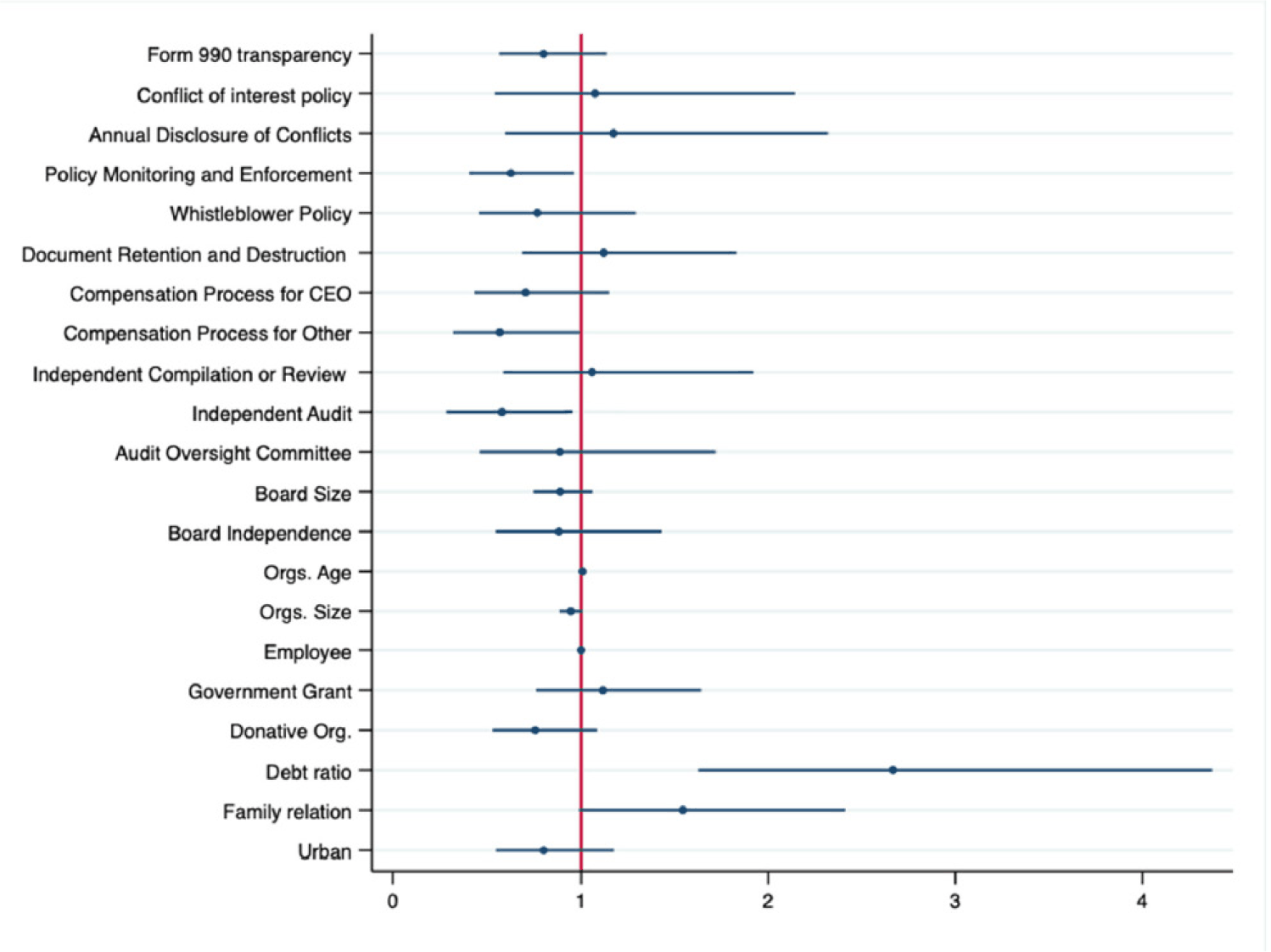
In this analysis, other variables, such as government grants, donations from other organizations, employee size, and location (urban vs. non-urban), do not show significant relationships with nonprofit asset misappropriation. Government grants and donations from other organizations, while positively associated with nonprofit fraud in some models, do not reach statistical significance. One possible explanation for the lack of statistical significance of government grants is that many federal grants explicitly require recipient organizations to adopt internal control policies, such as whistleblower protections and audit mechanisms. This overlap may reduce observable variation in governance practices among grant-receiving nonprofits, thereby attenuating the relationship between grant status and reported asset diversions in our models. Similarly, employee size and organizational location (urban vs. non-urban) do not directly impact the likelihood of fraud in the models. Fig. 3 displays the odds ratios and confidence intervals for each variable, illustrating the impact of each variable on reporting asset misappropriation.
Discussion and Conclusion
This study examined the impact of internal control systems on nonprofit fraud risk during the COVID-19 crisis, contributing to the broader research on nonprofit governance in times of uncertainty. The results highlight the impact of governance structures, organizational traits, and crises on fraud risk. The pandemic placed intense pressure on nonprofits, resulting in significant revenue declines, increased service demands, and operational disruptions (Maher et al., 2020). Such crises—whether financial, environmental, or human-caused—consistently cause organizational stress and weaken oversight capacity. Under these circumstances, opportunities for fraud grow as oversight weakens, while pressures and justifications for misconduct increase. The link between weaker governance and higher fraud risk shows that crises can worsen vulnerabilities in oversight systems. Future research should examine fraud risks across different types of crises, as their causes, length, and impact on nonprofits vary greatly.
The results reaffirm that strong governance policies and financial audit systems serve as crucial safeguards against misconduct. Transparent compensation processes, independent audits, and effective monitoring reduce the risk of fraud and align with governance theory, which emphasizes transparency and accountability as mechanisms that constrain opportunities for misbehavior. In addition, this study makes a novel contribution by demonstrating that family relations within nonprofits increase the risk of fraud. Familial ties may weaken impartial oversight, introduce conflicts of interest, and erode the enforcement of internal controls. Even when statistical significance is marginal, the consistently positive direction of results suggests that family-linked nonprofits require closer scrutiny and stricter conflict-of-interest policies. Financial pressures were also found to be a consistent driver of fraud, with the debt ratio standing out as a strong predictor. Nonprofits with high debt burdens may face incentives to engage in unethical practices to meet obligations, which reinforces the fraud triangle theory that emphasizes pressure as a central cause of misconduct. Ensuring financial sustainability through adequate reserves, diversified revenue sources, and prudent debt management remains vital for mitigating fraud risk. While external funding sources and demographic characteristics did not directly predict fraud, their absence of effect suggests that internal governance and oversight mechanisms are more decisive determinants of fraud risk. Nevertheless, crises magnify both internal vulnerabilities and external pressures, indicating that governance reforms and crisis-preparedness measures must advance together.
The findings also carry important policy implications. For grantmaking bodies and regulators, the evidence suggests that crisis-response funding should be paired with strict requirements for governance and audit systems, particularly independent audits and effective monitoring structures. For nonprofit boards, the results highlight the need to proactively strengthen internal control systems during crises, when both opportunities and pressures for fraud are most acute. More broadly, accountability frameworks in the nonprofit sector must be crisis-sensitive, recognizing that conventional safeguards may need to be reinforced when external shocks undermine normal oversight practices.
Despite these contributions, this study has limitations that should be acknowledged. The dependent variable—fraud incidents reported on IRS Form 990—is based on self-reported information; however, some organizations, particularly those that have experienced fraud, may not disclose such events unless compelled to do so by external auditors. This means that fraud is likely underreported, potentially biasing the results downward. Likewise, responses to governance and transparency questions on the Form 990 are also self-reported and may reflect reporting bias rather than actual practices. Moreover, the analysis focuses on the COVID-19 pandemic, but crises differ in nature, duration, and impact, which limits the generalizability of the findings. Future research should examine fraud risks across financial, environmental, and human-caused crises, as well as incorporate qualitative approaches to better understand how organizational actors perceive and respond to governance challenges during such times.
Additionally, we considered estimating the before–and–after effect of governance mechanisms by comparing 2018–2019 with 2020–2022; however, a practical identification problem prevents reliable within-organization inference. Many entities that reported fraud after the COVID-19 pandemic had no prior fraud reports. Among the 640 organizations with post-COVID fraud reports, only 62 could be consecutively matched to pre-COVID observations with comparable events. This sparse overlap undermines statistical power and threatens comparability for within-organization before–and–after estimation. Because governance policies tend to be reasonably stable from year to year, the panel shows limited within-unit variation and significant selection or left-censoring: units only enter the fraud-reporting risk set after the pandemic begins, while many pre-pandemic non-reporters never experience an event. Therefore, any comparison of pre- and post-periods would conflate governance effects with changes in the composition of the risk set and suffer from low statistical power, risking misleading conclusions. We therefore do not provide a before–and–after governance estimate and acknowledge this as a limitation; future research using longer panels with repeated fraud events or designs that track governance changes before the first event would be more appropriate for testing crisis sensitivity.
In conclusion, this study demonstrates that strong governance systems, board independence, effective financial oversight, and strategic resilience are crucial in reducing nonprofit fraud risk during crisis conditions. By underscoring the influence of family ties and financial pressures, the findings extend ongoing debates in nonprofit governance and highlight areas requiring closer regulatory and scholarly attention. Continued inquiry into crisis-sensitive governance will provide valuable guidance for building nonprofit resilience and accountability in increasingly uncertain environments.


