

Introduction
Over the past several decades, social capital has been one of the most sought research topics across a wide range of academic disciplines. Despite the extensive body of research, an in-depth understanding of the distinction between social capital accumulation and social capital activation merits further research. Energized by Putnam (1993), previous studies have emphasized the importance of accumulating stocks of social capital to facilitate economic and social development. However, the existing literature may not fully consider the possibility that stocks of social capital may already exist, but remain inactive (Coleman, 1990, 1988; Sharone, 2014; Smith, 2005; Tzanakis, 2011).
Differentiating the two concepts—social capital accumulation and social capital activation— is useful for answering an important question that has not been fully answered in the field of social capital. For decades, scholars have tried to explain why social capital facilitates development in certain countries but not others (Boix & Posner, 1998). Putnam (1993) would respond by emphasizing variation in accumulated levels of social capital. This response, however, cannot explain why social capital facilitates development for selected countries within a cluster of countries with similar accumulated levels of social capital.
In this context, this research introduces a theoretical framework differentiating social capital activation and social capital accumulation based on Coleman (1988)’s concept of trustworthy social structure. According to Coleman (1988), social capital is activated when a sense of trustworthiness is established by within and between existing actors. ‘Within actors’ refers to the existence of norms of reciprocity within a respective group, which, for the purpose of this research, is either government or civil society. On the other hand, ‘between actors’ refers to the presence of norms of reciprocity across different groups –specifically, between the government and civil society.
If norms of reciprocity exist only within respective actors, we identify the condition as the absence of social capital activation. On the other hand, if norms of reciprocity exist between actors, which is possible in a social structure with closure as stated by Coleman (1988), we identify the condition as social capital activation. In the latter case, social capital facilitates development, because transaction costs for cooperation and collective action are lower than the case lacking social capital activation. In such cases, transaction costs for cooperation and collective action are higher than the case of social capital activation, because each respective group pursues their own interests only within the confines of their group. In sum, the level of social capital accumulation remains similar in both cases, but the scope of reciprocity norms differs under social capital activation.
To test this theory, this study compares the effects of social capital on institutional quality before and after the 1997–1998 Asian financial crisis for various East Asian countries. Before the crisis, the state-society relation was politically demarcated, as strong states suppressed civil society in East Asia (Mo & Weingast, 2013). As a result, East Asia lacked norms of reciprocity between civil society and the state. After the crisis, however, such relationship between the state and society changed, as the severity of the crisis instigated a wave of political changes for the three most severely affected countries that resorted to the IMF bailout – South Korea, Thailand, and Indonesia. In South Korea, liberal opposition party— National Congress for New Politics (the former name of Democratic Party of Korea)— favorable to civil societies won the presidency, whereas in Indonesia, a series of reforms have been achieved, including democratization and local autonomy (Tan, 2000). In Thailand, people’s constitution passed for the first time with democratic coalition replacing the leadership (Haggard, 2000; Tan, 2000).
For the groups with similar level of social capital accumulation but did not experience political change through the crisis, we chose East Asian Miracle states and new East Asian democracies. New East Asian democracies include South Korea, Indonesia, Thailand, Philippines, and Malaysia. The East Asian Miracle states consist of these New East Asian democracies plus Singapore, China, and Japan. To test our prediction, we conduct fixed effects panel estimation from 1990 to 2005 for a subsequent five-year interval (1990, 1995, 2000, and 2005) and compare the effect of social capital on institutional quality for the three East Asian groups relative to the rest of the world. Our empirical results confirm our prediction. Our analysis shows that only the IMF-intervened states, or the three countries most affected by the crisis, experienced activation; before the crisis, the institutional effect of social capital was negative, but after the crisis, as expected, changed to positive. The results are robust after several robustness checks using different measures of social capital: for instance, social trust, voluntary association, and the interaction between social trust and voluntary association. For the dependent variable, institutional quality, we use de facto judicial independence.
Our research makes several important contributions to existing studies on social capital. First, our research empirically utilizes the notion of social capital activation to show that accumulation of social capital does not automatically facilitate development. In this effort, our research differentiates between activating and generating social capital. Second, we make important contribution to previous studies by conducting empirical analysis of how financial crisis affect effects of social capital on institutional quality. While much research has previously examined endogenous effects of social capital on various outcomes (Knack, 2002a, 2002b; Knack & Keefer, 1997) and how endogenous determinants affect social capital (Kumlin & Rothstein, 2005; Rothstein & Stolle, 2008), not much research has examined how exogenous shocks affect endogenous effects. The structure of this research begins with theory, followed by data and empirical strategy. Then we show our results, followed by discussion and conclusion.
The literature suggests that the concept of social capital is multi-dimensional. Despite many definitions provided for social capital, scholars generally agree that it includes two key dimensions–that is, attitudinal and structural aspects of social capital (Fukuyama, 2001; Hooghe & Stolle, 2003; Putnam, 1993). Firstly, the attitudinal dimension of social capital focuses on social trust, gauging individuals’ attitudes towards society and one another. The other dimension involves voluntary association as a structural component, typically defined as participation in social networks and measured by the extent of an individual’s involvement in voluntary associations. The two are important not only because both are used as a measurement for social capital, but because previous studies find that voluntary association has an attitudinal impact, creating social trust (Hooghe & Stolle, 2003).
Putnam (1993) defines social capital as the network of relationships, norms, and trust that facilitate cooperation and collective action within a community, thereby serving as a “schools of democracy.” Specifically, Putnam argues that when individuals engage in community organizations, and various forms of social interaction, they cultivate trust and promote cooperation, which are essential for effective democratic governance. Since engaged individuals develop important skills for democracy and gain knowledge on political issues, they are more likely to hold their leaders accountable, advocate community needs, and cooperate to solve social problems, thereby enhancing democratic governance. More importantly, Putnam (1993) showed that stocks of social capital could be accumulated through involvement in voluntary associations. Meanwhile, Fukuyama (2001) extends the definition to include informal norms originating from cultural norms, religions, and historical traditions. Fukuyama (2001) also echoed the democratic and economic development as consequences of stocks of social capital but also highlights social capital’s “radius of trust.” He warns that while it strengthens internal group bonds, it can sometimes lead to exclusion or distrust of outsiders, creating negative externalities.
On the other hand, another stream of studies emphasizes the type of voluntary association. For instance, Stolle & Rochon (1998) suggest that not all associations are equally effective in building generalized social trust due to several factors related to their membership, structure, and purpose. According to Stolle & Rochon (1998), their effectiveness depends largely on the diversity in community organizations, and commitment to broader civic engagement. The authors contend that the effectiveness of associations is diminished, particularly with homogeneous membership, as it hampers diverse perspectives and bridging social capital essential for broader social cohesion. Similarly, Rothstein & Stolle (2008) echo this point, questioning whether any type of voluntary association can lead to social trust. This would seem especially relevant in the Asian context, where rather than voluntary association, enterprise association prevailed (Jayasuriya, 1996). Similarly, scholars like Park (2012) and Park & Lee (2007) found that voluntarily association is only weakly associated with social trust in East Asia.
With the accumulation of studies on social capital, various definitions have been offered for various dimensions of social capital (Bjørnskov, 2011; Hooghe & Stolle, 2003; Putnam, 1993; Uslaner, 2002). However, the existing literature does not sufficiently address how the effects of accumulated social capital at similar levels differ across countries. In this context, Coleman (1988), who defines social capital by its function, is useful. For Coleman, various definitions of social capital share two common features. First, there exists some form of social structures defined by relations between actors and among actors. Second, the structure facilitates certain actions from actors. To recap, depending on the social structure made of different actors, social capital functions differently.
It is in this context we also define social capital activation. Previous studies on social capital activation emphasize the importance of trustworthy social structure. For Coleman (1990, 1988), social capital is activated when a sense of trustworthiness exists, such as in a tight social community or an embedded network of social closure. In other words, a trustworthy structure exists when norms of reciprocity between actors exist (Coleman, 1988). Combining norms of reciprocity with Coleman (1988)’s common features of social capital allow us to develop a theoretical expectation for why social capital may function differently.
Specifically, we expect social capital to function differently depending on how norms of reciprocity exist and extend across actors. We first classify actors into two groups: (1) individuals within the government, such as politicians and bureaucrats, and (2) individuals within civil society, including members of non-governmental organizations (NGOs) as well as individual citizens. The central tenet of this research lies in whether norms of reciprocity apply exclusively within a single type of actor or also extend across different types of actors. By ‘within actors’, we refer to norms of reciprocity that exist solely among individuals within the same group—either within the government or within civil society. Conversely, ‘between actors’ refers to the presence of norms of reciprocity that bridge individuals from different groups, fostering relationships and trust between members of civil society and the government.
This framework allows us to differentiate between social capital accumulation and social capital activation. When norms of reciprocity exist only among or within actors, social capital accumulation is high, but will not function to facilitate development, because actors would pursue only their own collective interests. As a result, transaction costs for cooperation and collective action would increase. Consistent with Roth (2009), such behavior would hamper development, as individuals within civil society and within the government collectively seek their own respective interest without compromise rather than compromising to further the benefit of society. On the other hand, when the norms of reciprocity are established between actors, we expect positive influence on development, as the norms of reciprocity between actors lower transaction costs for cooperation, dialogue, coordination, and collective action. In the next section, we introduce our hypothesis in the context of the 1997–1998 Asian financial crisis.
Previous studies have extensively examined state-society relations in East Asia. In South Korea, despite the civil society achieving democratization in 1987, studies consistently indicate that the civil society remained suppressed by the strong centralized state apparatus (Jayasuriya, 2006; Kohli, 2004; Mo & Weingast, 2013). Under various typologies – the East Asian Miracle states, the Asian Paradox, Relation-based governance – previous studies suggest that strong developmental states prevailed in East Asia (Haggard, 2004). Scholars agree that these states maintained tight control over civil society, limiting citizen participation (Li, 2003; Mo & Weingast, 2013). These studies imply that, in East Asia, a clear demarcation between state and society existed, with their interactions lacking reciprocal trust necessary for a collaborative relationship.
However, following the crisis, political and administrative reforms undertaken in the three most affected countries– South Korea, Indonesia, and Thailand –substantially transformed state-society relations. Confronted with severe economic pressure, these states were compelled to seek IMF assistance, which mandated comprehensive structural reforms as a condition of support. The crisis thus led to extensive political and administrative transformations as well as significant economic repercussions. Accordingly, focusing on these three countries is warranted, as it enables a nuanced exploration of social capital activation within contexts that experienced comparable external pressures yet underwent distinct political and administrative transformations in response to the Asian financial crisis. Of the three countries, the crisis had the most severe political consequences for Indonesia (Pempel & Tsunekawa, 2015). Due to the crisis, democratization took place in Indonesia, where President Suharto, who held office for more than thirty years, resigned (Tan, 2000). After the crisis, Indonesia also spearheaded major political reforms such as decentralization that gave more authority to the local governments (Pempel & Tsunekawa, 2015). In addition, the New Public Management (NPM) reforms, facilitated by the IMF conditions, introduced several advancements, despite some unexpected challenges (Harun et al., 2019). Specifically, decentralization empowered local governments to tailor policies and manage resources autonomously, fostering localized solutions and democratic participation, while accrual-based accounting standards and the strengthened Indonesian Audit Office enhanced transparency and accountability (Gaus et al., 2017; Harun et al., 2019). Recognizing the challenges posed by entrenched patrimonialism, the government adopted a hybrid model, blending NPM with Neo-Weberian principles to strengthen administrative law and maintain state oversight. This approach enabled Indonesia to navigate its socio-political complexities while pursuing a more transparent, efficient, and citizen-centered bureaucracy (Gaus et al., 2017).
Although not to the magnitude of Indonesia, South Korea and Thailand also experienced significant political and administrative changes due to the crisis. Before the crisis, both South Korea and Thailand had mode of governance that Li (2003) described as relation-based governance, which lacked separation of power and checks and balances within the three branches of the government –the executive, the legislative, and the judiciary–and between government and businesses. Maintaining such status required a stable ruling party in control of all three branches for a stable period. In South Korea, although the names of the parties frequently changed, they remained a conservative party with ties to big businesses. Due to the crisis, however, liberal opposition party (National Congress for New Politics) came to power for the first time (Haggard, 2000). In power, the party tried to carry out its reform agendas, with one of the central tenets being horizontal transfer of power, giving more voice to civil society, working class, and political parties (Han & Lim, 2003). Further, in response to the Asian financial crisis, the newly inaugurated Kim Dae-jung administration in South Korea undertook a series of NPM reforms to satisfy IMF stipulations tied to financial assistance (Jung, 2014). Central to these reforms were policies aimed at restructuring government institutions to enhance efficiency and accountability. The administration also prioritized transparency through the development of e-government initiatives, designed to facilitate greater public access to government services and strengthen institutional responsiveness. These reforms signified a transformative shift towards a more modernized and transparent governance.
In Thailand, due to the crisis, several political impacts were felt. Firstly, due to rising public demonstrations, the Prime Minister Chavalit Yongchaiydh resigned in 1997 (Tan, 2000). As a result, a new coalition of power led by the Democrat Party replaced existing coalition (Haggard, 2000). Secondly, more importantly, the crisis led to constitutional reform in 1997. Also identified as the “People’s Constitution (Kittayarak, 2003),” it demanded electoral reforms that made the government more accountable. These measures included independent election commission, greater separation of power between government branches, decentralization of government, established a bicameral legislature, and called for a direct election for the two houses. Furthermore, the constitution recognized human rights for the first time in Thailand’s history. Although reform efforts have existed before the crisis, the crisis in 1997 increased public awareness for the need of reform, and has been identified as critical for the success (Kittayarak, 2003). Thirdly, due to the crisis, a new coalition of power replaced the existing coalition. The new coalition was led by the Democratic Party, winning the election in both houses in the legislature for the first time. Additionally, Thailand also pursued NPM reforms and governance principles, emphasizing efficiency, privatization, and institutional accountability, inspired by global reform paradigms (Bowornwathana, 2000).
To recap the distinction between social capital activation and social capital accumulation, Table 1 below defines social capital accumulation and social capital activation through norms of reciprocity.
Although we have only discussed within and between actors, theoretically, norms of reciprocity may exist in both within and between actors. In such cases, we categorize it as equivalent to social capital activation. Within the East Asian context, the actors are members of civil society and the government. Within-actor norms refer to norms of reciprocity that only exist within the network of individuals among respective actor, whereas between-actor norms refer to norms that exist between civil society and government. When norms of reciprocal trust only exist within actors, it does not facilitate development. However, this does not necessarily indicate a low level of accumulated trust, but rather that transaction costs for cooperation are not lowered. On the other hand, in the case of between actors, social capital enhances development, as norms of reciprocal trust between civil society and government reduce transaction costs for cooperation.
Before the Asian financial crisis, East Asian states had accumulated social capital but had not yet reached the stage of activation. Civil society was united in pursuing democratization and reform in most East Asia, but the governments in East Asia, characterized as strong states, established shared expectation within themselves (Li, 2003) but not with civil society. In other words, there were no mechanisms, be it personal relations or constitutional rights or other means that enabled members of the government and individuals of civil society to cooperate and engage in dialogue. After the crisis, however, such mechanisms were established for the group most affected by the crisis, the three IMF-intervened states – South Korea, Thailand, and Indonesia. In South Korea, liberal opposition came to power for the first time, winning the presidency. Rather than trying to suppress civil society as done in the past, the liberal administration tried to govern through shared power, giving civil society more power (Han & Lim, 2003).
Similarly, in Indonesia, the authoritarian regime democratized, and reforms were made, enabling greater participation of civil society through decentralized governance (Pempel & Tsunekawa, 2015). In Thailand, the passing of the people’s constitution made direct voting of legislature possible for the first time, and human rights were recognized also for the first time (Haggard, 2000). Overall, these measures, taken by the three countries in response to the crisis, forced civil society and the government to collaborate and coordinate, rather than viewing each other as enemies. Consistent with Coleman (1988)’s notion of trustworthy social structure as a condition for social capital activation, we predict these actors established norms of reciprocal trust between government and civil society.
If our argument is correct, we should expect social capital to enhance institutional quality only for the three IMF-intervened countries. To test this, we compare the institutional effects of the crisis for the three IMF countries with the following East Asian country groups: the East Asian Miracle states and the new East Asian democracies. The East Asian Miracle states include eight East Asian states that earned their label by achieving tremendous growth during the 1960s and 1980s (Stiglitz, 1996). These countries are South Korea, Indonesia, the Philippines, Malaysia, Thailand, Singapore, Hong Kong and Taiwan. However, due to data limitations, Hong Kong and Taiwan are excluded. For the new East Asian democracies, we include South Korea, the Philippines, Malaysia, Indonesia, and Thailand. Fig. 1 below captures the mean scores of social trust for the respective East Asian groups we will test before and after the crisis.
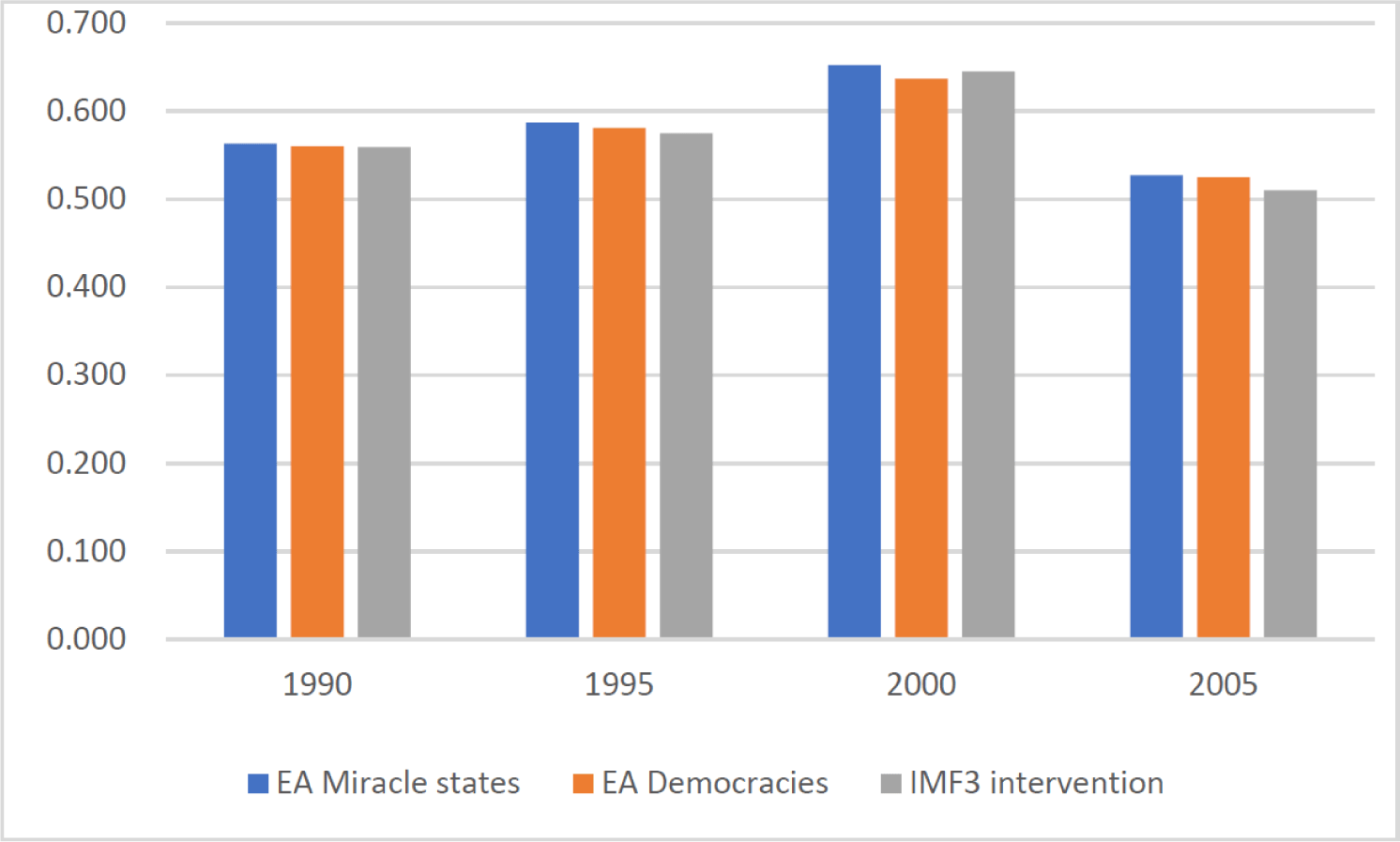
As Fig. 1 suggests, accumulated stocks of social capital are similar for all three groups, or that the IMF-intervened states have the lowest accumulation for the three out of four years. After the Asian financial crisis 1997–1998, in 2000 and 2005, the level of social trust increased in 2000, but then decreased to its pre-crisis level. However, the level across the three East Asian groups remains similar throughout. If our argument holds, despite similar levels of trust across the three groups, only the three IMF-intervened states should experience change. Comparing effects of social capital on institutional quality before and after the crisis, only the IMF-intervened states would exert positive effect after the crisis.
Data
This research employs various country-level data to conduct a panel data analysis from 1990–2005 for a subsequent five-year interval–1990, 1995, 2000, and 2005. One of the challenges for collecting appropriate data comes from finding balanced data and data covering adequate periods before the 1997–1998 Asian financial crisis. Only a few datasets are available for use before the 1997–1998 Asian financial crisis, but even those tend to be unbalanced in nature, consisting of more countries after 2000. Due to these limitations, this study’s dataset inherently follows an unbalanced panel structure. Furthermore, this dataset is composed of subsequent five-year interval from 1990 to 2005, because only dataset that provides enough years of information on social capital before the Asian financial crisis is the Index of Social Development. We begin this section by explaining the dependent variable, de facto judicial independence.
Scholars differentiate between judicial independence de jure and de facto (Hayo & Voigt, 2007; Melton & Ginsburg, 2014; Pozas Loyo & Rios Figueroa, 2017). De jure judicial independence refers to the institutional design of formal rules intended to constrain governments (Glaeser et al., 2004), whereas de facto judicial independence refers to the practice and enforcement of de jure institution. Previous studies identify gaps in the two types (Ginsburg & Versteeg, 2014; Hayo & Voigt, 2007), where intended rules may not necessarily be enforced. Thus, as the dependent variable, we use de facto judicial independence. Of the various available measures of de facto judicial independence, we will employ Linzer & Staton (2015)’s dataset, a composite index measuring the enforcement and practice of judicial independence. This measure of de facto judicial independence is conceptually defined as the power and influence of judiciary to constrain the government, or the executive branch. The range of the index is between 0 and 1.
Similar measures also exist, but we use this measure for several reasons. First, this variable is one of the few that explicitly define de facto judicial independence as influence and constraint over the government. Most existing measures emphasize judicial autonomy,1 rather than power. In sum, the concept of power is more relevant in the context of our research since we focus on strong governments in Asia. Secondly, Linzer & Staton (2015)’s measure is the only data with adequate years available for years before the 1997–1998 Asian financial crisis. Because the measure of social capital begins in 1990, we also require a measure of judicial independence from 1990. To our knowledge, only Linzer & Staton (2015) and the International Country Risk Guide (ICRG) meet this criteria. However, given that ICRG is not publicly available, we instead use this data.
In this context, we use social trust as a measure of social capital. Previous studies have also used social trust as a measure of social capital, since studies find social trust as the most important dimension of social capital (Roth, 2009; Rothstein & Stolle, 2008). As a robustness check, we also use the following measures: (1) voluntary association and (2) the interaction between social trust and voluntary association. The third measure multiplies two components of social capital, social trust×voluntary association. Such method has been used in the past to account for both dimensions of social capital (Paraskevopoulos, 2007).
For the variables social trust and voluntary association, we use measures from the Index of Social Development (ISD) developed by the International Institute of Social Studies (ISS). Voluntary association is measured through surveys assessing how actively one participates in associational life, including memberships in local voluntary groups, attendance at community meetings, and participation in local clubs and associations. For social trust, it measures how safe one feels in their neighborhood and how much they trust their neighbors, measuring trust towards strangers (Uslaner, 2002). Both variables range from 0 to 1.
Most control variables included in this model come from Williamson & Kerekes (2011): Education, urban population, and government consumption. Since de facto judicial independence is the outcome of interest, we also include de jure judicial independence as a control variable. Consistent with Melton & Ginsburg (2014), we include six dimensions (Melton & Ginsburg, 2014): (1) statement of judicial independence, (2) judicial tenure, (3) selection procedure, (4) removal procedure, (5) limited removal conditions, and (6) salary insulation (2011). In total, the score of the formal institution ranges from 0 to 6. For other control variables, we primarily use the World Development Indicator (WDI). Government consumption is measured as the government’s final consumption (% of GDP), and urban population as the percentage of the urban population over the total population from the WDI. Education is measured as the average years of education for the population over 25 years old, obtained from Barros & Lee dataset (Barro & Lee, 2014). Although Williamson & Kerekes (2011) included GDP growth, we excluded GDP growth, due to the potential for post-treatment bias (Samii, 2016). Table 2 below summarizes the descriptive statistics for all variables used in the analysis.
For the empirical analysis, we examine various East Asian country groups compared to the rest of the world. The list of countries for the East Asian groups are provided in Table 3 below:
| East Asian groups1) | Countries |
|---|---|
| IMF3 states2) | South Korea, Thailand, Indonesia |
| New East Asian democracies | IMF3 states+Philippines, Malaysia |
| East Asian Miracle states | New EA Dem+China, Japan, Singapore |
Empirical Analysis
This research will conduct a panel data analysis consisting of more than 120 countries from 1990 to 2005 at five-year intervals – 1990, 1995, 2000, and 2005. We compare the effects of social capital on institutional quality before and after the crisis for various East Asian country groups compared to the rest of the world. For the empirical model, this research employs the model developed by Williamson & Kerekes (2011) with some modifications. While similar control variables are used, a fundamental difference lies in expanding their model from a cross-sectional analysis to a panel data analysis. Using this model, we employ a fixed effect model as the main analysis. To measure social capital, we rely on social trust. As a robustness check, we employ two additional explanatory variables: voluntary association and the interaction between social trust and voluntary association.
Endogeneity issues, such as reverse causality, are a concern, and despite available instruments for social trust and development (Hall & Jones, 1999; Licht et al., 2007; Williamson, 2009; Williamson & Kerekes, 2011), we do not employ instrumental analysis for several reasons. First, because the nature of our analysis interacts with country and time variables, using the instrumental variable technique may yield biased estimates. Second, consistent with Özcan & Bjørnskov (2011), trust may exert different impacts depending on the level of income. As a result, instrumental variable analysis may produce biased estimates. Third, Özcan & Bjørnskov (2011) show that, because social trust has been stable over the period from 1980s to 2005, they use a pooled OLS estimate rather than instrumental variable analysis. Since the period of analysis overlaps with this research, we rely on fixed effects panel analysis.
Since time-invariant heterogeneity may exist within the sample of countries, we apply fixed effects panel analysis. Below is our baseline model specification for applying both country and time fixed effects:
Where INSTct, dependent variable, represents judicial independence de facto that varies across countries and time. β1, the main explanatory variable, represents social capital which varies across time and country. Both Ic and Tt represent fixed effects, where Ic represents country fixed effects and Tt represents year fixed effects, with the base year being 1990. Since fixed effects model does not allow us to include time-invariant variables such as country group variables, we interact country group dummy variable with our independent variable, social capital. Together, this variable measures effects of social capital on East Asian groups compared to rest of the world. β1 specified in the model 2 below represents this measure.
To test effects of the 1997–1998 Asian financial crisis, we include time dummy variable specifying years before the crisis in the model 3:
When AfterCrisis=1, it includes years after the crisis, 2000 and 2005. When the variable is coded 0, it represents years 1990 and 1995.
Results
Since we want to compare the effects of social trust on de facto judicial independence for the respective East Asian groups compared to the rest of the world before and after the crisis, we gauge the interaction effects between social trust, the respective East Asia group, and the time variable, represented by the following interaction variables: the interactions between social trust, the country group and after crisis. Specifically, we interact three variables –the country group, the explanatory variable, and the year variable. The results, obtained using fixed effects, are illustrated in Table 4. For all models 1–3, the country group is the respective group below the model number, and the reference group is the rest of the world. The year variable, After Crisis, includes years 2000 and 2005 when coded as 1, and the reference years include 1990 and 1995, when coded as 0. In models 1 and 2, the interaction effect of region and trust illustrates the effect of trust on the respective region compared to the rest of the world before the Asian financial crisis.
Models 1 and 2 do not have any statistically significant variables compared to the rest of the world. In model 3, however, the interaction effects are statistically significant. Compared to the rest of the world, in the three IMF-intervened countries, social trust exerts a negative effect on de facto judicial independence, with the coefficient being negative (–1.807) and statistically significant at 1%. Such result is consistent with our prediction that before the 1997–1998 Asian financial crisis. Social capital exerts a negative effect on institutional quality, as previous studies have found results in the East Asian context (Li & Wu, 2010). After the crisis, the coefficient for the IMF-intervened states change to positive, as the coefficient for the interaction term Region×Trust×After Crisis is positive (1.000) and statistically significant at 1%. As for the other regions, the coefficient is not statistically significant. Such findings confirm our prediction that due to the severity of the crisis, social capital activation only took place within the IMF-intervened states.
To further test the validity of our findings, in the next section, we conduct a robustness check.
In this section, to test the robustness of our results, we first reanalyze the same empirical model from the previous section, but with voluntary association rather than social trust. Then, we use our third variable for social capital (the interaction of voluntary association and social trust) to reanalyze the same empirical model. Finally, to verify that the exogenous intervention of the Asian financial crisis only applied to East Asian countries, we repeat our empirical analysis with different country groups – advanced Western states – in gauging the interaction effect.
Since both measures are closely related theoretically and empirically, we expect similar results found from the previous section. Table 5 displays the regression results using voluntary association as a measure of social capital. The interaction effect of voluntary association and country group measures the effects of voluntary association for the respective group before the crisis. Of the three groups, voluntary association is negative and statistically significant at 10% for the IMF-intervened countries, but not statistically significant for other groups. Similarly, after the crisis, the interaction effect of voluntary association, country group and after crisis is only statistically significant for the IMF3 group. For the IMF3 group, voluntary association is statistically significant at 1% and positive (1.572). Not only is the IMF3 group the only East Asian group to be statistically significant, but the coefficient has also changed, from negative before the crisis to positive after the crisis.
Since social trust and voluntary association may simultaneously affect institutional quality, we incorporate the two into one measure by applying Paraskevopoulos (2007)’s approach, which multiplies social trust and voluntary association to measure social capital. The results are displayed in Table 6. Similar to the results from Table 3, only the IMF3 group is statistically significant. Before the crisis, social capital exerted a negative effect (–3.078) for the IMF-intervened countries compared to the rest of the world, with statistical significance at 1%. After the crisis, social capital×group×after crisis is statistically significant at 5% and positive (1.507).
Finally, we test for the exogeneity of the 1997–1998 Asian financial crisis. If the crisis only affected East Asia, replacing country group in our empirical model with relatively unaffected country groups should yield statistically not significant results. For this purpose, we replace East Asian country groups with advanced Western countries – Western European states, the United States, and Canada – since the impact of the crisis was marginal in the region. The results are displayed in Table 7. Model 1 measures social capital as social trust, model 2 as voluntary association, and model 3 as the interaction between Trust×association. For all three models, social capital before the Asian financial crisis (Social capital×Advanced West) and after the Asian financial crisis (Social capital×advanced West × after crisis) are not statistically significant.
In this research, we introduced the notion of social capital activation to differentiate between social capital accumulation and activation. To make our case, we first showed that within East Asia, various East Asian country groups share a similar level of accumulated social capital. Of the three groups – new East Asian democracies, East Asian Miracle states, and the IMF-intervened states – we argued that social capital was activated only for the IMF intervened countries – South Korea, Indonesia, and Thailand – the three countries most severely affected by the crisis and resorted to the IMF bailout. As a result of this external shock, a wave of political reform took place in these three countries; In South Korea, a liberal president won for the first time, In Indonesia, the authoritarian regime democratized and conducted a sweeping reform, and in Thailand, the people’s constitution passed and a democratic coalition gained power. These changes, we hypothesize, established norms of reciprocity between government and civil society, qualifying as a trustworthy social structure (Coleman, 1988) and activated social capital.
Conservative political parties that held power for decades were replaced by the liberal opposition for the first time. In sum, the crisis not only led to the victory of the liberal opposition party more supportive of the civil society but also weakened the strength of the strong state that had been known to suppress civil society before the crisis. As such, the crisis provided an environment conducive to social capital activation for the three IMF-intervened states.
To test social capital activation, we employed fixed effects panel data analysis comparing the effects of social capital on institutional quality. Specifically, we applied this model to compare the effects of social capital for the institutional quality compared to the rest of the world. We hypothesized that, before the Asian financial crisis, social capital was not activated for the three East Asian groups but were activated after the crisis only for the IMF-intervened states. Our empirical results support this in a robust fashion. We tested our empirical model using three measures of social capital: social trust, voluntary association, and the interaction between social trust and voluntary association. The results support our claim that the effects of social capital on institutional quality changed only for the IMF-intervened states compared to the rest of the world. Finally, to test for the exogeneity of the crisis, this study replaced the East Asian country group with the country group least affected by the crisis around the world: advanced Western states. Our analysis confirms our prediction, as social capital does not exert significant effect on advanced Western states compared to the rest of the world before and after the crisis.
This research has tried to provide an answer for why the effects of social capital differ for countries when the level of social capital remains similar. Differentiating between social capital activation and social capital accumulation, this research used the Asian financial crisis and East Asian countries as an example to advance our argument that the crisis served as an activation mechanism for the IMF-intervened countries. In this light, this research makes several contributions to existing studies. Firstly, the most important contribution of this research lies in providing a possible explanation for why social capital may not facilitate development despite countries with the similar level of social capital. Secondly, this research makes contribution to existing studies on institutional change. While most studies have examined endogenous change on institutional quality (Bjørnskov, 2010; Bjørnskov & Méon, 2013; Hall & Ahmad, 2013; Levchenko, 2013), not many studies have examined how external and exogenous shocks affect endogenous change. Thirdly, this research makes contribution to the existing studies on East Asia. Previous studies on East Asia and social capital mostly finds contrasting evidence from theories on social capital (Horak, 2017; Horak & Taube, 2016; Li & Wu, 2010; Park, 2012; Park & Lee, 2007; Park & Shin, 2005). Our empirical evidence suggests that, while this may hold before the 1997–1998 Asian financial crisis, after the crisis, the effects of social capital has changed, confirming the existing studies led by Putnam (1993) and others (Bjørnskov & Méon, 2015; Fukuyama, 2001; Uslaner, 2003) that social capital facilitates development. In addition, this research offers actionable insights for policymakers and practitioners. Firstly, our findings emphasize the importance of fostering inclusive networks that connect government and civil society, promoting transparency to build trust between institutions and the public, and supporting decentralized governance that empowers local communities. These conditions are anticipated to reduce transaction costs in governance and facilitate collaborative problem-solving, thereby activating social capital to strengthen institutional quality. The findings also suggest that to enhance institutional quality, governments should invest in social capital-enhancing initiatives, such as public-private partnerships that foster institutional trust. Furthermore, community-based programs that encourage collaboration between local governments, civil society, and the private sector can support vulnerable communities in managing systemic risks.
However, this study is not without limitations. One of our limitations is we do not differentiate between countries resorting to IMF intervention and countries mostly affected by the crisis. Although the two effects are highly correlated, it is possible that IMF intervention may have unexplained effects from our model. In this context, further research on IMF intervention would be useful. Additionally, we acknowledge that crises can drive demand for innovative, non-standard governance solutions. For example, complex tasks arising during the crisis often require unconventional responses, which may prompt governments to incorporate inputs from civil society and adapt administrative procedures rapidly. We also note that, in such cases, huma capital activation may occur independently of trust-building between civil society and the government, as immediate solutions are necessary to address urgent challenges. Further, this study provides a comprehensive assessment of social capital activation across East Asia, utilizing quantitative cross-country regression with secondary datasets. While fixed-effects panel estimation yields valuable insights into longitudinal trends, it also has inherent limitations in capturing the nuanced, context-sensitive dynamics specific to each country. Specifically, this approach may introduce biases such as omitted variable bias or constraints associated with secondary data, which may not fully capture the distinctive socio-cultural contexts of each state. Future research would therefore benefit from a mixed-methods approach, incorporating qualitative methods such as ethnographic fieldwork, social network analysis, and country-specific case studies to offer community-centered perspectives on the role of social capital in enhancing institutional quality. Last, while this study focuses on East Asian economies affected by the Asian financial crisis, expanding the analysis to other regions, such as Latin America and Africa, could provide broader insights into social capital’s role in crisis recovery. This cross-regional approach would enhance contextual rigor and external validity, offering a more comprehensive view of social capital’s effect on institutional quality across diverse settings.


