

Introduction
Human resource management (HRM) has been widely recognized in both academic literature and practical context for its strategic significance in achieving crucial organizational outcomes, including improved effectiveness, sustained growth, competitiveness, and stable competitive advantages (Oliveira et al., 2021). Historically, the implementation of the Pendleton Act of 1883 and the Civil Service Reform Act of 1978 in the U.S. marked significant milestones in the promotion of personnel management grounded in meritocratic principles. These acts established protocols for allocating federal government positions based on merit and standardized competitive examinations. This shift towards merit-based practices has been credited with fostering a professional and efficient public bureaucracy, as noted by scholars like Groeneveld & Van de Walle (2010).
Specifically, to ensure continuous organizational growth, the HRM function should focus its recruitment and selection (R&S) practices on the ideology of the “best fit for all the job categories” (DeCenzo & Robbins, 1996). Evidence from past experiences supports this claim, as it has been shown that the best-fit (DeCenzo & Robbins, 1996) mode of recruitment positively influences organizational performance, which is directly linked to EP. For instance, Dahlström et al. (2011) conclusion about meritocracy and quality of government highlights a reduction in corruption level attributed to public administrations that follow merit-based recruitment, which in the long run tends to boost organizational performance. In a similar light, Pedersen & Johannsen (2015) observed that public servants, recruited and or promoted based on merit, embrace values related to integrity when compared to those recruited and promoted through a non-merit-base.
Within the literature, managing diversity has received contested arguments about its complementarity and or contradictoriness to merit principles (McCrudden, 1998; Woodard, 2005). Thus, while some scholars have observed managing diversity through antidiscrimination laws as countering merit principles, other scholars (Park & Liang, 2019; Pfiffner, 2000) view it through affirmative actions as complementing merit principles. Notwithstanding the various arguments revolving around managing diversity and merit-based practices, specifically R&S, little empirical evidence exists to support the dynamism underlying their relation to performance. Accordingly, this present study examines how the performance of employees is impacted by merit R&S and the extent to which this relationship is moderated by efforts toward managing diversity.
This study contributes significantly to the existing literature in several ways. First, reviewing the literature, it is highlighted that the relationship between merit R&S and performance has been explored by various studies (Gilmour & Lewis, 2006; Huselid, 1995; Park & Liang, 2019; Saleem & Khurshid, 2014; Saviour et al., 2016; Woodard, 2005). Previous studies have mainly focused on the direct effect of this relationship within public organizations, with only a few studies (Park & Liang, 2019) considering managing diversity as a moderator. The Ghanaian context has yet to be empirically tested as no study, to the best of our knowledge, exists in this regard. Second, the results from this study help in settling the worries of Ghanaians regarding the R&S practices being undertaken within the public sector of Ghana. Thus, the “Human Resource Management Policy Framework and Manual for the Ghana Public Services (HRMPFMGPS)” serves as a reference document and promotes recruitment practices that are based on merit and are conducted openly and transparently. Conversely, the convictions of most Ghanaians of recent have been that the R&S practices occurring within the public service of Ghana are drifting from the merit-based system towards political inclinations, tribal affiliation, over time networking, bribery, and corruption, among others. These convictions have been evidenced by editors of local newspapers and some scholars (Donkor, 2021; GhanaWeb, 2021; Kwawukume, 2014; Laary, 2014; MyJoyOnline, 2013; Sule, 2012). Also, the 2022 report of the United Nations Office on Drugs and Crime (UNODC) unveils that about 41.4 percent of public sector applicants under its study admitted to having relied on bribery, nepotism, or both in an attempt to enhance their chances of being selected for employment (United Nations Office on Drugs and Crime, 2022).
It will read as follows: Also, the 2022 report of the United Nations Office on Drugs and Crime (UNODC) unveils that about 41.4 percent of public sector applicants under its study admitted to having relied on bribery, nepotism, or both in an attempt to enhance their chances of being selected for employment (United Nations Office on Drugs and Crime, 2022). Such deviations from merit principles can create accountability deficits, which have been shown to negatively impact agency performance (Han, 2020).
Concept of Focal Constructs
In the context of HRM, merit recruitment and merit selection principles play a crucial role in ensuring that hiring and promotion are done based on an individual’s qualifications, abilities, and performance as opposed to being based on subjective factors. These principles, in their design, foster staffing fairness, efficiency, and transparency, ultimately achieving an effective and competent workforce. Sisson (1994) views R&S as the process of attracting and interacting with candidates to determine their suitability for being appointed for a job and finally selecting a candidate for employment. Merit R&S processes have integrated into them a series of procedures executed systematically, beginning with the sourcing of potential candidates through to the conducting of interviews and the selection of best-fit candidates (DeCenzo & Robbins, 1996) for placement. While recruitment involves the search for potential candidates and the stimulation of these candidates to put forward their applications, selection, on the other hand, encompasses a series of procedures taken to screen the applications received in order to choose the best candidates to fill the available vacancies (Potočnik et al., 2021). Thus, recruitment predates selection, just so a pool of potential candidates can be achieved and from which the qualified candidates can be drawn (Leopold, 2002).
Defined by scholars (Adu-Darkoh, 2014; Bratton et al., 2021; Hsu, 1993; Yaseen, 2015), merit recruitment is a systematic approach to attract and identify potential candidates with competence to form a pool of potentially qualified employees, from which some, all or none will be selected for placement. This definition resonates with Dipboye (1992) as he defines it as the search for and the provision of inspiration to potential applicants to apply for the available jobs. In a broader view, Armstrong & Taylor (2006) defined it as the obtaining of not just the right caliber but also the requisite number of qualified potential candidates for vacant positions. Also, Beer (1984) views merit recruitment to encompass Hsu’s (1993) definition in addition to its function of improving the workforce composition to blend well with prevailing cultural and organizational needs. Thus, merit recruitment achieves efficiency as it reduces the cost of processing unqualified applicants (Kumari & Malhotra, 2013) since information about qualification requirements is provided beforehand, resulting in unqualified applicants self-selecting themselves out of their candidacy. Recruitment based on merit is crucial to the selection of the right job candidates (Abbasi et al., 2020; Muscalu, 2015). Generally, the merit recruitment process results in the creation of a pool of candidates sourced both internally from within the organization and externally from outside the organization (Bateman & Zeithaml, 1993; Flippo, 1984).
The selection stage, according to Stoner (2006), is a mutual process comprising the employer’s and the candidate’s decisions as to whether to offer a job to a candidate or not and whether to accept the job offer or not, respectively. The merit system is characterized primarily by the selection of the “best qualified” candidates, using methods such as open-competitive examinations or their job performance rather than criteria that lack demonstrable fitness, such as nepotism (Ha, 1991). Instead, it emphasizes individual merit as the sole relevant criterion for selection. Merit selection is defined by Dipboye (1992) to involve a series of chronological steps used to screen applicants in an attempt to choose candidates with the most desired qualifications to fill the vacant posts. Despite its significance, the concept has often been described in broad terms encompassing ability, skill, and knowledge, with the aim of ensuring that hiring and promotion decisions are based solely on these attributes, fostering a fair and equitable employment environment devoid of bias related to non-merit factors (Ha, 1991). The merit selection process has been attributed a series of actions to be taken toward the best fit for the job (DeCenzo & Robbins, 1996). The process of selection based on merit, according to Manneh & Adesopo (2022), starts and ends with the evaluation of received applications and the taking of hiring decisions respectively. Thus, the process encompasses “evaluation of application forms, initial screening interview, selection tests, substantive interview, reference checks, medical examinations, selection decisions, and feedback and job offer”. Generally, selection is done by drawing from a pool of candidates with the minimum qualifications set by the organization.
Public Sector Recruitment and Trends of Diversity Management in Ghana
Ghanaians receive services and programs delivered by the public service, which is engaged in various works, including the development of policies. This is done to enhance citizens’ satisfaction and trust in government by acknowledging effective HRM as a critical factor in public service’s success (Public Services Commission, 2015). Relying on exemplary programs relating to the hiring and training of employees, the Public Service Commission (PSC) is charged with the supervision and regulation of HRM-related issues within public service organizations or agencies in Ghana. PSC developed the HRMPFMGPS to give guidance to public institutions in Ghana it serves as a holistic framework for HRM. HRMPFMGPS has principles in line with the ideology behind merit-based hiring since it encourages the attraction, recruitment, and retention of candidates with the required KSAOs, done through processes that are transparent, open, and inclined towards merit principles. The manual outlined steps to be followed towards achieving merit-based employee staffing, and these steps include internal and or external advertisement of vacant position(s); receipt of applications for potential candidates; short-listing of candidates; administering employment test(s), where necessary, may include psychometric, performance, knowledge, graphic response, honesty, and attitude tests; conducting selection interview; taking hiring decision, done by the appointing authority; conducting reference and background checks; administering medical examinations; offering of appointment by giving successful candidate(s) a letter of appointment; setting out in clear terms to the selected candidate the conditions of employment; receiving of acceptance or decline of offer of appointment by the candidate within the specified time; and the contacting of unsuccessful candidate as a matter of courtesy (Public Services Commission, 2015).
Underscoring the guidelines outlined in the HRMPFMGPS, R&S practices across various public organizations in Ghana still vary considerably due to their unique mandates and operational requirements. For instance, professional licensing and clinical qualifications are prioritized by the Ministry of Health during hiring processes so as to ensure public health standards. The Ministry of Education emphasizes regional language proficiency in addition to teaching credentials to ensure the achievement of educational needs (Anyidoho, 2018). Relating to the Ministry of Finance, hiring adopts rigorous quantitative skill assessments towards supporting economic policy-making. However, the Ministry of Gender, Children, and Social Protection, on the other hand, integrates diversity considerations into its hiring processes in order to promote social equity (Boateng, 2021; Mensah, 2020). Though guided by the HRMPFMGPS towards merit principles, these variations underscore the diverse R&S practices employed across various ministries, which are shaped by their specific strategic objectives and workforce needs.
Over time, diversity management has evolved in Ghana, more particularly regarding gender, ethnicity, and religion. Gender roles were historically viewed as heavily patriarchal. However, gradual improvements have been observed in recent decades, more so with regard to women’s representation in both leadership and education, following efforts to bridge the gender inequality gap since independence in 1957. Regardless, gender inequality remains a significant challenge. For instance, women’s representation in Parliament as of 2004 stood at only 11%, which modestly increased in 2020 to about 14%, which is indicative of the slow progress in political inclusion (Maame, 2021). These challenges mirror those found in other African bureaucracies, where significant barriers to gender representation persist (Tadesse Zenebe et al., 2025). With regard to ethnical diversity, Ghana is highly diverse, including major groups like Akan, Ewe, Ga-Adangbe, and Mole-Dagbani. Ethnic diversity is a complex issue in Ghana that has impacted social dynamics and political representation as the country attempts to ensure fair representation across various ethnic groups. Relatively, the management of religious diversity has afforded the maintenance of a strong culture of religious tolerance, with Christianity (71%) and Islam (18%) being the dominant religions alongside traditional African beliefs (Ghana Statistical Service, 2021; U.S. Department of State, 2023). Notwithstanding these improvements, diversity management is still challenged in Ghana, and continuous efforts are necessitated to enhance inclusivity across all sectors of society. Given the lack of access to current data on their diversity management dynamics, diversity dynamism is highlighted in four of the eight ministries under study. This is summarized in Table 1 in terms of gender and religious diversity.
Hypothesis Development
Generally, performance both at the individual and organizational level is argued to be influenced by R&S practices employed in the HRM of an organization (Saviour et al., 2016; Sunday et al., 2015). Thus, an organization’s style and system of R&S impact its outcomes. For instance, the financial performance and productivity of organizations are impacted by these systems of R&S (Hall & Torrington, 1998; Sunday et al., 2015). However, mixed results exist within the literature regarding this nexus. Linking EP to R&S as functions of HRM, literature has it that a relatively weak relationship exists between HR practices in general and performance (Wright & Kehoe, 2008). Other scholars, such as Saviour et al. (2016), established a strong connection between EP and R&S as functions of HRM. Also, while a positive effect is observed to exist between staffing, which includes R&S, and EP (Ali & Jadoon, 2012; Quresh et al., 2010), Quresh et al. (2010) observed a negative relationship between HR practices in general and EP. The general tendency. according to Saleem & Khurshid (2014) is that EP is positively influenced by HR practices as a whole.
Sisson (1994), in linking R&S to EP, emphasized effectiveness, as the effectiveness of R&S is considered a critical factor in an organization’s successful performance. Effective R&S is viewed to encompass the finding and filling of vacant posts with people deemed to possess the requisite expertise, skills, qualifications, and knowledge in an attempt to positively contribute towards achieving the values and strategic objectives of the organization (Sisson, 1994). Also, Pilbeam & Corbridge (2006), concluding on a possible negative impact accruing from R&S, assert that R&S is a critical function and an inappropriate execution of this function can result in a reduction in organizational performance by declining its effectiveness, hindering its strategies of rewards and development, unfair treatments of employees, and the bringing of distress to managers tasked to handle the unqualified employees. In light of this, the Pendleton Act of 1883 can be referenced as engendering effective R&S practices through upholding its merit principles. Thus, this Act, as well as the Civil Service Reform Act of 1978, were enacted in the U.S. to promote the management of people (personnel) based on the underlying principles of merit, which involve awarding federal government jobs based on merit and through competitive exams. However, the efficacy of merit practices on public bureaucracy within the literature is mixed.
Some scholars (Ingraham et al., 2002; Maranto, 1998; Woodard, 2005) have pointed out the possibility of merit hiring, which has included in it R&S, negatively impacting performance. Thus, arguing that merit hiring as a whole limits flexibility, leading to rigidity, and according to Johnson (2015), non-merit hiring policies do not necessarily result in low governmental performance. For instance, employees’ creativity and innovativeness can be hindered by merit principles, as stated in the work of Nicole (2016). Contrary to merit principles of R&S, which protect employment tenure leading to inflexibility, non-merit policies for R&S are argued to result in flexible administration characterized by high managerial discretion (Green et al., 2006; Kellough & Nigro, 2006; Krause et al., 2006; Maranto, 1998; Nicole, 2016).
Notwithstanding the negative relationship argued to exist between merit-based R&S and performance above, most scholars, on the contrary, have established a positive link between merit R&S and performance or a negative link between non-merit R&S and performance (Gilmour & Lewis, 2006; Huselid, 1995; Kranz, 1974; D. Lewis, 2008; G. Lewis, 2012; Park & Liang, 2019; Pedersen & Johannsen, 2015). For instance, as established by Lewis (2012), the quality of public service in the federal state is at risk of declining if veterans are hired based on their status rather than on their merits. Also, as observed by Pedersen & Johannsen (2015), merit R&S results in public servants embracing values related to integrity when compared to those recruited and promoted through a non-merit basis. Accordingly, this study, underscoring the clear separation of recruitment practices from selection practices as defined in the above literature, argues that merit recruitment practices will encompass transparent attempts to advertise vacant job positions. This will promote equal opportunity for all potential applicants, resulting in the creation of a large pool of potential candidates with the requisite qualifications (KSAOs), from which some, all, or none may be selected for placement. To ensure equal opportunity is made available to the public to participate in the process of recruitment, various transparent advertisement channels are utilized, such as announcements through mass media and the official website of the public organization. Also, merit selection practices are argued to encompass the utilization of all or a combination of the potential candidate screening techniques in an attempt to decide the “right person” for the vacant post. Drawing from the understanding of the above literature, this study hypothesizes the following:
The concept of diversity in the workforce is defined by Pitts et al. (2015) as the degree of similarities existing between members of a group across pertinent dimensions. Thus, the composition of individuals that share similar observable and or unobservable values within a group. Within the public management literature, social diversity, as one of the dimensions of diversity, has been characterized by gender, religious, cultural, language, educational level, ethnic, and racial diversity, among others (Yeo & Jeon, 2023). With the public sector becoming more diverse, an attempt to enhance the responsiveness of government to the needs of the public, as put forward by Pitkin (1967), warrants the representation of the demographic composition of the public as explained through the representative bureaucracy theory. Thus, through passive and active representation, the government attends to the interests of the public. Also, from the decision-making theory, a diverse workforce results in harnessing a broader knowledge base, accessing more talents, and gaining creative and innovative perspectives and ideas (Andersen & Moynihan, 2016; Mosher, 1968; Ospina, 2001). This calls for enhancing efforts toward achieving a diverse workforce in the public bureaucracy. Diversity Management, as defined by Ivancevich & Gilbert (2000), is an organization’s commitment to recruit, reward, as well as promote employees heterogeneously. Thus recruiting and rewarding employees from diverse or different backgrounds and social dimensions. The relationship between diversity, its management, and performance has been established by several studies (Adler & Gundersen, 2008; Aghazadeh, 2004; Pitts, 2005), yielding mixed results.
Specifically, a negative or no significant effect is established by scholars to exist between diversity and performance (Chatman & Flynn, 2001; Choi & Rainey, 2010; Foldy, 2004; Tajfel & Turner, 1986). Thus, diversity is argued to result in a decline in performance, given that heterogeneous groups are characterized by conflicts and delays in decision-making. On the contrary, a positive relationship has been established between diversity management and performance by Pitts (2009) concerning racial minorities in the federal workforce. Also, several scholars (Cox & Blake, 1991; Ely, 2004; Ely & Thomas, 2001; Richard, 2000) have reported a positive association between diversity and organizational outcomes such as productivity and employee commitment. Thus, given that diversity leads to the harnessing of varied perspectives brought forward by diverse employees, it is often associated with improving performance. Based on this literature, this study hypothesizes the following:
-
Hypothesis 3: Efforts directed towards diversity management are positively associated with the performance of employees.
Acknowledging the relevance of a representative bureaucracy, the public’s demand for more diverse compositions within the public sector has grown steadily. However, this rise in demands for more diversity has brought forth some managerial challenges and controversies. Diversity management, in relation to merit R&S, has received contested arguments regarding whether it complements and/or contradicts merit principles (McCrudden, 1998; Woodard, 2005). Accordingly, two strands of literature exist to that effect, with the first being scholars (Gilbert et al., 1999; Heilman et al., 1992; Summers, 1991; Von Bergen et al., 2002) observing diversity management through the antidiscrimination laws, concluding that it counters merit principles. Organizational diversity-promoting policies are argued to result in categorization as well as different employee treatments, consequently undermining merit principles. Also, with regard to diversity management, it is critical to underscore the possibility of merit R&S’s standardized practices imposing considerable administrative burdens on marginalized and disadvantaged applicants, though these processes were designed to ensure fairness and objectivity. Thus, these standardized processes usually require some levels of educational qualifications or bureaucratic experience that may not be accessible to everyone. For instance, possessing poor educational qualifications or due to some factors, such as limited time, some applicants are excluded from the recruitment pool due to these complexities that create barriers to entry. This potentially undermines the goals of diversity and inclusion. Accordingly, addressing these challenges will require the consideration of more inclusive and flexible approaches to R&S in order to accommodate the various needs of all applicants (Linos & Riesch, 2019).
Nevertheless, the second strand of research (Park & Liang, 2019; Pfiffner, 2000) viewed diversity management through affirmative action and concluded that it complements merit principles. Thus, diversity management can be seen to be compatible with merit R&S. Diversity management, as observed by Pitts et al. (2015), encompasses the management of all differences, be it racial, gender, ethnic, functional, or educational, towards providing all employees with the requisite resources to ensure successful work execution. Both merit and diversity have similar management objectives, which are efficiency, quality, and productivity (Kellough & Naff, 2004). Also, another argument that aligns diversity management and merit R&S relates to merit principles holding public servants in a democracy accountable, while diversity management through representative bureaucracy enhances these public servants’ responsiveness (Han & Hong, 2016). Irrespective of the assumptions behind merit R&S, which is to achieve fairness and objectivity, there still exists the possibility of these practices being impacted by unconscious biases. For instance, candidates with similar characteristics to hiring managers may be unintentionally favored, or those stereotyped as what “good candidates” may look like may be given more attention. Diversity management practices, according to Kalev et al. (2006), can aid in mitigating these unconscious biases by creating an inclusive environment for all candidates, irrespective of their diverse backgrounds. Mitigating these biases ensures that merit practices are truly reflected in the R&S process, resulting in the hiring of candidates with the most qualifications, thereby strengthening merit R&S’s impact on EP. Yet another mechanism by which diversity management influences the relationship between merit R&S and EP is the promotion of a broader talent pool. With this, diversity management brings about an expansion to the pool of potential candidates since it actively encourages applications from marginalized and underrepresented groups as well (Thomas & Ely, 1996). Broadening the talent pool increases the possibility of considering candidates with diverse backgrounds and high qualifications in the R&S process. Thus, increasing the chances of finding top talent that might otherwise have been overlooked. A diverse workforce bringing different skills, perspectives, and experiences to the organization can enhance employees’ creativity, decision-making, and problem-solving. Thus, the simultaneous implementation of diversity management and merit practices is viewed as resulting in organizations benefiting from not only the hiring of high-performing individuals but also from the enhancement of performance outcomes brought forth by diversity (Hunt et al., 2015). Accordingly, and towards the later strand of research where diversity management is thought of as complementing merit R&S in an attempt to improve EP, this study hypothesizes that:
-
Hypothesis 4: The positive relationship between merit recruitment practices and EP will be positively moderated by efforts directed toward diversity management.
-
Hypothesis 5: The positive relationship between merit selection practices and EP will be positively moderated by efforts directed toward diversity management.
Methodology
Ghana’s public service comprises the Ministries, Departments, and Agencies (MDAs), which form both the central and local government’s administrative structure. Accordingly, a survey of public servants within the Greater Accra and Northern Regions was conducted to ensure diverse representation. To ensure diverse representation, both probabilistic and non-probabilistic methods were utilized in drawing the study’s sample. Seven out of the thirty ministries (Ministry of the Interior, Ministry of Communication and Digitization, Ministry of Education, Ministry of Local Government, Ministry of Health, Ministry of Chieftaincy and Religious Affairs, and Ministry of Foreign Affairs) were randomly selected within the Greater Accra region, Ghana’ economic and administrative hub. Additionally, to capture different cultural and geographical perspectives, the Northern Regional Coordinating Council (NRCC) was included in this study. Following the selection of the ministries and the NRCC, convenient sampling was utilized to draw respondents for the study, thus enumerating available public servants who consented to participate in the survey on the data collection date, resulting in a target sample of 400 public servants (50 respondents each from the ministries and the NRCC). This attempted to achieve equal representation. Due to the challenges of the physical unavailability of some respondents at their workplaces, 210 paper questionnaires were administered on the data collection date, and web-based questionnaires were sent through social media platforms to those who were unavailable to ensure a higher overall response rate. In total, 148 paper questionnaires were returned, and 221 web-based responses were received. However, a critical review revealed eight web-based respondents declining to participate and fifty-eight duplicate responses, which were consequently deleted, resulting in a 311-sample size for the study, analyzed using Stata 18.0. Referencing Jackson (2001), a sample size of about 200–300 is justified for moderately complex models, and a ratio of at least 5:1 (five observations per parameter) is recommended. Our sample size of 311 and a model with 38 parameters exceed these recommendations, indicating the sample size’s sufficiency for our model. Additionally, Kline (2015) suggests that, for simple models, a minimum of 200 is recommended, and up to 400–500 is recommended for complex models. This, yet again, places our sample size within an acceptable range for moderately complex models (Fig. 1).
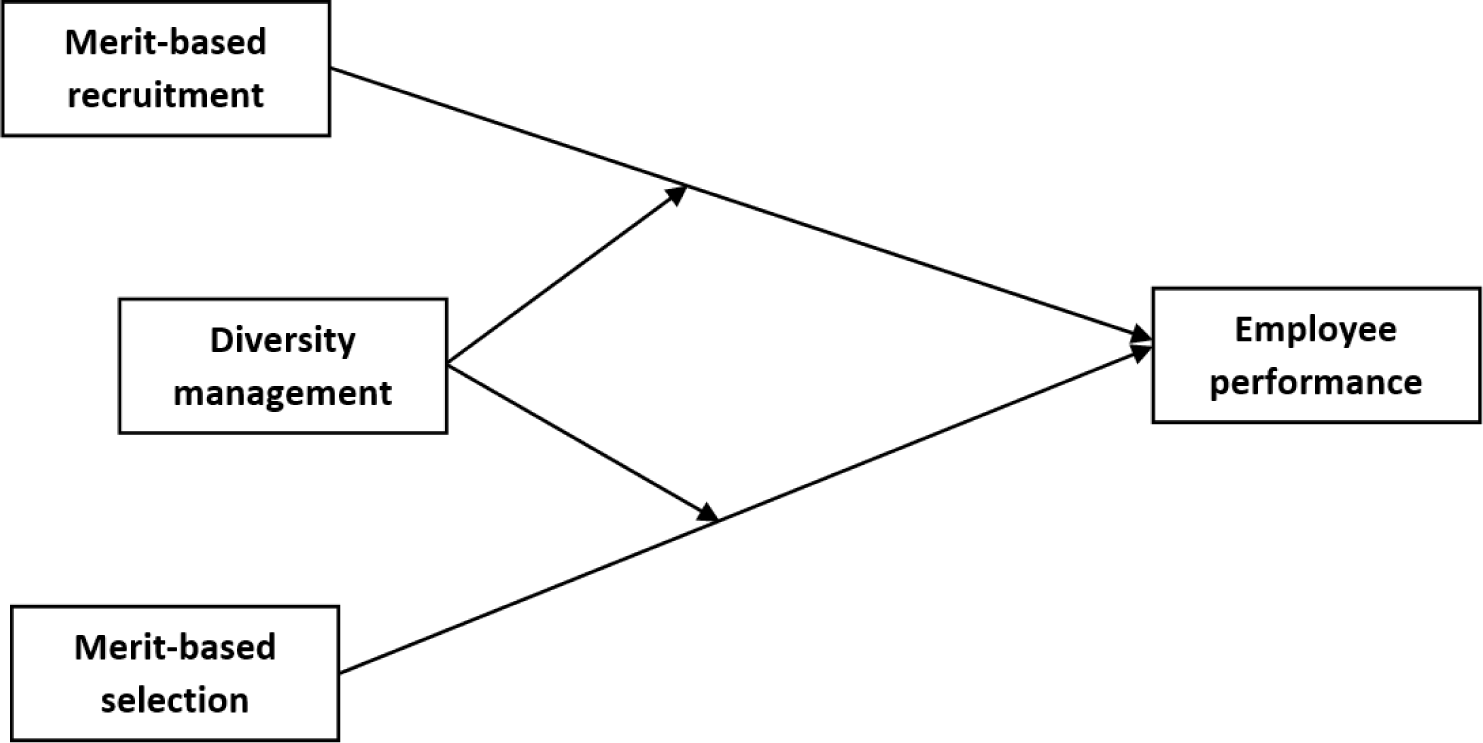
Using convenient sampling is criticized by Topa & Valero (2017) as it may introduce selection bias. However, using this approach has been justified in several ways. First, given that this study utilizes items from previous research, convenient sampling is justified by Highhouse & Gillespie’s (2008) advice on the use of this sampling method when a scale or theoretical examination is being conducted. Second, this sampling approach was chosen given its practicality in terms of time constraints and accessibility, allowing for a quick data-gathering process from a diverse group. Notwithstanding these justifications, efforts were made to mitigate potential biases. First, randomly selecting the ministries and including a regionally diverse sample, the Greater Accra and the Northern regions, were strategies employed to reduce this bias. Second, combining paper and online surveys aided in increasing the response rates, thereby improving the sample’s overall representativeness. Convenience sampling has been utilized by various studies within the social science literature (e.g., Abualrub & Alghamdi, 2012; Fatoki, 2014; Özarallı, 2015; Saleem, 2015), though criticized for its tendency to limit generalizability.
An online, self-administered questionnaire was utilized, supplemented by self-administered pencil and paper questionnaires. The questionnaire structure for both instruments had five sections. Section 1 included questions that solicited the demographics of respondents, which included gender, age, marital status, education qualification, income, and tenure. Section 2 encompassed the questions related to the respondent’s perceived EP, which had seven question items drawn from the literature, as elaborated in the next section of this study. Sections 3 and 4 contained questions about the respondents’ perceptions of the extent to which merit-based R&S are practiced in their organization. Merit recruitment and merit selection comprised four and five items, respectively, which were drawn from the literature. The last section included three items that relate to respondents’ perceptions of managers’ efforts toward diversity management.
To measure perceived EP, seven items were selected from the eleven unvalidated employee question items developed by Manneh & Adesopo (2022). Though responses are subjective, subjective measurements of performance are in line with various other scholarly works (Adam, 2020; Choi & Rainey, 2010; Manneh & Adesopo, 2022; Saleem & Khurshid, 2014; Sarah et al., 2018). Respondents were asked to rate performance items on a 7-point Likert scale, which ranges from 1-strongly agree, to 7-strongly disagree.
Measuring merit recruitment, which advocates for providing equal opportunities for all potential candidates, four question items were drawn from Ali (2022) and modified by the researcher to suit this study’s setup. In measuring merit selection, four question items were drawn from Saleem & Khurshid (2014), with the researcher adding one question item to capture non-merit selection actions, which was “In our organization, nepotism does not affect the employee selection process.” Survey respondents were asked to rate, on a 5-point Likert scale, the extent to which they perceive the R&S practices to be based on merits.
The moderating variable, diversity management, was measured following previous literature (Choi, 2009; Oberfield, 2014; Park & Liang, 2019). The three question items were adopted to gauge employees’ perception of managerial capacity towards managing diversity as well as managers’ commitment to and promotion of diversity policies and practices. Similarly, 5-point Likert scales were utilized to rate these question items.
Demographics of respondents, including age, gender, academic qualification, tenure, marital status, and income, were included in an attempt to control for their impact on the dependent variable. Previous literature has shown that these demographic characteristics impact perception. The descriptive statistics of these variables are shown in Table 2.
Results
As displayed in Table 2, the majority of the study’s respondents were females (56.3%), and more than half (71%) of the total respondents were below the age of 41. Out of every 10 respondents, about 5 and 3 had a bachelor’s and a master’s degree, respectively, with only about 2 possessing a doctoral or Ph.D. degree. A large proportion (78.5%) of employees in this study earn only 4,000 GH₵ and below, and the average tenure of respondents is five years or less.
Adopting unvalidated measurement items, except the diversity management construct items, an exploratory factor analysis (Linos & Riesch, 2019) was first conducted, which included all the measurement items utilized in this study. A factor test produced a Kaiser-Meyer-Olkin of KMO=0.824, suggesting the adequacy of the sample for conducting an EFA, as the KMO of 0.6 is suggested as the cutoff for fitness (Pallant, 2001; Tabachnick & Fidell, 2007). Also, the Bartlett test of sphericity produced a p-value of 0.000, which is less than the threshold of 0.05 significance level (Durmuş, 2013; George & Mallery, 2019), suggesting that a correlation exists between the variables. The principal components test revealed five components with eigenvalues greater than one, suggesting that five underlying latent constructs can be extracted from the observed variables. These five factors explain about 60.64 percent of the total variance, with the first explaining only 26.81 percent of the total variance. This suggests that a greater proportion of total variance is not explained by any single factor, since the variance explained by the first factor is well below 50 percent of the total variance. Conducting an orthogonal rotation using Varimax rotation resulted in only four factors with loadings above a minimum of 0.5. Consequently, all items except two EP items and one merit selection item loaded above 0.5 onto their respective constructs. Accordingly, the nineteen question items, excluding respondents’ demographic questions, were reduced to sixteen, which were then subjected to confirmatory factor analysis (CFA) and the testing of the model. Table 3 presents the standardized factor loadings for these sixteen items under their respective constructs with their Cronbach’s alphas, and all measurement items were statistically significant (p<0.001). The measurement model showed adequate fitness compared to other models (X2/df=158.199/96; p<0.001; RMSEA=.046; CFI=.963; TLI=.954; SRMR=.041).
The seven items adopted to measure perceived EP were reduced to five, which loaded on a unidimensional factor of EP, with factor loadings above 0.5 (ranging from 0.588 to 0.665). Two of the seven items had factor loadings below 0.5, which were consequently deleted from further analysis. These items are “there has been higher-level employees’ responsiveness (e.g., based on some files treated, revenue generated, client and peer feedback),” and “employees engage in a transaction(S) or action(s) that is(are) in conflict with or infringes on the execution of their official duties.” Also, one measurement item for merit selection loaded below 0.5. Accordingly, this item was deleted from further analysis as well, resulting in the four items being used to measure merit selection. These items loaded above 0.5 (0.651 to 0.829) onto the construct. The deleted merit selection item is “In our organization, nepotism does not affect the employee selection process.”
A reliability test was conducted to assess internal consistency, utilizing consistency, Cronbach’s alphas ( ), and composite reliability. A range of Cronbach’s alphas ( ) (from .7160 to .8459) were obtained, as presented in Table 3, which were above the .70 minimum value (Hair et al., 2017; Nunnally, 1978). Similarly, the composite reliability test produced values above the .70 cutoff (Hair et al., 2017). The composite reliability values are presented in Table 5, all of which confirm reliability. Regarding common method bias (CMB), Podsakoff et al. (2003) argue that it becomes a concern when self-reported measures are employed. It is a notable concern, as it can lead to the inflation or attenuation of linear relationships (Conway & Lance, 2010; Siemsen et al., 2009). Thus, given that the same source was used to collect responses for measuring all variables, there is the possibility of response bias, which may significantly impact the study’s findings (Podsakoff et al., 2003). A series of procedural and statistical remedies were undertaken in this study to assess and address the potential of CMB. Procedurally, this study’s survey design featured the use of anonymity and varied response formats in an attempt to minimize response biases. The survey was conducted anonymously, which reduces the likelihood of social desirability bias. Additionally, different response scales were used, with the dependent variable measured on a 7-point Likert scale and the independent variables measured on a 5-point Likert scale. This variation in scale design helps to mitigate the potential for response pattern biases (Podsakoff et al., 2003).
Statistically, the construct validity of the measures was supported through internal consistency checks, with Cronbach’s alpha values for all constructs exceeding 0.7 (Conway & Lance, 2010). Furthermore, two recommended approaches by Podsakoff et al. (2003) were employed to assess the extent of potential bias. First, Harman’s single-factor test was conducted to evaluate the potential impact of CMB, revealing that a single factor accounted for only about 24.82 percent of the total variance, which is well below the 50 percent cutoff (Podsakoff & Organ, 1986), suggesting that CMB is unlikely to significantly influence the findings. Second, the fitness of one-factor, two-factor, three-factor, and four-factor models was compared using CFA. As presented in Table 4, the results demonstrated that the one-factor model had the worst fitness to the data compared to the multi-factor models, supporting the argument that the constructs are distinct and that a single factor does not dominate the data structure. This comparison further mitigates concerns regarding the influence of CMB. While it is acknowledged that CMB cannot be entirely ruled out due to the use of self-reported data, these combined measures provide strong evidence that its impact is minimal in this study.
Following Fornell & Larcker (1981), a discriminant validity test was conducted using the square root of average variance extracted (AVE) for each construct. The results are presented in Table 5 in square brackets, diagonal to the inter-construct correlation. The results show that discriminant validity is established between constructs since the square root of AVE for each construct exceeded its correlation with other constructs. This is an acceptable criterion in literature, which suggests more variance to be shared between measurement items and their latent construct than between latent constructs (Barclay et al., 1995).
Before conducting the structural modeling, the variance inflation factor (VIF) is estimated for all items in an attempt to check if there is a possibility of the study’s findings being adversely influenced by multicollinearity. As presented in Table 3, VIF for all measurement items meets the cutoff of below 3 (Kock & Lynn, 2012), ranging from 1.46 to 2.43 across the measurement items. Utilizing STATA 18.0, structural equation modeling (SEM) was used to test the study’s hypotheses. Across all models, the same sample size is used: 311 responses. Assessing the moderating effect of diversity management on the link between merit R&S and EP (Hypothesis 4 and 5), the study relied on the matched pairs interaction terms between the moderating variable question items and the independent variables’ question items, thus choosing only the interaction terms that load highest onto the interaction construct (Collier, 2020). This approach involves first constructing a full indicator interaction term, then selecting the interaction terms where each of the moderating variable items loads highest onto the latent interaction construct.
Table 5 presents the AVE, the composite reliability, and discriminant validity values for the latent constructs utilized in this study. The table also shows the bivariate correlation matrix between these constructs and the control variable. As seen in the table, all key latent constructs statistically and positively correlate with each other, with their correlation coefficients ranging from .265 to .446. Between the key constructs and the control variables, a statistically significant correlation is observed only between income and merit recruitment (r=–.179, p<0.01), educational qualification and EP (r=–.138, p<0.05), and between marital status and diversity management (r=–.149, p<0.05). Also, the effects of the predictor variables on the dependent variable are presented in Table 6.
Specifically, the effects of only the control variables on perceived EP are examined in Model 1. In Model 2, the effects of merit R&S were added to the estimation. Diversity management variable is subsequently added in Model 3’s estimates. Model 4 includes the two interactive terms to estimate the comprehensive effect of all the variables under consideration.
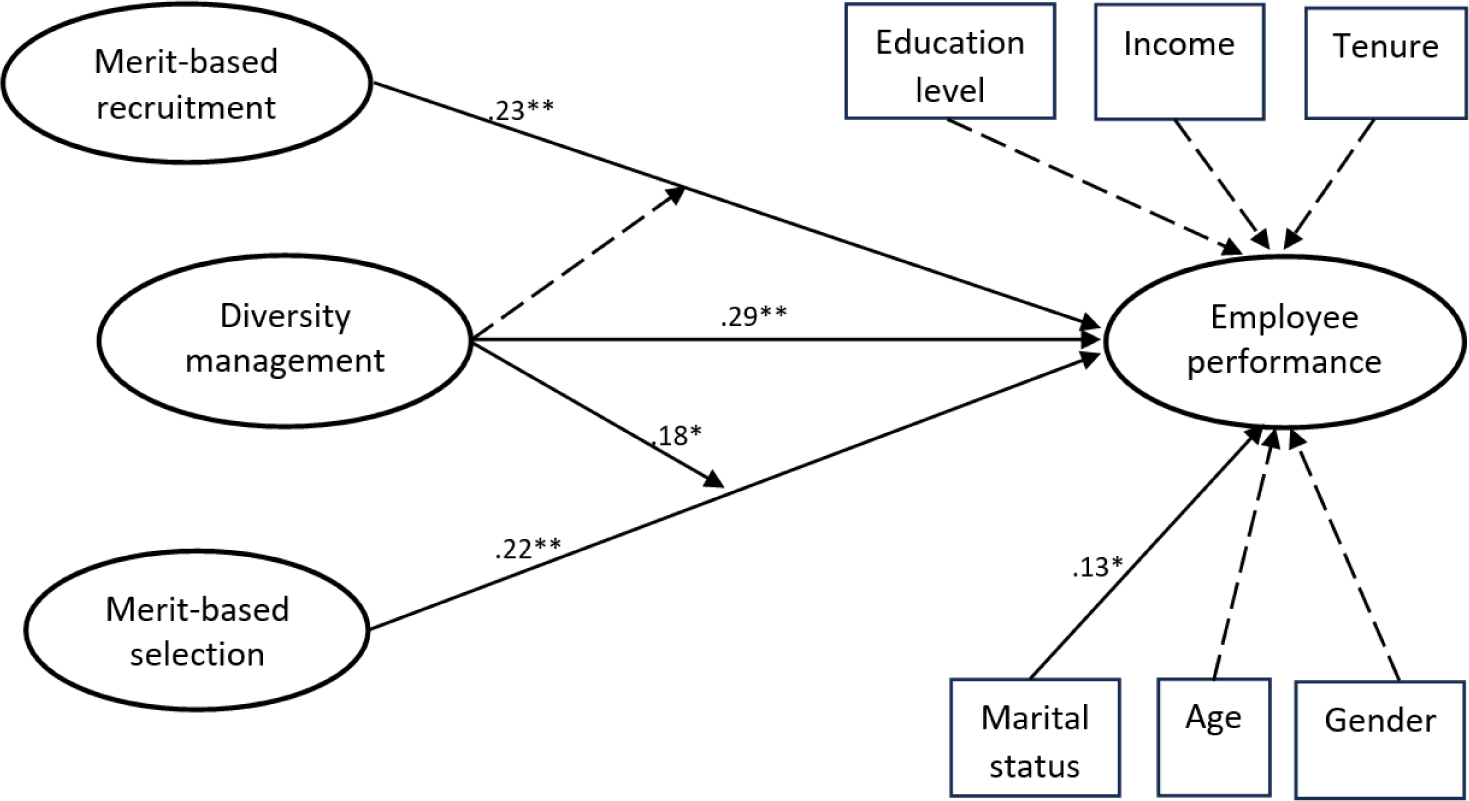
SEM estimates in Table 6, to a large extent, confirmed the first three hypotheses of this study. Thus, a statistically significant and positive association is established between merit recruitment, merit selection, diversity management, and perceived EP across models 2, 3, and 4. Specifically, in Model 1, all public employees’ demographics failed to significantly predict their perceived performance. In Model 2, only merit R&S practices positively associated with perceived EP with statistical significance. In Model 3, all independent variables of interest showed positive and statistically significant associations with perceived EP.
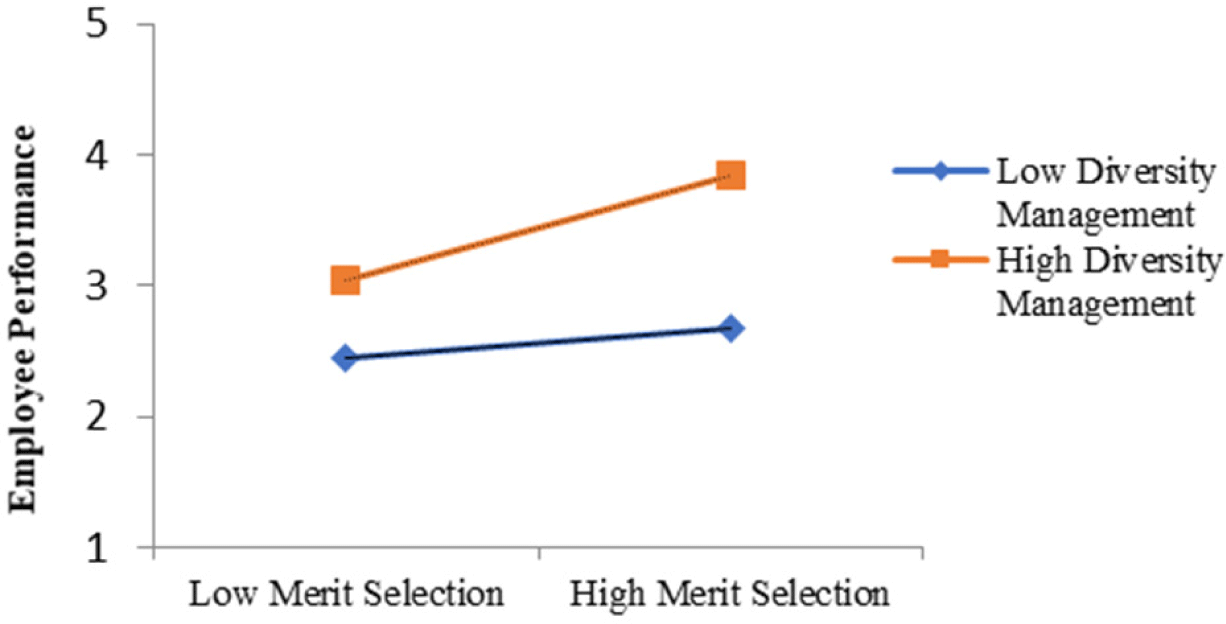
In the last model, it is shown that a positive and statistically significant association still exists between the direct effect of merit recruitment, merit selection, diversity management, and perceived EP. However, the estimates show that only the interaction term between diversity management and merit selection practices was positively associated with perceived EP with statistical significance. The interaction between diversity management and merit recruitment failed to statistically predict perceived EP. This result provided support for hypothesis 5 while failing to statistically support hypothesis 4. Specifically, and regarding the moderating effect as presented in model 4, diversity management only moderates the path between merit selection (β=.18, p<0.05) and perceived EP, as depicted by Fig. 2. Fig. 3 displays standard SEM estimates for all the hypothesized paths. With regards to the model fitness, as displayed in Table 6, the root mean square error of approximation (RMSEA) across all models is well below the threshold of .08, suggesting the close fitness of the study’s sample to the study population, with models 3 and 4 having the least RMSEA.
Discussion and Conclusion
This study seeks to examine how merit recruitment, merit selection, and diversity management are associated with EP. Several important insights into the dynamics of EP within the Ghanaian public service are revealed. Specifically, the intricate relationship between merit principles and diversity management efforts is highlighted as an addition to the reinforcement of the need to continually explore merit principles’ impact on public employees’ performance. This is critical as both merit principle and diversity management are crucial elements of HRM, most especially within the public sector. The study’s findings largely corroborate our expectations and suggest future research areas that are of relevance.
The positive independent impact of merit recruitment and merit selection on EP aligns with previous literature, which underscores the relevance of merit-based practices in enhancing the effectiveness and efficiency of organizations (Kranz, 1974; D. Lewis, 2008; G. Lewis, 2012; Park & Liang, 2019). For instance, Park and Liang’s work demonstrated that organizations that prioritize merit principles are more likely to experience higher levels of performance. This finding is suggestive of the crucial nature of merit-based practices in fostering a high-performing workforce within Ghana’s public sector. With diversity management found to independently and positively impact EP, which corroborates the findings of scholars such as Cox & Blake (1991) and Ely & Thomas (2001), this finding possibly highlights the relevance of managing for diversity in an attempt to enhance creativity, better decision-making, and to promote an inclusive organizational culture. This is particularly significant to the Ghanaian context, given its still-growing workforce diversity level in terms of ethnicity, gender, and cultural background, as varied employee perspectives and experiences can be leveraged to bolster desired outcomes. Nonetheless, Hwang and Han (2020) suggest that gaps between accountability and performance perceptions may challenge such outcomes, which is indicative of the need to align diversity efforts with accountability mechanisms to maximize their effectiveness. Interaction between merit selection and diversity management was also found to positively influence the performance of Ghana’s public employees, indicating that pairing diversity management with merit-based practices amplifies their benefits. Thus, organizations that undertake to select employees based on merit as well as actively manage for diversity stand a higher likelihood of improving their performance. This finding resonates with those of scholars such as Richard (2000) and Park & Liang (2019), as diversity can enhance the benefits of merit practices by pooling in a wider range of skills and perspectives towards better organizational outcomes. However, the same cannot be said for the findings for the interaction between merit recruitment and diversity management. With no significant effect, the result becomes somewhat surprising as it indicates that while both merit recruitment and diversity management are independently relevant, combining them does not yield additional benefits in the recruitment phase of the hiring process. This finding could be interpreted in light of literature that suggests diversity management to be more critical to the selection and integration stages of the hiring process. Also, contextual factors could have accounted for this surprising resolve. For instance, recruitment channels within the public service of Ghana are still relatively homogeneous, consequently leading to no significant change in EP since the pool of candidates might not fully reflect the reaching of a diverse population. Another possible explanation could be the overemphasis on academic qualifications as an objective approach to merit recruitment within the Ghanaian context. In addition, the relatively high unemployment rate of about 14.7 percent as of the first three quarters of 2023 (Oduro-Mensah, 2024) compared to the global average of about 4.9 percent (International Labour Organization, 2024) could have resulted in job vacancies attracting a large number of highly qualified applicants, making it easier for public service organizations to focus solely on merit-based recruitment at the expense of diversity management at this stage.
Theoretically, this study contributes to the literature by advancing our knowledge of how relevant the simultaneous implementation of merit-based practices and diversity management can be to organizational life. Thus reinforcing theories of organizational behavior and HRM that advocate for the integration of meritocracy and diversity towards achieving optimal performance. Building on these findings, subsequent research could explore how accountability systems, as examined by Han et al. (2025), interact with merit-based practices and diversity management to shape not only performance but also the well-being of public employees. Also, how transformational leadership interacts with merit-based practices can be examined, as Han et al. (2023) suggest its critical effect on organizational behavior in Egypt. Beyond internal managerial practices, external factors such as citizen participation can also shape the performance of public institutions, as demonstrated by Suzuki & Han (2019) within Japanese municipalities. Such studies could provide a holistic understanding of performance in public administration.
Establishing a complementing relationship between merit selection and efforts towards managing diversity, the relevance of managerial strategies that attempt to achieve a demographically represented workforce selected through merit principles is highlighted. Accordingly, several practical strategies are suggested from the findings to Ghana’s public service managers and policymakers. First, public organizations are encouraged to promote inclusive management by training managers to lead inclusively. Thus enhancing their ability to recognize how valuable merit practices and diversity can be in decision-making and team building. This is crucial as inclusive leaders are able to create an environment that places value on the contributions of all employees, thereby motivating them. Second, regular employee feedback in the form of surveys is recommended to assess their perceptions of inclusion, organizational fairness, and how effective the practice of merit principles and diversity management has been. This can aid management in improving its practices and policies accordingly. Lastly, cross-functional collaborations among different departments and backgrounds are encouraged to promote understanding and respect across diverse groups and enhance overall organizational performance and innovation.
Though providing valuable insights and contributions, the study is not without limitations. First, using a single survey questionnaire for data collection likely introduced CMB, resulting in inflated relationships among variables. Though the CMB test revealed that it’s not an issue to be concerned about in this study, future studies are recommended to be conducted by adopting different instruments for measuring the variables. Second, relying on a cross-sectional dataset likely limits the study’s argument in regard to achieving causality. Accordingly, future studies can employ other approaches, such as longitudinal analysis or experimental designs. Finally, convenient sampling was employed, which could limit the study’s generalizability. To this end, replication of similar studies studies using more representative sampling techniques or within different contexts and regions is called for in order to enhance the robustness of the results.


