


Introduction
The detrimental effects of disasters accumulate unevenly both across and within communities, with the most vulnerable and least resourced often experiencing the greatest suffering. Tragic examples abound. For example, despite comprising only 15 percent of the population, 75 percent of the deaths that occurred in the US City of New Orleans after Hurricane Katrina were among elderly residents (Wingate et al., 2007). In Maricopa County, Arizona, nearly half of the 645 people who fell victim to heat-related deaths during the summer of 2023 were homeless, and their estimated mortality risk was 200 to 300 times greater than for the population at large (Smith et al., 2024). A major tornado outbreak in December 2021 that spanned the states of Arkansas, Kentucky, Missouri, and Tennessee impacted their relatively small Hispanic immigrant populations particularly hard (Trujillo-Falcón et al., 2024).
While individually anecdotal and context-specific, these examples collectively point to a consistent pattern: of the approximately 160 million people affected by natural disasters globally each year, vulnerable populations—including children, individuals with medical needs, people living in poverty, and those who cannot communicate in the dominant local language—experience disproportionately adverse outcomes (Rubin et al., 2019). These disparities reflect the barriers each of these groups faces that limit their ability to access or effectively utilize standard forms of assistance (Saja et al., 2018; Wingate et al., 2007). Decreasing their heightened risks necessitates targeted public actions intentionally designed to circumvent population-specific barriers.
In the United States, the national, state, and local governments play distinct roles in helping communities mitigate, prepare for, respond to, and recover from disasters. The federal government provides overarching national guidance for emergency planning and response, as well as resources to support response efforts when disasters overwhelm state and local capacities. State governments act as a bridge between local needs and federal support in emergency management. They monitor local compliance with higher-level mandates, provide training, and help coordinate actors and resources as needed during disaster response. However, emergency management in the United States is first and foremost a local government responsibility (FEMA, 2024). Local governments act as the primary planners and implementers of disaster mitigation, preparedness, response, and recovery efforts. As communities’ first line of defense, they are responsible for addressing the immediate impacts of a disaster and continuing to manage its long-term effects long after state and federal agencies have departed (McEntire & Dawson, 2007).
A central advantage of a bottom-up approach to emergency management is that local governments, relative to higher levels of government, possess place-based knowledge that allows them to more precisely identify the specific needs and vulnerabilities within their communities (Gooden & Rissler, 2017). This localized understanding can, in turn, support more effective preparation for and response to disaster-related inequities. At the same time, capacity-constrained local governments may struggle to deliver proactive, tailored assistance across diverse populations. Moreover, a long-standing body of scholarship suggests that local governments are ill-suited to pursue redistributive policies and face structural disincentives to provide extra assistance to higher-need communities (Peterson, 1981, 1995).
Considering this dynamic, this research asks: what conditions lead local governments to take preparatory action to reduce the specific risks faced by vulnerable local populations? We examine this question using Qualitative Comparative Analysis (QCA), a methodological tool increasingly used in policy research to uncover complex causal pathways to desired policy outcomes (Eisenack & Roggero, 2022; Soni & Mistur, 2025; Wang et al., 2024). The analysis primarily uses data from a survey completed by local emergency managers representing 48 counties in the US state of Kansas. Findings indicate that high levels of general preparatory action (i.e., practices aimed at the public at large) can arise through multiple causal pathways that combine vulnerability, capacity, and leadership. However, fewer viable pathways exist for counties to implement emergency preparedness practices that specifically target vulnerable populations. In these cases, supportive local leadership emerges as a critical compensatory factor, enabling action even in jurisdictions with limited capacity.
The paper is arranged as follows: the next three sections establish the problem driving the research by situating it in the relevant literature on understandings of vulnerable populations and on the factors known to limit and facilitate local emergency management efforts. The paper then introduces the State of Kansas as the context for this study, describes the methods and data used in the analysis, and presents the results. The discussion and conclusion that follow highlight the practical relevance that the study’s findings have for emergency management and local government professionals.
Characterizing Vulnerable Populations
The term “vulnerable populations” is often used to describe groups of individuals who face a heightened susceptibility to harm due to a combination of physical, social, economic, and environmental factors (UNDRR, 2017). Vulnerability refers to a group’s structured capacity to respond to external stress, which is distinct from both risk exposure and engagement in adaptive behaviors (Meer, 2026). Demographic characteristics—such as age, income, race, disability status, and primary language—are often used to identify potentially vulnerable individuals and groups (Rivera & Knox, 2023). While they can serve as practical heuristics for identifying members of a community potentially in need of additional or different assistance, demographic categories alone often fail to capture the dynamic, intersectional or contextual features of vulnerability (Brown et al., 2017; Liu et al., 2025) The widespread use of the term ”vulnerability” in social science research and public policies has also been criticized as vague and malleable (Brown, 2011; Brown et al., 2017; Rivera & Knox, 2023).
In an attempt to build conceptual clarity, Brown et al. (2017) articulate three approaches to vulnerability often used in scholarly literature. Normative vulnerability is linked to inherent or ‘natural’ traits like disability or age that may not be accommodated by typical social or economic structures. Situational vulnerability, in comparison, arises from events or situations of difficulty, where experience of past challenges may increase susceptibility to future harms. For example, refugees or homeless people may be considered situationally vulnerable. Finally, universal vulnerability is a shared human condition that highlights people’s interdependence with one another and is intensified by inequality (Brown et al., 2017). In this research, we examine the first two types of vulnerability that affect individuals’ ability to benefit from local governments’ emergency preparedness efforts. The inability to access or effectively use essential resources, information, or assistance directly increases the risk of harm and contributes to negative outcomes during hazard events (Saja et al., 2018; Wingate et al., 2007).
A significant body of research considers how vulnerability is produced, shaped, and reproduced in societies through institutional design, public policy, and administrative practices (Brown et al., 2017; Schneider & Ingram, 1993; Soss et al., 2011). Common among these perspectives is an emphasis on how public systems, through burdensome procedures, symbolic labeling, or selective inclusion, can exacerbate exposure to harm or further marginalize already disadvantaged groups (Amann & Sleigh, 2021; Gaynor & Wilson, 2020; Vogel et al., 2025). This literature also highlights how administrative decisions shape service delivery as well as the perceived deservingness of vulnerable populations. For example, Schneider and Ingram’s (1993) influential framework, for example, suggests that groups viewed as “dependent”, symbolically deserving but politically weak, often receive superficial support. Studies of frontline discretion show that public officials’ willingness to reduce burdens or adapt processes for vulnerable clients depends not only on institutional mandates, but also on how vulnerability is framed and understood within the organization (Johnson & Neshkova, 2024).
Although it has been criticized for remaining disconnected from broader discussions of social equity (Rivera & Knox, 2023), the field of emergency management does engage issues of social vulnerability. The US Federal Emergency Management Agency (FEMA) has established a “whole community” approach to emergency management, calling on all segments of society to share responsibility for hazard preparedness and response (FEMA, 2011). Part of this approach involves recognizing and meeting the needs of underserved communities. For example, FEMA’s 2011 National Preparedness Doctrine identifies specific populations for additional consideration, including “people speaking diverse languages or from diverse cultures or economic backgrounds, all ages from children and youth to seniors, people with disabilities, others with access and functional needs, and populations traditionally underrepresented in civic governance” (FEMA, 2011, p. 9). Although it does not address the intersecting and compounding nature of these conditions, subsequent that FEMA policies call for ensuring “equal access to disaster services and to meet the functional needs of all individuals without discrimination” (FEMA, 2014, p. 8). Legal scholars describe this language as “unequivocal in its intent and expectation” for local governments (Flowers, 2016, p. 564).
Although guidelines specifying a whole community approach and meeting needs without discrimination are to be applauded, by definition, vulnerable populations have limited ability to access and/or benefit from standard assistance, information, or resources. Within any community, reaching all residents effectively may require multiple solutions tailored to meet specific needs. In practice, this is far from universally or consistently accomplished, reinforcing systematic differential outcomes between groups in disaster contexts (Xiang et al., 2021).
Barriers to Comprehensive Local Efforts
In an ideal world, no people or property would be harmed by disasters. A more realistic goal is to minimize the extent to which populations that are known to be vulnerable suffer disproportionately from disasters. Given the previously discussed complexities of vulnerability, low-cost, mass-produced solutions may miss segments of society whose needs, constraints, or patterns of risk differ from those assumed in generalized preparedness and recovery systems. Research demonstrates that racial and ethnic minority communities, particularly those facing language barriers or distrust of government institutions, often experience lower levels of disaster preparedness and reduced access to critical resources under standardized emergency planning approaches (Bethel et al., 2013). Similarly, broader reviews of disaster recovery systems show that historically marginalized populations frequently encounter procedural barriers, exclusion from decision-making processes, and inequitable access to recovery assistance due to the design and implementation of generalized recovery programs (Ferreira et al., 2024). While local plans often acknowledge vulnerable populations, actual policy actions often remain superficial or symbolic, lacking meaningful integration into operational plans or accountability structures (Gooden et al., 2009; Krigel et al., 2023).
One reason is that the needs of vulnerable populations are not always fully known or understood by local government officials. Members of vulnerable populations often face layers of social marginalization-many face language barriers, cultural disconnects, or stigma, and a lack of trust in authorities as a result of historical neglect or discriminatory experiences (Shi & Stevens, 2021; Teo et al., 2018). As a result, they may be less likely to proactively seek preventative assistance from local officials and view governmental outreach with skepticism (Rosete et al., 2021). These dynamics can make marginalized vulnerable populations particularly difficult to engage effectively, requiring emergency managers to demonstrate the commitment and interpersonal skills to build relationships that facilitate meaningful communication to support effective preparedness efforts.
Even when local governments are fully cognizant of community needs, chronic resource constraints can limit their ability to plan for and serve at-risk populations. Many local governments, especially those with higher poverty rates or in rural areas, operate with insufficient budgets, an inadequate workforce, and aging or underdeveloped physical infrastructure (Bevc et al., 2014; Krigel et al., 2023; Lewis et al., 2012). Especially in less populous jurisdictions, emergency management is often handled by a single individual who is simultaneously responsible for multiple other government functions (Wang et al., 2026). This forces city and county officials to make difficult decisions about what to prioritize and to confront trade-offs, both real and perceived, between adequately protecting the majority and accommodating the specific needs of vulnerable subpopulations.
Considerable public investment is needed to meaningfully mitigate the amplified risks that vulnerable community members face during and after disasters, and local governments may lack incentive to make such commitments. Public choice theorists suggest that because their residents are relatively mobile, local officials are disincentivized from pursuing redistributive policies that impose costs on local taxpayers while delivering benefits to groups that provide little economic return (Gooden et al., 2009; Krigel et al., 2023; Peterson, 1995; Tiebout, 1956) This dynamic is reinforced by short electoral cycles, competing development priorities, and pressure to attract private investment or maintain balanced budgets.
Finally, rigid rules, regulatory frameworks, and incentive structures can also inadvertently obstruct local efforts to address the needs of vulnerable communities. Performance-based contracting, categorical eligibility requirements, and narrow definitions of service eligibility can deter local agencies from prioritizing high-need, high-cost populations (Lewis et al., 2012; Osgood et al., 2010). Similarly, local governments often operate within broader state and federal mandates that can constrain flexibility and innovation (Bevc et al., 2014). For instance, ambiguous guidelines or unfunded mandates from higher levels of government can place additional burdens on local actors without providing the necessary resources or discretion to adapt policies to local contexts (Gooden et al., 2009). These institutional misalignments shape incentives that favor maintaining the status quo over investing in complex, equity-focused interventions.
Paths to Robust Emergency Preparation
In the face of information challenges, resource constraints, and institutional and political-economic disincentives, what leads some local governments to make targeted efforts to safeguard their vulnerable communities from the effects of disasters? While US state governments typically require their local governments to adhere to basic emergency management practices, we hypothesize that several distinct combinations of local factors can lead county governments to engage in more robust preparedness efforts. Given the layered nature of the barriers to proactively accommodating vulnerable populations, achieving this policy output likely requires configurations of supportive conditions more complex than those leading to the enactment of parallel practices aimed at the general population.
The literature on local policy implementation frequently highlights the importance of governmental capacity, which Deslatte & Stokan (2020) describe as “the aggregate level of resources committed to a specific competency” (Deslatte & Stokan, 2020, p. 1025). Higher levels of local government capacity are generally associated with the adoption of more proactive policies (Fatemi et al., 2026; Hawkins & Krause, 2021; Yeganeh, 2020). However, preparedness decisions also reflect political priorities and trade-offs rather than capacity alone. High-capacity counties may opt to allocate resources to competing objectives, while lower-capacity counties with strong need or motivation may sacrifice elsewhere to pursue robust emergency preparedness practices. In this context, local leadership—especially elected officials—can play a critical role in mobilizing political will and fostering emergency management practices that engage vulnerable populations and incorporate their perspectives into policy and decision-making (Bera, 2023).
In particular, whereas supportive leadership or capacity alone may be sufficient to predict the presence of general emergency preparedness practices, we anticipate that a combination of capacity and motivation—in the form of leadership and/or heightened local needs—is required for counties to take robust actions specifically aimed at protecting vulnerable populations. In other words, a significant number of conditions need to be “right” simultaneously. Given the potential that layered interactions among key conditions may be necessary to yield viable pathways to the outcome, the analysis should be undertaken with an analytical approach capable of capturing this complexity. Reflecting this, we employ QCA to explore the potentially circuitous pathways by which county governments act to protect their most vulnerable.
This research is situated in the US State of Kansas, which lies at the geographic center of the country and is regularly affected by extreme weather events. Kansas ranks ninth among the 50 US states in the number of Federal Disaster Declarations issued per capita (FEMA, 2026). Historically, its primary hazards have been tornadoes, ice storms, and damaging high winds. Similar to many other places, the nature of its environmental threats is evolving, with wildfires emerging as a new major concern for state and local leaders (Wang et al., 2026).
The state’s population distribution reflects much of the urban-rural spectrum of the United States. Like much of the country, a substantial portion of Kansas is sparsely populated or dotted with small towns, whereas the City of Wichita and counties in the Kansas City metropolitan area are highly urbanized. The “face of vulnerability” differs across these settings and, as the context for this research, Kansas offers insight into the range of communities typical of much of the midwestern United States.
Kansas is comprised of 105 counties, which, as political and administrative subdivisions of the state, help deliver key local services, including emergency management. Many US states, including Kansas, statutorily require each county to adopt and regularly update a Local Emergency Operations Plan (LEOP) as part of their efforts to assess, prepare, and plan responses to local risks across all hazards (Kansas Adjutant General’s Department, 2023). The State also requires every county to maintain an emergency manager position. Although many of the state’s larger cities provide complementary emergency services, the overarching responsibility for coordinating across all actors and phases of emergency management is situated within county governments, making them the appropriate unit of analysis for this study.
Local governments and the communities they serve are marked by substantial variation and, often, considerable complexity. Policy decisions rarely stem from a single factor; instead, they are shaped by numerous interacting influences. For example, political pressure can shape institutional capacity, which in turn can shape community need, further reinforcing or redirecting political pressure. Building from the premise that policy outputs are often enabled by combinations of conditions rather than individual drivers, we employ fuzzy-set Qualitative Comparative Analysis (fsQCA) to examine these dynamics in the context of emergency management. QCA applies the logic of Boolean algebra to identify configurations of conditions that consistently produce a given outcome (Longest & Vaisey, 2008). Unlike linear regression, which estimates the net effect of individual variables, QCA is designed to capture causal complexity by allowing for “multiple pathways” to the same end. In other words, the explicit purpose of QCA is to allow for conjunctional causality and equifinality (Ragin, 2006; Schneider & Wagemann, 2012). Each pathway may consist of a distinct combination of one or more causal conditions. A consistency score assesses the proportion of cases (here, counties) that conform to each identified pathway.
QCA refers to both outcome and condition variables as “sets” because they indicate the extent of a case’s membership in any given condition. For example, our model includes a variable representing membership in the set of “urban counties.” In crisp-set QCA, fully urban counties would receive a value of 1, and those that are not fully urban would receive a value of 0. By comparison, fuzzy-set QCA allows for partial membership measures, with values ranging from 0 to 1. For example, a county with a set value of 0.80 would be considered “mostly” urban, whereas one with a value of 0.6 would be “more urban than rural,” but considerably less so than the one valued at 0.8. Substantive, qualitative knowledge of the observations and phenomena under consideration is essential to determining appropriate thresholds for set membership. Variables in fuzzy sets must be carefully calibrated to conform with known standards or contextual dynamics; a process which arguably makes them superior to uncalibrated measures (Ragin, 2008).
The degree of inclusion in a fuzzy set is established based on meaningful knowledge of context and external criteria for what constitutes membership, be it full or partial, in a set. It is up to the researcher “to distinguish between relevant and irrelevant variation” when calibrating thresholds for set membership (Ragin, 2008, p. 10). In this analysis, we use the “direct method” of calibration proposed by Ragin (2008), in which we qualitatively determine appropriate thresholds for full membership, full non-membership, and the crossover point (i.e., the value of maximum uncertainty) between them.
Data for the analysis were collected from several sources. The primary data for the outcome variables, which indicate the extent of emergency preparedness actions undertaken in each county, come from the “Kansas ARISE” survey. This survey was administered by members of the research team and was sent via email to the Emergency Manager in each of the 105 counties in the State. To the extent possible, we sent survey invitations to the recipients’ direct work addresses rather than a general organizational email. Following Dillman’s best practices, a pre-notification email was sent, along with an initial survey invitation and up to 3 reminders (Dillman, 2011). A hard-copy invitation containing a QR code and a URL to the online survey was sent by first-class mail to anyone who did not respond to the emailed invitation. This resulted in 42 responses. Data for an additional six Kansas counties were obtained from a related 2025 survey that included the same relevant questions. In total, 48 counties, or 45.7% of Kansas counties, are represented in the analysis, ranging in population from 1,528 to 610,742. Additional data were obtained from the US Census American Community Survey.
Table 1 compares the 48 counties in our analysis to the rest of the counties in Kansas on several relevant demographic characteristics. Although we do not claim that the results of this study are generalizable to the entire country, we include corresponding data for counties in the Midwest region and the entire United States to facilitate comparison and contextualization.
This study employs two outcome measures. The first captures the extent to which each county has implemented emergency preparedness actions targeting the general population. The second assesses whether counties have also implemented parallel actions tailored to vulnerable populations who may not be adequately served by those broader efforts. Specifically, county emergency managers were presented with a list of three preparedness practices for each outcome measure and asked to indicate which were currently in place in their jurisdictions (see Table 2 for the survey question and the list of actions). To adhere to the 0–1 range required by QCA, the outcome value is calculated as the proportion of the listed practices that were active at the time of survey completion. Counties with none of the practices in place receive a score of 0; those with one of the possible three receive 0.333; those with two receive 0.666; and those with all three actions receive a score of 1, indicating full membership in the set.
1) LT stands for “low threshold” and HT for “high threshold,” both of which must be established along with a crossover value for the to transform variables for use in fuzzy-set Qualitative Comparative Analysis (fsQCA).
2) The threshold and crossover values for vulnerable populations were determined by natural breaks in the data. Notably, vulnerabilities are calculated cumulatively. Thus, an elderly low-income person who speaks limited English embodies all three vulnerabilities and is “counted” 3 times in the construction of this condition.
The explanatory conditions include population density/urbanism, financial health, workforce sufficiency, population vulnerability, and support from local leadership. Mathematically, only a limited number of conditions can be included in a QCA model. Moreover, rather than trying to control for all relevant factors, as in regression, the logic of QCA aims to identify a set of theoretically bound and causally meaningful conditions that may jointly explain the outcome (Schneider & Wagemann, 2012). In this analysis, we focus primarily on conditions that can be linked, even indirectly, to policy or administrative decisions. Table 2 describes the operationalization of the condition sets used in the models.
Results
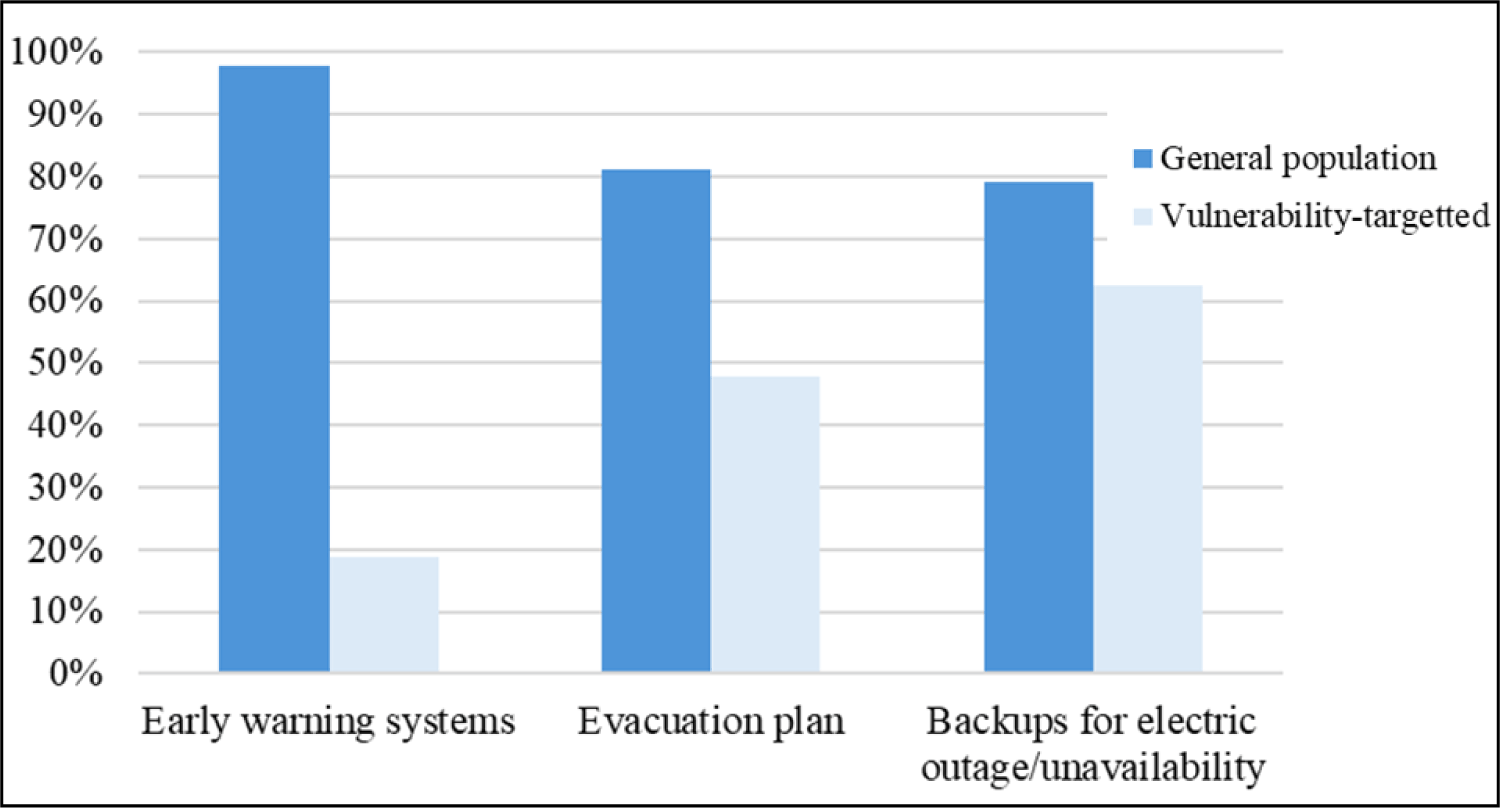
Descriptive results reveal a simple yet clear pattern: preventive emergency management actions targeting the public at large are enacted far more frequently than those tailored to specific vulnerable populations. This is to be expected. In fact, what may be more notable is the high rates at which these preventative efforts are in place across even very rural counties—some of which are classified as “frontier” due to their extremely low population densities. All but one of the responding Emergency Managers reported an active early warning system in their counties.1 An evacuation plan and a backup electricity supply for critical infrastructure were each identified as being present in approximately 80% of counties.
In comparison, parallel actions customized to meet the needs of populations unable to benefit from standard preventative measures are far less common. Most notably, fewer than 20% of responding Kansas counties provide emergency warnings—which may come in the form of texts, social media posts, and radio or TV announcements—in languages other than English, potentially placing individuals with limited English proficiency at increased risk.2 Similarly, although slightly over 80% of responding Kansas counties have an evacuation plan, 41% of those plans do not account for individuals with mobility impairments or those without a personal automobile.
The final vulnerability-targeted practice asked about the availability of heating and cooling alternatives during extreme temperature events for individuals who may not otherwise be able to access or afford to maintain a safe, climate-controlled environment. This is operationalized as the number of counties in which financial assistance is available to low-income households to avoid utility shut-offs, and/or in which warming and cooling stations are opened during extreme temperatures. Emergency manager respondents indicate that one or both of these safety nets are present in 63% of Kansas counties (Fig. 1).
Results from the fsQCA identify which combinations of the five county-level characteristics (conditions) described in Table 2 offer pathways to the adoption of robust emergency preparedness practices. Table 3 shows the results associated with high levels of preparatory actions aimed at the general public. Overall, the model fits reasonably well. Its coverage of 0.595 means that the model explains nearly 60% of the membership in the outcome, and its consistency score indicates that 89% of cases in the dataset exhibit the conditions specified in its pathways.
No single condition is consistently present across all cases exhibiting the outcome, indicating that none meets the threshold for necessity for this outcome. Instead, consistent with equifinality, the results indicate that multiple sufficient configurations lead to counties having a high level of preparatory practices in place. Because the model includes five conditions, 32 pathway configurations to this outcome are technically possible (2^5). After logical minimization, four sufficient paths each explain over 5% of cases—and thus are likely to be empirically meaningful—remain and are presented in Table 3.
The first two paths are based on the presence of a large vulnerable population AND on a county having high capacity. Importantly, capacity can take the form of either a reliable workforce (as in path 1) OR the county having good financial health. These two channels of capacity are substitutable for each other. Importantly, having sufficient capacity, in one form or another, is needed to enable counties to respond to high need. Having higher levels of need alone is not enough to result in action.
Paths 3 and 4 together point to the importance of supportive leadership. Path 3 reveals that leadership can play a compensatory function. In counties where emergency management operations receive strong support from county leaders, high levels of general preparatory actions are regularly in place even when there are capacity (i.e., workforce) challenges and in the absence of population vulnerability. Although it is slightly less consistent than the others, Path 4 has the most extensive coverage, explaining 38.6% of observed cases. Here, the presence of supportive leadership and good financial health combine to enable high levels of action. Notably, Paths 3 and 4 show that general preparation is not purely reactionary or driven by the presence of vulnerable populations. Instead, leadership and capacity are key.
Table 4 shows the fsQCA-derived paths that enable counties to enact robust preparatory actions tailored to accommodate the needs of vulnerable populations, i.e., those that general practices may not serve. This model has a notably poorer fit than the previous one. Its total coverage explains 35.6% of the variation in the outcome. At 0.814, its overall consistency is borderline acceptable. Together, this suggests that the dynamic that leads to the presence of vulnerability-targeted practices is more idiosyncratic than that which leads to those focused on the larger population.
Three pathways have raw coverage over 5%, though their consistency is lower than is often desirable.3 Based on its coverage, Path 1 is the primary path to implementing robust, vulnerability-targeted emergency management practices. It suggests that conditions must be broadly favorable (High vulnerability + good financial health + supportive leadership), but even under these ideal conditions, the outcomes are not always evident. Indeed, the consistency score of 0.767 indicates that approximately 23% of the counties characterized by these conditions do not implement robust vulnerability-targeted practices. Path 2 is similarly facilitative but emphasizes the role of capacity rather than leadership. The consistency scores associated with these two pathways indicate a significant number of non-conforming cases and represent a structural limitation of modeling highly idiosyncratic equity-focused policies. The third and final path has somewhat less coverage but more consistency than the other two and shows supportive leadership in a compensatory light. Importantly, for the vulnerability-targeted outcomes, strong leadership can compensate for a lack of both fiscal and human capacity.
Discussion
This research seeks to understand the conditions under which local governments invest in preparedness actions to reduce the disproportionate risks faced by vulnerable populations, despite the political, administrative, and logistical barriers to doing so. To explore this question, we combined descriptive analysis with QCA to compare the conditions associated with two forms of emergency management activity: broadly targeted preparedness practices intended to protect the general public and parallel actions specifically tailored to vulnerable populations. This comparison provides insight into the distinction between factors that facilitate robust emergency management generally and the additional efforts required to ensure that protective measures are accessible and effective for populations such as older adults, low-income residents, and individuals with limited English proficiency.
The findings reveal a substantial disparity between the prevalence of general preparedness practices and those specifically designed to address the needs of vulnerable groups. Across Kansas counties, broad preparedness measures—e.g., emergency warning systems, backup electrical supply for critical infrastructure, and evacuation planning—were widely implemented. Between 78 and 97 percent of the counties in our sample reported having each of these practices in place, while two-thirds had implemented all three. Given the small populations, limited administrative resources, and “frontier-level” population densities characterizing many Kansas counties, this level of preparedness is notable. The consistency of these practices likely reflects institutionalization of emergency management responsibilities through state and federal policy frameworks, including the state requirement that every Kansas county maintains an emergency manager position. Even where emergency managers occupy multiple roles within small local governments, the existence of dedicated personnel appears to help sustain core preparedness functions.
These findings suggest that baseline emergency management capacity has become relatively normalized across Kansas local governments. In many respects, counties appear capable of implementing broadly applicable preparedness measures that are in line with professional emergency management norms. Results also showed that, for preparedness measures aimed at the public broadly, counties typically required some combination of organizational capacity and motivating conditions. Specifically, pathways frequently included either financial or workforce capacity combined with either leadership support or demonstrated need. This suggests that generalized preparedness can emerge through multiple alternative configurations, reflecting the principle of equifinality emphasized within QCA research.
At the same time, the results demonstrate that preparedness measures designed to accommodate the specific needs of vulnerable populations remain far less common. Only two counties in the sample reported implementing all three of the vulnerability-targeted practices examined, while half reported implementing only one or none. Notably, these deficiencies were not confined to the smallest counties but appeared across counties of varying population sizes and capacities. Individuals unable to access or benefit from emergency management practices aimed at the public as a whole are typically not further accommodated. This aligns with the utilitarian logic that underlies many emergency management strategies, which focus on achieving the “greatest good for the greatest number” (Etkin & Timmerman, 2013).
The comparatively weak adoption of vulnerability-targeted preparedness also reflects the additional administrative, political, and organizational challenges involved in tailoring emergency management practices to diverse populations. Customized outreach, multilingual communication, transportation assistance, registry systems for medically vulnerable residents, and similar efforts often require greater coordination, specialized knowledge, and sustained engagement (Rosete et al., 2021; Teo et al., 2018). These actions may also involve redistributive dimensions that frequently encounter institutional disincentives at the local level (Peterson, 1981, 1995).
Our review of the literature led us to propose that multiple supportive conditions would need to be present within counties to achieve robust preparedness targeted toward vulnerable populations. This expectation was largely supported by the QCA results, which indicated that this outcome has a relatively demanding and unstable causal structure. The largest pathways involved the joint presence of (1) financial capacity, (2) workforce capacity, (3) strong leadership support, and (4) elevated need. However, even these pathways showed multiple nonconforming cases, indicating that the dynamics underlying inclusive preparedness may be shaped by context-specific or idiosyncratic factors not fully captured by the model.
Despite the complexity of these pathways, the importance of supportive leadership emerged across both outcomes. Leadership support appeared capable of opening pathways toward robust preparedness even in counties lacking otherwise favorable structural conditions. In some cases, leadership served as a compensatory factor, partially offsetting limited resources or workforce constraints. In others, leadership operated as an enabling condition that helped translate existing capacities into concrete preparedness action.
Consistent with prior research emphasizing the central role of leadership in effective emergency management (Bera, 2023), we find evidence that supportive leadership can outweigh the influence of resource availability. While local fiscal and administrative capacity remains important, resource expansion alone may be insufficient to improve preparedness for vulnerable populations in the absence of committed leadership. By contrast, when county leaders prioritize comprehensive efforts, pathways for implementing robust preparedness practices can emerge even under conditions of significant resource constraint. State agencies, professional associations, and federal preparedness programs may therefore benefit from focusing not only on technical capacity building but also on developing strategies to build local elected and administrative leaders’ support for emergency management and develop accountability structures that emphasize equitable preparedness outcomes (Ripberger, et al., 2026).
Conclusion
The detrimental impacts of disasters are not distributed evenly but instead concentrate among populations that face structural barriers to protection and recovery. This pattern underscores that standard emergency management approaches—while often broadly protective—do not fully account for differences in populations’ ability to access and benefit from assistance.
Within the United States’ federated emergency management system, responsibility primarily rests with local governments, which serve as the front line of disaster planning and response. While federal and state governments provide essential coordination and resources, local jurisdictions possess the place-based knowledge necessary to identify community-specific vulnerabilities. Yet this localized advantage exists alongside well-documented capacity constraints and structural disincentives to engage in redistributive policymaking.
This research examines the conditions under which counties adopt vulnerability-targeted preparedness measures alongside more general emergency management practices. Focusing on the State of Kansas, the findings demonstrate a clear gap between the widespread implementation of general preparedness actions and the far more limited adoption of measures specifically designed to serve vulnerable groups. Pathways to the local enactment of robust practices towards either end require combinations of supportive conditions—namely, capacity, vulnerability, and leadership- but vulnerability-targeted preparedness appears far more restricted and contingent. Nonetheless, when supported by strong leadership, pathways to comprehensive emergency preparedness appear to be available, even in extremely rural and low-capacity counties. This is an important finding.
At the same time, several limitations temper the strength and generalizability of our conclusions. First, the analysis is based on a single-state case study. While Kansas counties share demographic similarities with much of the U.S. Midwest, they are not as representative of the country as a whole. In particular, Kansas has a comparatively small non-English-speaking population. Second, the coverage and consistency of the QCA model for vulnerability-targeted preparedness were less than ideal. While it may reflect the inherently uneven and context-specific nature of these policy adoptions, it also points to methodological constraints. Because QCA requires model parsimony to manage the exponential growth of configurational pathways, it necessarily excludes potentially relevant conditions that may shape outcomes. As a result, additional important influences may not be captured in the analysis.
Despite these limitations, the study advances understanding of how and when local governments move beyond generalized emergency management toward more equitable preparedness strategies. It also supports recent literature suggesting that the rural–urban divide in emergency management capacity and practice may be less pronounced than is sometimes assumed (Wang et al., 2026). The findings reinforce that while baseline preparedness is relatively widespread, its targeted extension to protect vulnerable populations is far less consistent and more dependent on enabling leadership. As disaster risks continue to increase, improving outcomes will require not only maintaining general preparedness systems but also strengthening the institutional and political conditions that support inclusive, equity-oriented emergency management at the local level.


