


Introduction
Ethnic and religious policies play a crucial role in ensuring socio-political stability, strengthening national unity, and promoting sustainable development in multi-ethnic and multi-religious countries. In Vietnam, the implementation of ethnic and religious policies has contributed to improving the material and spiritual lives of ethnic minorities, preserving traditional cultural values, and strengthening the connection between the state and the community (Van Tuan et al., 2024). However, the effectiveness of these policies is uneven across regions and is increasingly being impacted by profound changes in the socio-economic and environmental context.
The Mekong Delta region is a typical example of these challenges. This area boasts a high level of ethnic and religious diversity, characterized by the intermingling presence of Kinh, Khmer, Hoa, and Cham communities, alongside diverse religions and beliefs. The Mekong Delta is also one of the regions most severely affected by climate change, saltwater intrusion, land subsidence, and changes in traditional livelihoods. Economic restructuring, rapid urbanization, labor migration, and digital transformation are profoundly altering the social structure, governance methods, and the relationship between the state and local ethnic and religious communities (Pham, 2023).
Many studies indicate that the capacity of state management at the grassroots level is limited, intersectoral coordination is ineffective, and community consultation mechanisms are largely superficial, resulting in a gap between policy objectives and the practical needs of the people (Asibey et al., 2021). In particular, in areas with a large number of ethnic minorities practicing religion, cultural factors, language, community institutions, and the role of religious leaders strongly influence the level of policy acceptance and compliance, but these factors have not been fully integrated into the policy design and implementation process (Agbato et al., 2025).
Domestic and international studies have approached the relationship between ethnicity, religion, and sustainable development from various perspectives, such as social inequality, cultural rights, livelihoods, education, health, and local governance (Hoang & Van, 2025). However, three main research gaps can be identified. Firstly, most studies focus on individual dimensions (economic, social, cultural, or environmental), lacking integrated analytical models to explain the multidimensional and interdisciplinary nature of ethnic-religious policies. Secondly, factors related to community actors, especially the level of genuine participation of people and the roles of religious and community institutions (RACI), have not been systematically quantified in policy studies. Thirdly, there is a lack of empirical evidence based on representative survey data in the Mekong Delta region—a region where ethnic and religious diversity converges, along with the challenges of sustainable development.
This study approaches ethnic and religious policy as a multi-stakeholder public governance process, where policy effectiveness is determined by the interaction between the natural-economic context, social structure, institutional capacity of local governments, and the proactive role of the community (Wang et al., 2018). Based on a combination of public policy analysis theory, sustainable development theory, and a structure-agency approach, the paper constructs an analytical model comprising six groups of factors: (i) natural-economic conditions (NAEC); (ii) human and social (HUAS) (iii) religious institutions and communities; (iv) local policy institutions (LOPI); (v) level of community participation (LOCP); and (vi) religious and community institutions (RACI); application of technology-digital transformation (TADT).
The objective of this study is to analyze the extent and mechanisms of impact of factors on the effectiveness of ethnic and religious policy implementation (ERPO) in the Mekong Delta, using survey data from 420 households in three representative provinces: An Giang, Can Tho, and Vinh Long. The study utilizes structural equation modeling (SEM) to test relationships between latent variables within the framework of multidimensional policy analysis.
This study has three main contributions. Firstly, it develops an integrated analytical framework, connecting public policy analysis with a structural-agent approach in ethnic and religious policy research, contributing to clarifying the central role of communities in sustainable development governance. Secondly, it provides empirical evidence by applying SEM to quantify the factors influencing policy effectiveness in the context of multi-ethnic and multi-religious Vietnam. The research findings offer key policy implications for strengthening community participation, enhancing grassroots-level institutional capacity, and promoting flexible, inclusive and adaptable ethnic and religious policies that address sustainable development challenges in the Mekong Delta.
Literature Review
In implementing the sustainable development goals (SDGs), ethnic and religious diversity is seen as a dual factor impacting development. On the one hand, diversity can create important social resources through social capital, community networks, and cultural and religious norms that support cooperation and mutual assistance. On the other hand, if not effectively managed, ethnic and religious diversity can also increase social fragmentation, inequality, and conflicts of interest.
Many international studies show a link between religious and ethnic diversity and the level of social cohesion and cooperative community behavior. Andreoni et al. (2016) indicated that the level of religious and ethnic diversity significantly affects philanthropic behavior and social trust (Andreoni et al., 2016). Bruehwiler et al. (2025) show that religious differences can slow the spread of sustainable development initiatives in ecological communities if appropriate coordination mechanisms are lacking (Bruehwiler et al., 2025).
These studies mainly approach diversity as a sociological characteristic, rarely placing it within a specific public policy framework. The relationship between ethnic-religious diversity and the effectiveness of sustainable development policies, especially in the context of local governance, has not yet been systematically analyzed. This is a significant gap, especially for developing regions where state policy plays a central role in regulating social relations.
A major research direction focuses on horizontal inequality among ethnic and religious groups, viewing it as a barrier to sustainable development and social equity. Draper & Selway (2019) developed a dataset on structural inequality among ethnic groups in Thailand, showing disparities in access to education, healthcare, and economic opportunities (Draper & Selway, 2019). Subsequent studies emphasize that social exclusion is not only economic but also linked to institutional and cultural factors (Draper et al., 2022).
In many developing countries, ethnic and religious minority groups often face disadvantages in accessing public services, leading to delays in achieving SDG 10 (reducing inequality) (Mulindwa, 2019; Uzochukwu et al., 2021). These studies indicate that inequality is not simply a consequence of poverty but also stems from governance capacity, policy design, and the LOCP in decision-making process.
Most recent studies only describe the state of inequality or evaluate policy outcomes, without delving into the specific mechanisms underlying the interactions between institutional capacity, community participation, and policy effectiveness (Rasoolimanesh et al., 2017). In particular, religious and community institutions (RACI)? are often viewed as exogenous variables, rather than as integral components of the governance process.
Several studies emphasize the role of cultural rights and RACI in promoting sustainable development. Portolés & Šešić (2019) argue that recognizing and empowering cultural rights helps minority communities enhance social participation and a sense of representation in policy (Portolés & Šešić, 2019). Galvão et al. (2025) also emphasize that the SDGs need to be approached from an ethnic-racial perspective, especially in countries where cultural rights are often overlooked (Galvão et al., 2025).
Religious institutions such as temples, churches, cathedrals, or community organizations play a crucial intermediary role between the state and the people. These institutions not only convey policy information but also shape the attitudes, levels of trust, and compliance behavior of the community. Several studies have shown that when policies are implemented through religious-community channels, acceptance and implementation effectiveness are often higher (Sabates-Wheeler & Barker, 2024; Studzieniecki & Meyer, 2022). In public policy research, the role of RACI is often not fully quantified or integrated into analytical models. This leads to an underestimation of the impact of cultural-religious factors on policy effectiveness, especially in multi-ethnic regions.
The relationship between ethnicity, religion, and development has been addressed in various fields such as education, health, livelihoods, and culture. Several studies emphasize the need to integrate cultural and religious factors into policy design for Khmer, Cham, Hmong, and other minority communities (Do et al., 2020; Nguyen, 2020). In the field of education, studies point out language barriers, religious space, and cultural biases for ethnic minority students (Ngoc & Kim Khanh, 2025).
Many studies focus on livelihoods, adaptation to climate change, and cultural ecosystem services (Tran et al., 2024). Some works initially address the roles of religion and social capital in adapting to environmental change in coastal and rural communities. However, these studies often approach each area separately, lacking an integrated policy analysis framework to explain why the same ethnic-religious policy has different implementation effectiveness among localities in the Mekong Delta.
Vietnamese studies still lack multivariate quantitative models to simultaneously test the role of NAEC, social characteristics, RACI, local institutional capacity, and the level of people’s participation in policy effectiveness. This gap is particularly evident in the Mekong Delta, a region both ethnically and religiously diverse and heavily impacted by sustainable development challenges.
From the literature review, three research gaps can be summarized: A lack of studies approaching ethnic and religious policy as a multi-dimensional governance process, simultaneously connecting institutional, community, cultural, and sustainable development context factors; a lack of adequate quantification of the role of community participation and RACI in policy analysis models; and a lack of empirical evidence based on representative survey data in the Mekong Delta (Vaz et al., 2024). Based on this, this study develops an integrated analytical framework and SEM to examine the impact of six groups of factors on the ERPO in the context of sustainable development in the Mekong Delta. This literature review serves as the direct foundation for the theoretical framework and research model presented in the following section.
Theoretical Framework and Research Model
Research on ethnic and religious policies in the context of sustainable development requires an interdisciplinary and multi-dimensional approach. It must move beyond linear analytical frameworks. This study, based on a literature review, constructs an integrated theoretical framework. It draws on three main theoretical foundations: (i) public policy analysis theory, (ii) sustainable development theory, and (iii) the structure-agency approach. These three approaches do not exist in isolation. Instead, they complement and interact with each other to explain the ERPO in the Mekong Delta region.
Public policy analysis theory emphasizes that policy effectiveness depends not only on the policy content at the central level but is also strongly influenced by the institutional context, the capacity of implementing actors, and the policy environment at the local level (Dye, 2012). For ethnic and religious policies, this is particularly important because implementation takes place primarily at the grassroots level, where cultural, religious, and community relations factors directly influence policy outcomes (Ikram et al., 2016). Therefore, local institutional capacity and the level of inter-sectoral coordination are considered key determinants of policy effectiveness.
Sustainable development theory provides a framework for evaluating policies not only based on short-term results, but also on their ability to ensure harmony among the three pillars: economic, social, and environmental (Tomislav, 2018). In the context of the Mekong Delta, ethnic and religious policies cannot be separated from the challenges of livelihoods, climate change, social inequality, and access to public services. A sustainable development approach allows for the consideration of natural-economic and socio-demographic factors as fundamental conditions governing policy effectiveness (Le et al., 2023).
The structural-agent approach clarifies the two-way relationship between institutional structures (laws, policies, administrative apparatus) and the proactive role of social actors, especially ethnic minority communities and RACI. According to this approach, policy is determined through the LOCP, negotiation, and adaptation (Kipo, 2014). This is suitable for analyzing ethnic-religious policies, where beliefs, cultural norms, and the prestige of religious leaders can either enhance or diminish policy effectiveness.
The integration of these three theoretical foundations allows for the study of ethnic and religious policies as a multi-agent public governance process, where policy effectiveness results from the interaction between the sustainable development context, institutional capacity, and the level of substantive community participation (Hussain & Findlay, 2025). Based on the integrated theoretical framework and research gaps identified in the literature review, this study selected six groups of factors influencing the ERPO in the Mekong Delta. The selection of these factors was not arbitrary, but clearly justified both theoretically and practically.
NAEC are considered fundamental factors in the sustainable development approach. In the Mekong Delta, the impacts of climate change, saltwater intrusion, resource depletion, and livelihood changes directly affect the lives of ethnic and religious communities, thereby influencing the level of policy acceptance and effectiveness.
Human and social (HUAS) reflect diversity in ethnicity, education level, language, and living space. Previous studies have shown that these differences can create barriers to accessing policy information and public services and increase the risk of inequality if policies are not designed appropriately.
Religious and community institutions (RACI) are included in the model as an independent group of factors to overcome a common limitation in previous policy studies, which often viewed religion only as a cultural context. In practice, these institutions play a crucial intermediary role, influencing social trust, the level of community mobilization, and the ability to deliver policies.
LOPI reflect the implementation capacity of the grassroots state management apparatus, including the capacity of officials, the level of inter-sectoral coordination, and the flexibility in policy implementation. According to public policy analysis theory, this is a decisive factor in transforming policy objectives into practical results.
Community participation is a central element in the structural-agent approach. Participation is not limited to receiving policies, but includes consultation, dialogue, feedback, and monitoring. Many studies show that policies only achieve sustainable effectiveness when the community participates genuinely.
The TADT is considered an emerging element in modern public governance. Although the current impact may not be fully apparent in rural areas and ethnic minority communities, digital transformation has the potential to improve transparency, access to information, and policy management effectiveness in the long term (Shamoa-Nir & Milford, 2025). The six groups of factors above fully reflect the institutional, community, and context dimensions of sustainable development, and allow for the construction of an integrated analytical model, avoiding a one-sided or single-sector approach.
The study proposes a research model in which the ERPO is the dependent variable. Policy effectiveness is conceptualized through indicators such as people’s satisfaction levels, equitable access, coverage, and the sustainability of policy outcomes. Six independent factors include (i) NAEC; (ii) human and social (HUAS); (iii) religious and community institutions (RACI); (iv) LOPI; (v) LOCP; and (vi) TADT. The model assumes that each group of factors has a direct impact on policy effectiveness, with different levels and mechanisms of impact as shown in Fig. 1.
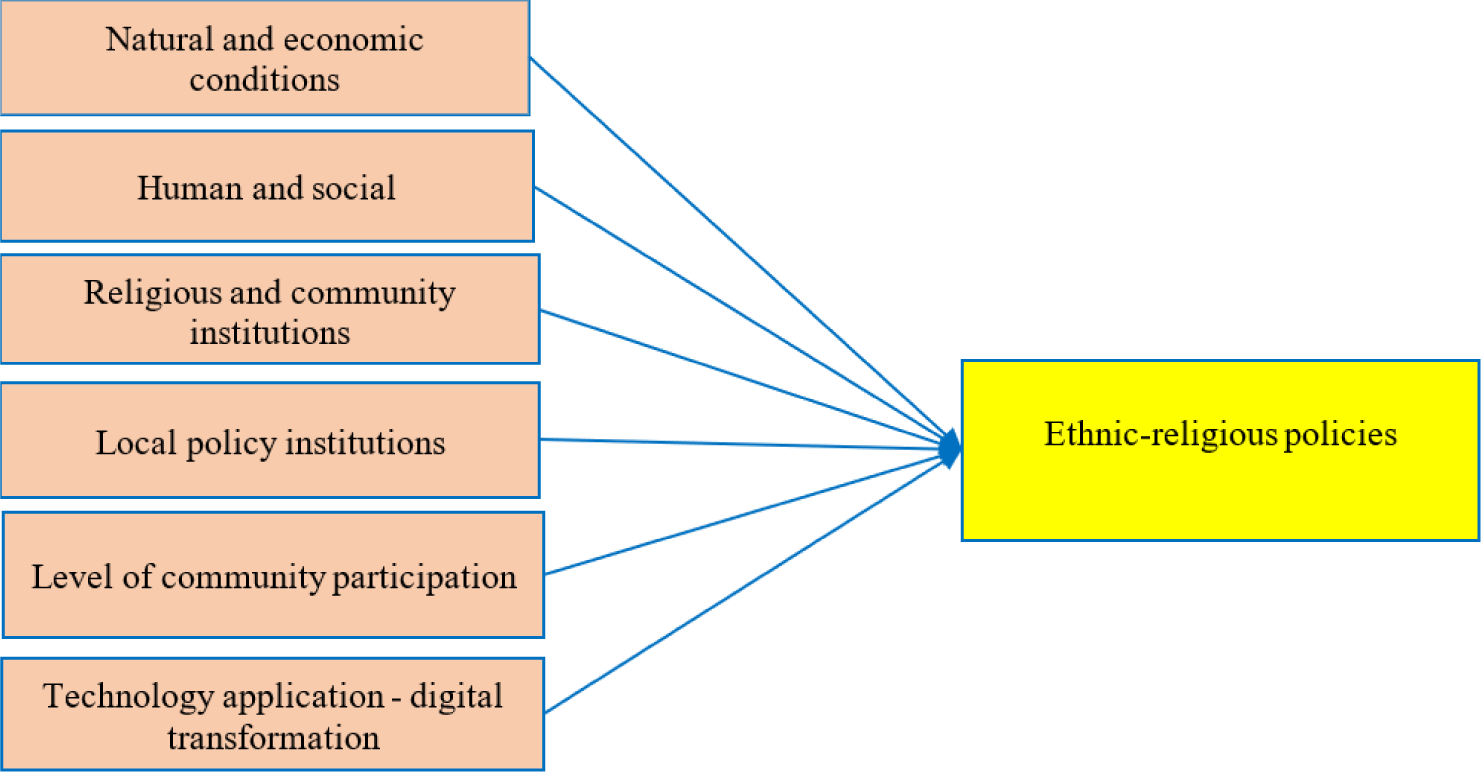
The research model considers the effectiveness of ethnic and religious policies as the dependent variable, measured through indicators including people’s satisfaction level, policy coverage, fairness in access, and sustainability of policy outcomes. The observed variables of the factors are shown in Table 1.
The selection of a SEM model allows for the simultaneous testing of relationships between latent variables and the assessment of the relative strength of each group of factors within a unified analytical framework. This theoretical framework and research model directly serve as the basis for designing the survey tools, constructing the scales, and selecting the analytical methods presented in the following section on research methods.
Methods
This study is designed as a quantitative analysis, using SEM to simultaneously examine the relationships between factors influencing the effectiveness of ethnic and religious policies in the Mekong Delta region. In-depth interviews are used as a supplementary data source to provide context and illustrate the quantitative results. Qualitative data is not analyzed as a separate, independent component, but rather serves to support the interpretation and clarification of the SEM findings. Clearly defining the study as primarily quantitative ensures consistency between the research design and analytical methods, while addressing inconsistencies pointed out by reviewers.
The study was conducted in three localities representative of the Mekong Delta region: An Giang, Cần Thơ, and Vĩnh Long. The selection of these three localities was based on three main criteria: (i) clear levels of ethnic and religious diversity; (ii) different impacts of climate change and livelihood transformation; and (iii) reflection of diversity in socio-economic development conditions and local governance capacity in the region. Data was collected through a survey of 420 households using stratified sampling. Stratification criteria included residential area, ethnicity, religion, and age group, to ensure diversity and relative representativeness of the research sample.
The questionnaire was structured to collect socio-demographic information from respondents. Six groups of influencing factors were measured, including (i) NAEC; (ii) human and social (HUAS); (iii) RACI; (iv) LOPI; (v) LOCP; and (vi) TADT. Policy implementation effectiveness is measured through indicators of satisfaction, accessibility, fairness, and sustainability of policy outcomes.
Observed variables are measured using a 5-point Likert scale, from “strongly disagree” to “strongly agree”. The content of the scales is adjusted to suit the local context, with consultation from experts and managers in the field of ethnicity and religion. Survey data were collected between March and May 2025 through direct interviews at households. The collected data were coded and entered using SPSS software, then transferred to analysis of moment structures (AMOS) for SEM analysis. The data processing procedure followed standard steps in SEM research, including checking for missing data, descriptive analysis, reliability assessment, and scale validity evaluation, before proceeding with structural model analysis.
Results
The study used survey data from 420 people across three representative localities in the Mekong Delta, Vietnam, including An Giang (35.7%), Can Tho (33.3%), and Vinh Long (31.0%), ensuring a reasonable geographical distribution. The survey sample was selected using a stratified sampling method to ensure diversity in gender, age, ethnicity, religion, and education level.
Regarding gender, the proportion of women was 52.4%, while that of men was 47.6%. In terms of age, the group aged 31 to 50 accounted for 58.3%, reflecting the main labor force with extensive social and policy experience. In terms of ethnicity, the Kinh people accounted for 71.4%, the Khmer people 21.4%, and other ethnic groups, such as the Cham and Chinese, accounted for 7.2%.
Regarding religion, 83.6% of people have faith or follow a religion, mainly Southern Buddhism, Hoa Hao, Catholicism, and Protestantism. Education level shows that 42.4% have college or university degrees or higher, 42.4% have graduated from high school, and the remaining 15.2% have junior high school degrees or lower. Shown in Table 2.
The survey sample structure reflects the characteristics of a multi-ethnic, multi-religious, and diverse educational population, which is an important foundation for appropriate policy analysis in the context of regional sustainable development.
The study tested the reliability of the scales using Cronbach’s alpha coefficient to assess the internal consistency of the observed variables. The results showed that all scales met the reliability requirements. The Cronbach’s alpha coefficient ranged from (0.788) to (0.939), exceeding the acceptable threshold of (0.70) (Cronbach, 1951). The corrected item-total correlation were all greater than 0.50, indicating that the observed variables made a good contribution to the implicit concept, and no variables were excluded. This is shown in Table 3.
NAEC scale achieved a Cronbach’s alpha of 0.886; HUAS 0.803; RACI 0.788; LOPI 0.931; LOCP 0.865; and TADT 0.914. The ERPO scale had the highest Cronbach’s alpha coefficient, at 0.939.
The average values of the scales ranged from 3.021 to 3.982, with community participation having the highest average value, reflecting the positive assessment of the people regarding the role of the community in the policy implementation process. The Cronbach’s alpha test results confirm that the scales in the study have good reliability and are suitable for further confirmatory factor analysis (CFA) analysis to assess the convergent and discriminant validity of the measurement model.
The scales met the reliability requirements, and the study proceeded with exploratory factor analysis (EFA) to assess the factor structure of the dataset. The Kaiser-Meyer-Olkin (KMO) and Bartlett tests showed that the data were entirely suitable for factor analysis, with a KMO index of 0.865 (>0.6) and statistically significant Bartlett test results (χ²=8410.530; df=406; p<0.001).
The EFA analysis using principal component analysis and varimax rotation revealed that 7 factors were extracted with Eigenvalues >1, explaining 73.946% of the total variance of the data. All factor loading coefficients were greater than (0.70), exceeding the acceptable threshold recommended by Baumgartner & Homburg (1996). This result confirms that the scale structure is clear, there is no significant cross-loading, and all 29 observed variables are retained in the research model. Shown in Table 4.
CFA was performed to assess the composite reliability and convergent/discriminant validity of the scales. The CFA results show that the composite reliability (CR) of the latent variables is all greater than (0.80), while the average variance extracted (AVE) exceeds (0.50), confirming the reliability and convergent validity of the scales (Hair et al., 2010).
In addition, the maximum shared variance (MSV) value of each variable is smaller than the AVE, and the square root of the AVE is greater than the correlation coefficients between the latent variables, indicating that the model has discriminant validity. The correlation coefficients between the structures are statistically significant and consistent with theoretical expectations, reflecting a reasonable relationship between the factors in the ethnic-religious policy analysis framework. The EFA and CFA results confirm that the measurement model in the study meets the requirements for reliability, convergent validity, and discriminant validity, providing a solid foundation for further SEM analysis to test the causal relationships between factors affecting the ERPO in the Mekong Delta region.
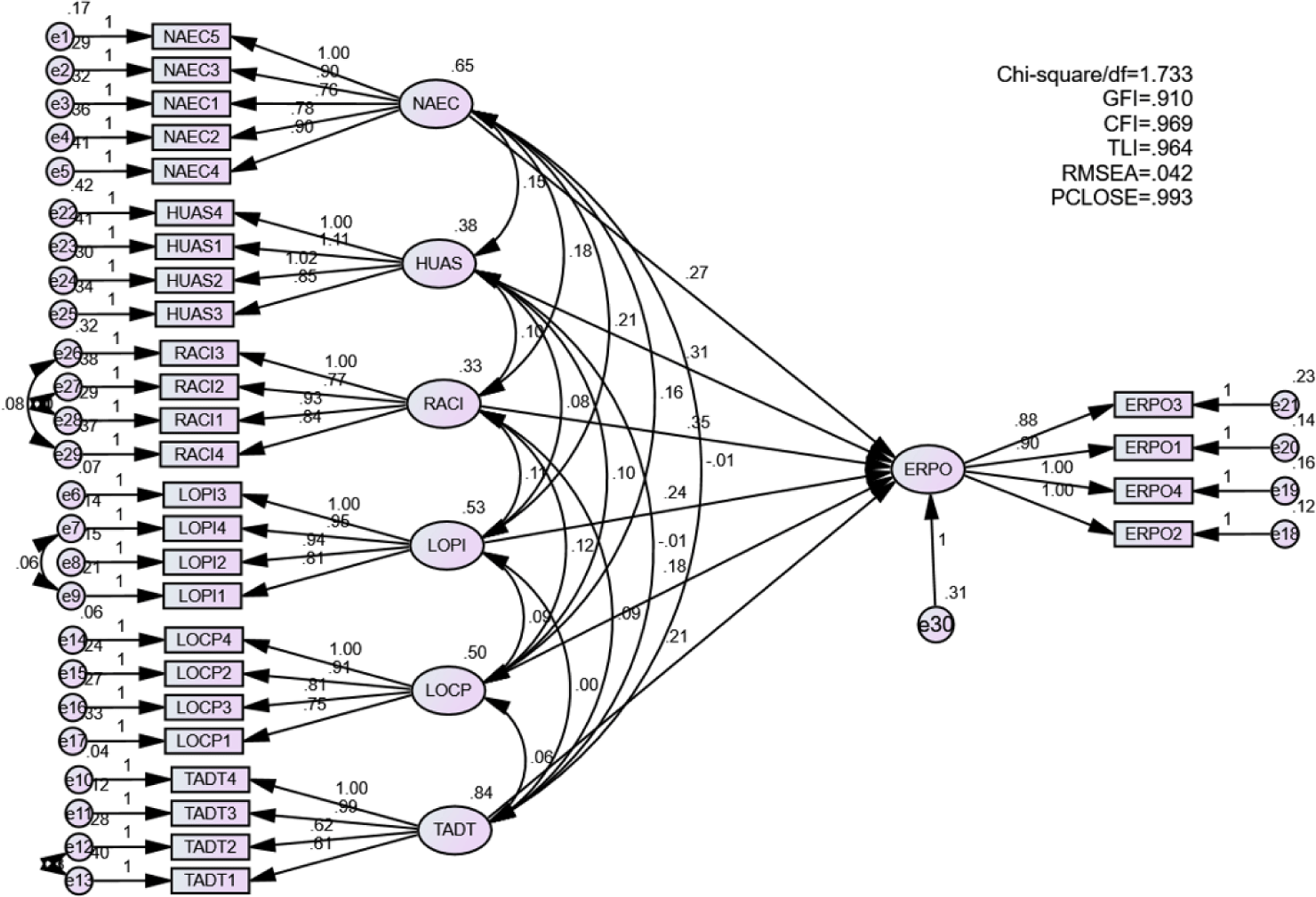
SEM was used to assess the direct impact of six groups of factors on the ERPO. The SEM results showed that the model had a good fit with the survey data. Specifically, all evaluation indicators met or exceeded the recommended thresholds in the SEM study: Chi-square/df=1.733 (<3); goodness of fit index (GFI)=0.910; comparative fit index (CFI)=0.969; Tucker-Lewis index (TLI)=0.964; root mean square error of approximation (RMSEA)=0.042 (<0.05); and p-value of close fit (PCLOSE)=0.993. These results confirm that the proposed structural model is suitable for the empirical data and can be used to interpret causal relationships between the research variables (Hu & Bentler, 1999).
The results of the SEM model analysis show that all six factors have a direct, positive, and statistically significant impact on the ERPO (p<0.001). This is shown in Table 6.
C.R., composite reliability; MSV, maximum shared variance; MaxR (H), maximum reliability (Hancock); NAEC, natural economic conditions; LOPI, local policy institutions; TADT, technology application-digital transformation; LOCP, level of community participation; ERPO, ethnic and religious policy implementation effectiveness; HUAS, human and social; RACI, religious and community institutions.
ERPO, ethnic and religious policy implementation effectiveness; NAEC, natural economic conditions; HUAS, human and social; RACI, religious and community institutions; LOPI, local policy institutions; LOCP, level of community participation; TADT, technology application-digital transformation; C.R., composite reliability.
RACI have the strongest impact on ERPO with a normalized coefficient β=0.237, indicating the important mediating and social mobilization roles of these institutions in policy implementation. TADT (β=0.233) and HUAS (β=0.230) also have significant impacts, reflecting the increasing role of social and technological capacity in policy governance.
LOPI have a positive and statistically significant impact with a coefficient β=0.204, confirming that the implementation and coordination capacity of local governments is a crucial condition for transforming policy objectives into practical results. NAEC also showed a significant influence (β=0.255), reflecting livelihood and environmental context as fundamental factors influencing policy effectiveness in the Mekong Delta region.
LOCP had a standardized coefficient β=0.151, which, although lower than some other factors, was still statistically significant (p<0.001). This result shows that community participation plays an indispensable role in improving policy effectiveness and suggests that expanding community consultation, dialogue, and monitoring mechanisms will contribute to improving the sustainability of ethnic and religious policies.
The structural model shows that the independent factors explain 57% of the variance of the dependent variable ERPO (R²=0.572). This level of explanation is appropriate for policy and social science studies, where policy effectiveness is simultaneously influenced by multiple institutional, social, and contextual factors. The SEM results confirm that the ERPO in the Mekong Delta is the result of a multidimensional interaction between religious institutions and communities, local institutional capacity, and community participation levels, all within the context of strong impacts from NAEC.
Discussion
The results of the SEM show that the ERPO in the Mekong Delta is the result of a multidimensional interaction between institutional factors, communities, and the sustainable development context. These findings not only have practical significance but also contribute to clarifying theoretical arguments in public policy analysis, the structural-agency approach, and sustainable development theory.
From the perspective of structure-agency theory, the research confirms that policies are co-created through the actions and participation of social actors. LOCP has a positive, statistically significant impact on policy effectiveness, demonstrating the proactive role of citizens, community groups, and social actors in receiving, adapting to, and implementing policies. Although the LOCP impact coefficient is not the highest, the theoretical significance of this result is crucial: policies only achieve sustainable effectiveness when the community is not only a beneficiary but also an active participant in the entire policy cycle, from consultation and feedback to monitoring implementation (Esses et al., 2017).
The research results emphasize the central role of LOPIs in determining implementation effectiveness. The significant impact coefficient of LOPIs shows that the capacity of local governments, inter-sectoral coordination, and flexibility in policy implementation are key factors in transforming policy objectives into concrete results. This reinforces the argument in policy analysis theory that the gap between policy design and practice mainly appears in the implementation phase, especially in multi-ethnic and multi-religious areas (Rumsby & Gorman, 2023). In the context of the Mekong Delta, where natural and social conditions are rapidly changing, local authorities not only play the role of implementing administrative orders but also must act as coordinators, adaptors, and adjusters of policies according to local specificities (Di Stasio et al., 2021).
Another notable finding of the study is the strong role of RACI in policy effectiveness. With the highest impact coefficient in the SEM model, RACI shows that these institutions are not only socio-cultural factors but also an important part of the informal governance structure. Religious institutions act as a bridge between the formal policy structure and community action, contributing to building social trust, enhancing compliance, and creating consensus in policy implementation (Gao et al., 2024). This finding also expands the approach in public policy analysis, suggesting that RACI should be viewed as “policy partners” rather than simply as objects of management.
Within the framework of sustainable development theory, research results show that NAEC and HUAS have a significant impact on policy effectiveness. This reflects the reality that ethnic and religious policies cannot be separated from the livelihood, environmental, and social structure context of communities. In the Mekong Delta, which is heavily impacted by climate change, saltwater intrusion, and livelihood transformation, policies that focus only on socio-cultural aspects while neglecting economic and environmental factors will struggle to achieve long-term sustainability. This finding reinforces the view that ethnic and religious policies need to be integrated into the overall sustainable development strategy, linked to the goal of reducing inequality and building inclusive institutions (Agyeman, 2001).
The TADT shows a positive and statistically significant impact on policy effectiveness, reflecting the inevitable trend of modern public governance (Yen, 2023). However, the impact has not been as significant as that of traditional social and institutional factors, indicating that digital transformation is only effective when built on a solid institutional foundation and with genuine community participation. This implies that technology cannot replace the roles of humans and social institutions, but needs to be integrated appropriately into the socio-cultural context of ethnic and religious communities (Bloom et al., 2015).
The above results show that the effectiveness of ethnic and religious policies in the Mekong Delta is a product of the interaction between institutional structures (policy institutions), social actors (community participation, religious institutions), and the sustainable development context (NAEC). This integrated approach not only contributes to clarifying the mechanisms of impact of factors in the SEM model, but also expands the theoretical framework for analyzing ethnic and religious policies in a multi-dimensional, flexible, and community-centered direction (Fig. 2).
Conclusion
This study systematically analyzed the factors influencing the effectiveness of ethnic and religious policies in the context of sustainable development in the Mekong Delta region. Based on survey data andSEM, the research results show that policy effectiveness depends not only on policy content or purely administrative capacity, but also on the multidimensional interaction between NAEC, social characteristics, RACI, local institutional capacity, community participation levels, and the application of technology in public administration.
The study contributes an integrated analytical framework connecting public policy analysis theory, the structural-agent approach, and sustainable development theory in the study of ethnic and religious policies. The study applies the SEM model to simultaneously test relationships between multiple factors within a unified analytical framework, providing empirical evidence for policy research in the multi-ethnic and multi-religious context of Vietnam. The research findings offer important implications for improving ethnic and religious policies towards inclusiveness, adaptability, and community-centered approaches. Specifically, the study emphasizes the crucial role of RACI, local institutional capacity, and genuine citizen participation in enhancing the effectiveness and sustainability of policies in the Mekong Delta region.
The study has some limitations due to the cross-sectional data collection method, thus failing to reflect the dynamic changes in policy effectiveness over time. The scope of the study focuses on three representative localities, so generalizing the results to the entire region or other contexts needs careful consideration. The study does not include moderating or mediating variables in the model, such as social trust or community leadership capacity, which could further deepen the explanation of policy impact mechanisms. Future research could expand in several directions, conducting time-series or longitudinal studies to analyze the long-term impacts of ethnic and religious policies in the context of climate change and digital transformation. Comparisons between multi-ethnic regions within and outside Vietnam will help validate the universality of the proposed analytical framework.
The study affirms that for ethnic and religious policies to be truly effective in the context of sustainable development, a flexible, multi-dimensional, and community-centered approach is necessary. This is a crucial foundation for building inclusive, adaptive, and sustainable policies for the Mekong Delta region amid current deep integration and transformation.


