


Introduction
Collaboration is a multilateral interaction (Ansell & Gash, 2008; Emerson et al., 2011), and its success often depends on the nature of the relationship participants form during the process. When participants have mutual understanding and trust, reaching a consensus that would benefit all parties is easier. For this reason, collaboration is referred to as a trust-building process among interdependent actors (Bryson et al., 2006; Leach & Sabatier, 2005).
However, stakeholders are not always accurate in perceiving the overall context of collaboration. In other words, one stakeholder’s participation efforts might not be interpreted as intended by other collaboration partners, resulting in a perceptual incongruence. According to Benlian (2014), perceptual congruence refers to “the extent to which two or more people or groups of people share their perceptions of an object or an idea”. Reversely, perceptual incongruence would indicate a situation where individuals have differing perceptions. For instance, power, resource, and knowledge imbalances that are prevalent among stakeholders (Ansell & Gash, 2008; Bryson et al., 2006; Emerson et al., 2011) could lead to disparate views of the current levels of participation. Although repeated interaction and trust-building have been recognized as prerequisites to a successful collaboration (Emerson et al., 2011; Vangen & Huxham, 2003), literature on collaborative governance assumes that the intentions of each member will be interpreted by others without flaws. This indicates that there is a need for a deeper understanding of situations where perceptual gaps or incongruence happen during a collaborative process.
The understanding of this process is crucial as perceptual incongruence in the level of participation could send a wrong signal to collaboration partners regarding their intention to collaborate. This could result in a weaker commitment to the process, difficulties in trust-building, and ultimately hinder performance (Carter & Mossholder, 2015; Moshavi et al., 2003). While there are various research on the perceptual distance between leaders and team members (Favero et al., 2018; Song & Meier, 2022), not a lot of focus has been placed in the relationship between collaborating stakeholders. Therefore, this research attempts to address possible limitations stakeholders have in interpreting the collaboration intention of other members by adapting theories on perceptual (in)congruence (Bashshur et al., 2011; Benlian, 2014; Coo et al., 2021; Hatfield & Huseman, 1982; Malmrud et al., 2020; Ozkul et al., 2019; Song & Meier, 2022) and self-other agreement (Yammarino & Atwater, 1993).
The major focus of this research is to explore the concept of perceptual incongruence in a collaborative context and observe its relationship with organizational performance with the school survey data from the state of Georgia. A parallel survey on perceived parental involvement administered to parents and school personnel identifies a possibility of perceptual incongruence in parental involvement. Though this measure does not portray the actual level of collaboration or participation, it provides valuable insight into differences in the perception of stakeholders’ collaboration efforts. As the scope of the research is centered on educational bureaucracies, stakeholder participation would become parental involvement. Similarly, organizational performance will be measured through the academic performance of students in standardized tests (Figlio & Loeb, 2011; Hanushek & Raymond, 2005).
Parent-school collaboration provides a suitable and simplified context to explore the perceptual incongruence between stakeholders and its effect on performance. Parents are one of the major stakeholders (Bauch & Goldring, 1998; Farrell & Jones, 2000; Hooge et al., 2012) in a public education system and share a common goal of student well-being (Wolfendale & Bastiani, 2000) with schools. Most schools have a participatory mechanism for parents to take part in the decision-making process of the school administration. For example, the Every Student Succeeds Act (ESSA) that governs federal educational policy mandates public schools to establish a home-school partnership through regular meetings, capacity building, and information sharing (ESSA Act, 2015). However, studies show that the implementation of collaborative mechanisms in public schools has not always resulted in better educational performance (Kogan et al., 2017; Meier & O’Toole, 2003). This research will provide evidence of whether having collaborating parties seeing eye to eye with each other is crucial in achieving better performance.
Perceptual Incongruence During Collaboration
Perception often overpowers objective reality especially in a situation that involves multiple actors (Brewer & Kellough, 2016). Human cognitive skills have limitations which lead them to have a biased understanding of their surroundings. These biases do not operate identically across individuals as they have different prior beliefs based on their own experiences and world views (Baekgaard & Serritzlew, 2016). For instance, in performance appraisal, cognitive biases such as halo effect or recency effect are known to cause appraisals that are distinct from employees’ actual performance (Belle et al., 2017). Representative bureaucracy literature also states that bureaucrats could have different values and ideals based on their demographic identities and have different perceptions of policy needs (Meier, 1993; Nicholson-Crotty et al., 2016; Riccucci & Meyers, 2004). Thus, individuals could create disparate perceptions of the given reality.
Similarly, building a collaborative relationship is a strenuous process because groups with different intentions and motives have to coordinate their goals and come to a consensus. While differences in participation levels might be an objective truth, stakeholders often misgauge other parties’ participation levels. During the relationship-building process, members can evaluate identical situations differently since individuals try to make sense of the surrounding environment using unique past experiences and contexts (Allport, 1955; Benlian, 2014). In other words, people form a personal interpretation of the situation concerning values and concepts that are salient to them. The collaborative governance literature explores possible sources of incongruence, such as power-resource-knowledge imbalance (Ansell & Gash, 2008) and goal diversities (Vangen & Huxham, 2012).
These differences in perception are explored as a concept of perceptual incongruence in management literature. Perceptual incongruence refers to a situation where two parties disagree when perceiving the same stimulus (Benlian, 2014; Coo et al., 2021; Hatfield & Huseman, 1982). Perceptual incongruence happens as individuals react differently to the outward changes, and is often observed in an organizational setting where individuals have different roles and perspectives (Favero et al., 2018; Wright & Nishii, 2007). This concept was mainly explored in a leader-subordinate context (Gibson et al., 2009; Wexley et al., 1980) but is also applied in customer-employee relationships (Ozkul et al., 2019).
In a leader-subordinate setting, literature found that perceptual incongruence between team leaders and team members lead to negative organizational outcomes (Benlian, 2014; Gibson, 2009). The area where perceptions differed was explored widely from organizational learning (Tafvelin et al., 2017) to leader-member exchange relationships (Chaudhry et al., 2021). Similarly, in a customer-employee relationship, perceptual distance between clients and contractors resulted in a negative outcome (Benlian, 2013; Ozkul, 2019; van der Krift et al., 2021a). Differences in social situations or information asymmetry could exacerbate this incongruence (Hatfield & Huseman, 1982; Ozkul et al., 2019; van der Krift et al., 2021b) and can affect organizational outcomes such as client satisfaction (Benlian, 2013), service quality (Ozkul et al., 2020), and performance (Bashshur et al., 2011; Benlian, 2014; Tafvelin et al., 2017).
Perceptual incongruence has been explored in the public sector context as well. Some research explicitly mentions the term “perceptual incongruence” while others allude the possibility of perceptual alignment affecting policy outcomes. First, some literature suggest that bureaucrats’ or clients’ shared perception could impact public sector outcomes. Representative bureaucracy assumes that similar belief system between bureaucrats and clients could lead to policy outcomes that favor such clients (Nicholson-Crotty et al., 2016; Riccucci & Meyers, 2004). Performance appraisal literature also highlights cognitive biases that could cause differences in performance evaluation among clients, superiors, and subordinates (Battaglio et al., 2019; Belle et al., 2017). While these studies do not overtly measure perceptual distance, they assume that public sector agents could have disparate understanding of the surroundings.
Second, there are literature that explicitly explore perceptual distance between agents. This literature usually uses parallel survey among multiple actors and measures actual difference between the responses. Literature on leadership discusses how perceptions between public sector leaders and team members on the leadership could be different as leaders often overestimate their leadership (Favero et al., 2018). Particularly in a public school context, there are research on parent-teacher relationships (Minke et al., 2014) and school principal-teacher relationships (Song & Meier, 2022). Both research found similar results to the management literature where perceptual distance between two parties lead to negative organizational outcomes.
Parents and schools as collaborators have divergent perceptions since they have goal diversities, asymmetries, and internal measurement errors. First, the two parties have different goals. Vangen & Huxham (2005) introduce a “goal paradox” where the balance between goal congruence and diversities determines the success of the collaboration. Members must have a certain level of goal congruence to participate in a collaboration. However, if the congruence is extreme, members lose the collaborative advantage that comes from cooperating with an external partner. Therefore, goal diversity among collaborative partners is inevitable for a successful collaboration but at the same time a source of misunderstanding. The perceptual incongruence literature captures this goal diversity by observing differences in leadership rating among leaders and subordinates. Song & Meier (2022) concluded that role differences between leaders and subordinates result in perceptual incongruence in the rating.
In the public school context, parents are largely interested in the success of their children (Barge & Loges, 2003). As a result, the purpose of their interaction with the school is narrowly tailored. However, school personnel views parental involvement on a collective level. Their goal is related to the success of students as a whole, schools, and the education system in general. There are certain levels of congruence in the goals of parents and school employees which creates a motivation to collaborate. However, since two parties have different end goals, perceptions toward parental involvement could diverge. While some parents perceive their level of participation to be sufficient, school personnel might not perceive it as sufficient on a school level.
Second, parents and schools are also under asymmetric relationships in terms of power, resources, and knowledge. The problem of power imbalance among stakeholders is a widely discussed obstacle that constraints collaboration (Ansell & Gash, 2008; Bryson et al., 2006; Purdy, 2012; Vangen & Huxham, 2003). If some stakeholders have insufficient representation, resources, and expertise, the collaboration is susceptible to the manipulation of members that hold power (Ansell & Gash, 2008; Purdy, 2012). Bryson et al. (2006) acknowledged the fluctuation in power among stakeholders and its potential to change the dynamic within a collaboration network. Power asymmetry ultimately connects to resource and knowledge imbalance as members with power will become reluctant to share resources with others. The asymmetry between individuals is a factor that deepens perceptual incongruence (Hatfield & Huseman, 1982; Ozkul et al., 2019; van der Krift et al., 2021b). van der Krift et al. (2021a) states that information asymmetry between the client and the contractor causes perceptual incongruence in the overall process of collaboration.
Despite efforts to collaborate as an equal entity, parents and schools have experienced changes in the level of power they hold (Vincent, 2013). Schools traditionally have more power over parents as they hold more information that is specifically related to the students’ academic performance. However, parents’ power has also grown extensively as accountability of public schools gained importance. For example, some teachers consider parents as a threat to a culture of professionalism at school (Addi-Raccah & Arviv-Elyashiv, 2008). These imbalances in the power could shift the perception of stakeholders during collaboration. Being in a different situation urges participants to have different expectations of the other or generate a different agenda (Vangen & Huxham, 2012).
Finally, there could also be an internal measurement error (Song & Meier, 2022). Since most parental involvement efforts are measured by administering surveys to parents, the results rely on self-assessments. When conducting a self-report, individuals are more likely to exaggerate their level of participation due to social desirability bias (Favero et al., 2016). Similarly, parents are prone to overestimate their involvement in school. School employees’ perception of parental involvement is less likely to suffer from a social desirability bias since it is independent of parents’ intentions (Song & Meier, 2022). However, this measure could also be susceptible to the halo effect, where observation of one trait decides the overall evaluation (Favero et al., 2016). In other words, school employees might have a certain preconception of parents that could affect their evaluation of parental involvement (Goodall & Montgomery, 2014).
Perceptual Incongruence and Performance
The existence of perceptual incongruence is a problem in a collaborative context because it can deteriorate the performance of the organization. The vast literature suggests that co-production and collaboration are effective strategies that could increase the performance of the government (Jo & Nabatchi, 2021; Neshkova & (David) Guo, 2011). Public participation in the decision-making process allows the public sector to better “manage the diverse expectations” of the citizens (Romzek & Dubnick, 1987). However, Vangen & Huxham (2012) also acknowledge the paradox within this stream of literature that describes the difficulty of achieving the status of collaboration. This research adds to Vangen & Huxham (2012) and explores how perceptual incongruence can have a negative impact on performance.
This research specifically looks into the perceptual incongruence in the level of parental participation between teachers and parents. In other words, the paper attempts to compare the self-perceived level of parental participation and teachers’ perception of parental participation. The perceptual incongruence in parental involvement between parents and schools can be detrimental to school performance. First, a perceptual incongruence can have a negative influence on the trust-building process. Vangen & Huxham (2003) explores trust-building process and concludes that trust is a prerequisite to successful collaboration. To gain trust, communication and information sharing among members are crucial (Vangen & Huxham, 2003). This indicates that the power imbalance and information asymmetry could be a source of mistrust (Ansell & Gash, 2008; Bryson et al., 2006). Power imbalance and asymmetry being the main source of perceptual incongruence, this suggests the connection between perceptual incongruence and a negative performance.
Literature on perceptual incongruence provides additional explanation. Consensus building is one of the mediating factors that connect citizen participation with trust in government (Wang & Wan Wart, 2007). Therefore, perceptual distance can hinder the process of consensus-building during collaboration which could harm mutual trust. Additionally (Coo et al., 2021) argued that perceptual similarity can provide a sense of connectedness and validation which could lead to dedication and commitment. In other words, a perceptual gap will decrease an individual’s effort to engage. Lack of trust and commitment will generate lower performance (Gulati & Nickerson, 2008).
Second, perceptual incongruence can hinder problem-solving. Goal diversities among collaborative partners could motivate members to create a separate agenda that maximizes self-interests (Vangen & Huxham, 2012). Differences in perception created through goal diversities will hinder communication and a power to address major issues. Also, power imbalance could deter collaboration by allowing manipulation by the strongest member (Emerson et al., 2011). This can result in perceptual incongruence in the way stakeholders view the participation of other members. Problems cannot be solved in an organization if the problem itself is not noticed (Bashshur et al., 2011). Similarly, in situations where parents believe they are actively participating but the school does not recognize it, frustrations parents experience cannot be solved because it is not accurately observed by school employees. Bashshur et al. (2011) found that this misidentification is most problematic when the magnitude of the issue is underestimated.
In sum, perceptual incongruence in parental involvement can hurt school performance. Even if a partnership is established, all individuals perceive reality distinctly based on their cognitive lens (Coo et al., 2021). This creates a disparate interpretation of the same situation they are experiencing. Particularly, the perceptual gap in parental involvement could occur due to differences in goals, power imbalance, and measurement errors. Consequently, the incongruence in perception can compromise mutual trust and problem-solving skills which could ultimately damage school performance. Therefore, hypothesis 1 is as follows.
Data and Methodology
The data for the analysis is based on high schools from the Georgia School Climate Survey (GSCS) from 2015 to 2019 and The Georgia Milestones Assessment from 2015 to 2019. GSCS is administered to school personnel, parents, and students to better understand the educational environment in which individuals are situated. Ninety-three parents and 109 school personnel (teachers, administrators, and certified staff) were surveyed per school on average. This survey was originally administered on an individual level, but variables will be aggregated at a school level to create panel data. Overall, the data is made up of 1,632 schools. Within the sample, 302 schools were surveyed constantly over the 5 years.
The Georgia Milestones Assessment data measures students’ understanding of selected subjects based on the state curriculum. Students from grades 9–12 take end-of-course (EOC) assessments that measure students’ understanding of the basic courses such as American Literature and Composition, Algebra, and Biology. The achievement level of the students is categorized into four levels (GOSA, n.d.) (Table 1).
Source: The Governor’s Office of Student Achievement. (n.d.). Downloadable Data Explained - GA Milestone Assessments. https://gosa.georgia.gov/ga-milestone-assessments-explained. Retrieved April 15, 2022.
The dependent variable is school performance scores. Based on the vast literature on how to measure school performance (Figlio & Loeb, 2011; Hanushek & Raymond, 2005), this research defined school performance as the academic achievement of students. Also, the Alexander (2015) requires states to create an academic standard that students can be tested on to demarcate underperforming schools. Therefore, this research will measure school performance using the academic performance of the students in standardized exams.
School performance is measured through the Georgia Milestones Assessment data. As mentioned, there are four levels in the system (beginning learners, developing learners, proficient learners, and distinguished learners). The dependent variable is measured by the percentage of students in each school receiving proficient learner level and distinguished learner level. The Georgia state guideline in Table 1 states that students above the proficient learner level met the state standards in academic achievement. Therefore, the percentage of students at proficient and distinguished learner levels can be interpreted as school performance in comparison with state standards.
The EOC assessments are divided into 4 subcategories and 10 subjects: English language arts (ninth grade literature and composition, American literature and composition), mathematics (coordinate algebra, analytic geometry, algebra I, geometry), science (biology, physical science) and social science (united states history, economics/business/free enterprise). Not all subjects are tested every year since schools offer different courses based on their curriculum. Therefore, this research measured the average of the dependent variable of each test that was available in a given year. For example, if a certain school gave a test on American literature and composition, geometry, biology, and United States history, the percentage of students receiving higher than proficient learner level for each test subject was averaged.
The Independent variable for this research is Perceptual Incongruence which is measured by the absolute difference in perceived parental involvement between parents and school personnel (|Pparents − Pschool personnel|. In the GSCS survey, parents and school employees answered three parallel questions regarding their perception of parental involvement in each school in areas such as school activities, special projects, and parent-teacher conferences.
Parental involvement is the act of parents taking part in a wide range of school operations (Goodall & Montgomery, 2014). Scholars have created different typologies of parental involvement through observations, surveys, and meta-analyses (Bauch, 1994). One of the widely used categories created by Dauber & Epstein (1993) lists six types of involvement: basic obligations of family, basic obligations of schools, involvement at school, involvement in learning activities at home, involvement in decision-making, and collaboration. Among these, this research focuses on parents’ interaction with the school such as communication, parent volunteering, participation in committees, and collaboration.
For Hypothesis 1, the absolute difference in the perceived parental involvement is used to measure the perceptual distance between parents and school employees. The gap in the perception between the parents and employees is generated by subtracting the perception of the employees from the perception of the parents (Song & Meier, 2022). To measure the (in)congruence, the absolute value of the gap is generated.
Pparents : Average scores of the self-reported involvement level of parents on a school level
Pschool personnel : Average score of the perceived parental involvement level of parents by school employees on a school level
This measure indicates the perceptual incongruence between parents and school employees. If parents and school employees agree on the level of parental involvement, the discrepancy between the two scores will be minimal. On the other hand, schools will exhibit higher scores if parents and employees disagree on the level of parental involvement.
The first part of the equation is perceived parental involvement by parents (Pparents). In the GSCS Parent survey, three questions were asked to measure parental involvement in school. Table 2 shows GSCS Parent survey question 22 (“I am actively involved in activities at my student’s school.”), question 23 (“I attend parent/teacher conferences at my student’s school.”), and question 24 (“I frequently volunteer to help on special projects at my student’s school.”). Each question is on a 4-point Likert scale from 1 “Strongly Disagree” to 4 “Strongly Agree”. Three questions can be combined to create a single scale based on the Cronbach’s α test result of 0.76 (Ursachi et al., 2015). Therefore, individual parents’ perception of parental involvement will be measured by averaging the scores of three survey questions.
To create school-level panel data, the individual parent’s scores were aggregated on a school level. During 5 years, 1,633 high schools participated in the survey with an average of 94 parents responding in each school. The average parental involvement score of each school is the final value that is used as perceived parental involvement by parents (Pparents).
The second part of the equation is school employees’ perception of parental involvement (Pschool personnel). Since a parallel survey was administered to school personnel regarding parental involvement, employees’ perception of parental perception on a school level can be measured as in the case of parents (Table 3). Three questions can be combined to create a single scale based on the Cronbach’s α test result of 0.92 (Ursachi et al., 2015). Throughout the 5 years, 1,632 high schools participated in the school personnel survey and 109 school employees responded in each school on average (Figs. 1 and 2).
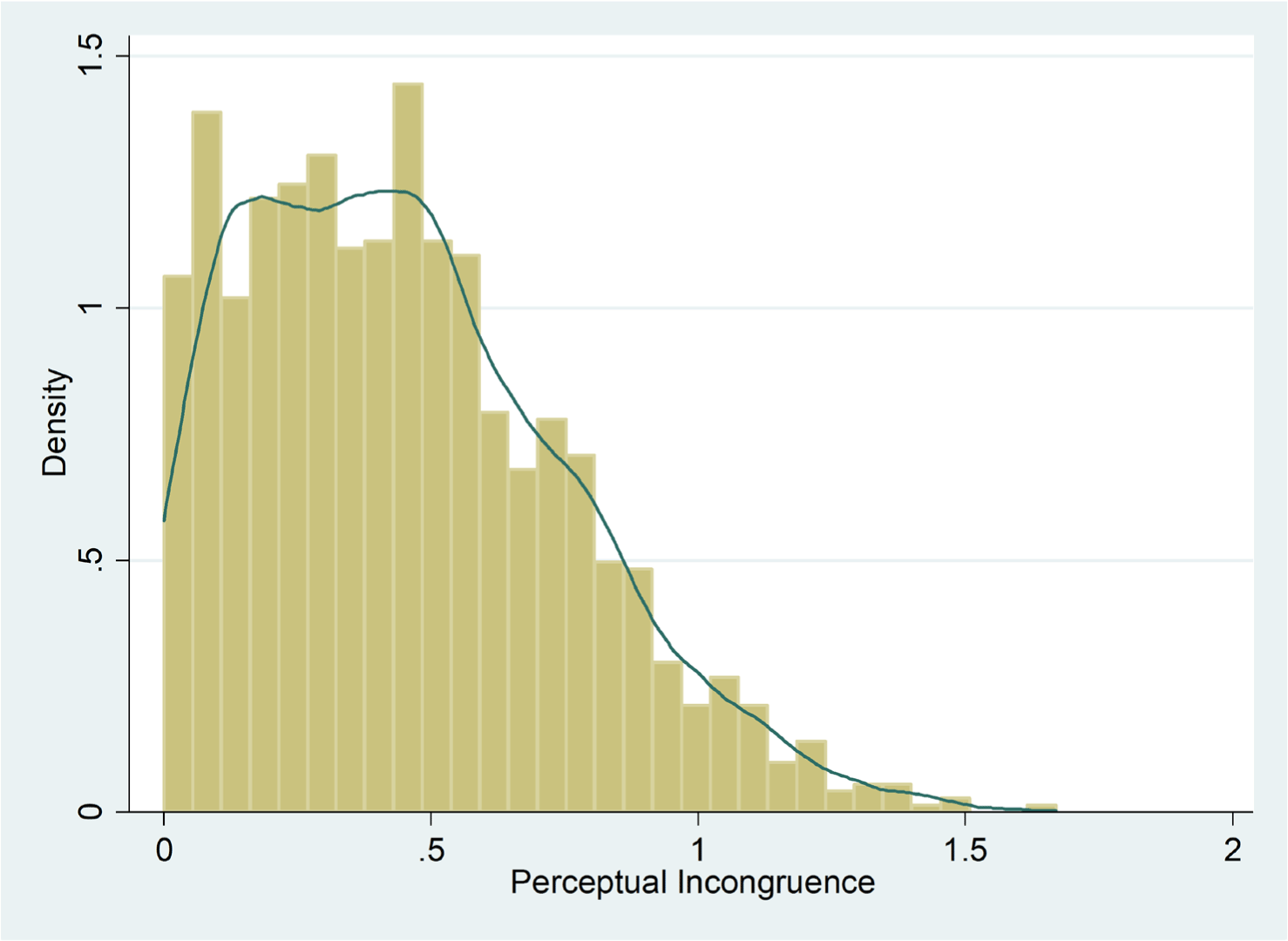
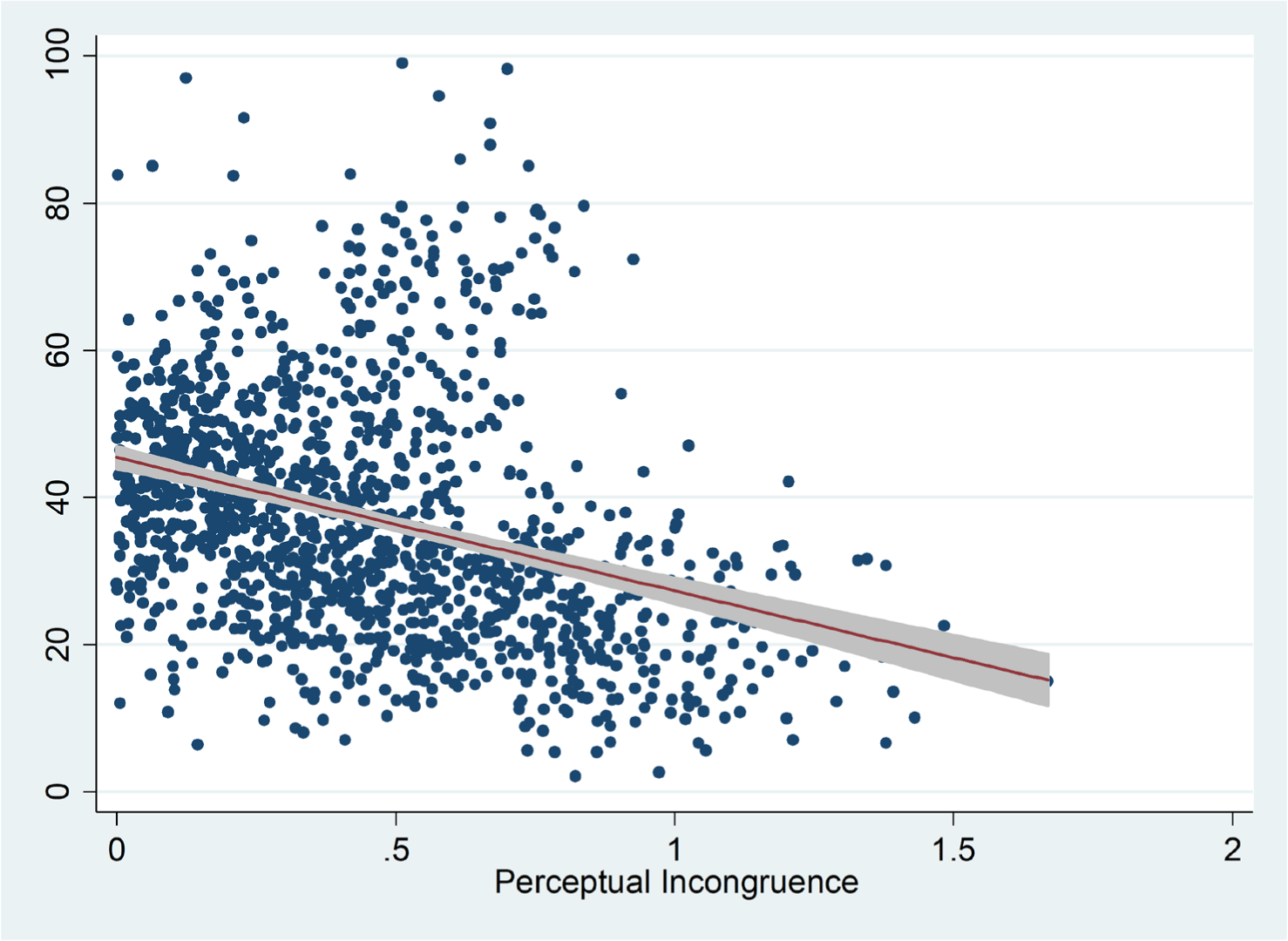
Control variables include Perceived Parental Involvement, School Size, and Advanced Placement (AP) Test. Perceived Parental Involvement is a measure of parents’ perception of parental involvement. Parents hold crucial roles in public schools but face several barriers to filling these shoes. Parents are one of the major stakeholders (Bauch & Goldring, 1998; Farrell & Jones, 2000; Hooge et al., 2012), share a common goal of student well-being (Wolfendale & Bastiani, 2000), and are consumers who have a choice within or even to opt-out of the public school system (Chubb & Moe, 1990). Due to the strong connection created through their children, parents have always had an interest in school activities (Barge & Loges, 2003). Therefore, parental involvement in schools has been accepted as a crucial factor that influences school effectiveness (Hill & Craft, 2003; Hill & Taylor 2004; Izzo et al., 1999; Topor et al., 2010).
Also, there are mixed results in the effect of congruence. There is literature on perceptual incongruence that found an overall positive effect of congruence regardless of what individuals agree on (Yammarino & Atwater, 1993). However, some findings support that there is a less positive result when individuals agree on negative things. For instance, Atwater et al. (1998) discovered that supervisors and employees having congruent views on a bad performance of the supervisor corresponds with less favorable outcomes. The Perceived Parental Involvement will account for this effect by serving as a proxy for the actual participation of parents. Although this research argues that the perception of parental involvement might be measured inaccurately, it presumes that the overall trend of the survey responses will match the magnitude of participation effort in reality. In other words, schools with parents reporting high participation will generally have more actual participation compared to schools where parents report low participation.
School Size is measured through the number of full-time equivalent students. The full-time equivalent student data is from the Revenues and Expenditures data from the Georgia Governor’s Office of Student Achievement and is measured by counting the actual number of students in October each year.
AP Test variable measures the percentage of total test-takers who got a score higher than 3 out of 5. AP program is designed to help students prepare for college by allowing them to take university-level courses in advance (Ewing, 2006). AP program is run by a non-profit organization named the College Board since 1955. AP test-related data provides additional performance data of the school that is separate from the state-administered standardized test.
This research utilized panel regression to test the hypotheses. The standard error is clustered on a school level to account for heteroskedasticity across different schools. The year-fixed effect is used to control for variant factors over time. A potential problem of this model is reverse causality. In other words, the performance of the school in year t (Yt) could affect the parental involvement in year t+1 (Xt+1). For example, parents could increase their input if the school performance was low in the previous year. In an attempt to resolve this issue, certain models control for a 1-year lead variable of independent variables (Parent Involvement, Perceptual Incongruence).
Models 1 and 2 in Table 5 exhibit a random effects panel regression result between perceptual incongruence in the perception of parental involvement and school performance. Model 1 tested the hypothesis without the lead variable while Model 2 accounted for the possible reverse causality. The results were both statistically significant on a 5% level, but the effect size increaseed in Model 2. The change in coefficient estimate indicates that there is a possible simultaneity bias in Model 1. Therefore, Model 2 results will be used to interpret the results.
According to Model 2, Perceptual Incongruence harms School Performance. A one-unit increase in perceptual incongruence corresponded to a 1.741 percentage point decrease in the percentage of students receiving proficient learner level or higher in individual schools. AP Test has a positive effect on School Performance. A 1%p increase in the percentage of students receiving AP test scores higher than three corresponded with a 21.085 percentage point increase in the percentage of students receiving proficient learner level or higher in EOC assessments. School Size also had a statistically significant effect on a 5% level. A one-person change in full-time enrollment corresponded to a 0.004 percentage point increase in the EOC assessment results.
Models 3 and 4 in Table 5 explain the relationship between perceptual incongruence and school performance, controlling for the level of parental involvement. Both models include Parental Involvement and a one-year lead variable of Parental Involvement (F1.Parent Involvement) to control for the level of parental involvement in each school. Model 3 does not include the one-year lead variable of Perceptual Incongruence while Model 4 does. In Model 4, the effect size of Perceptual Incongruence changed from –3.388 to –3.350. This implies a possibility of simultaneity bias. Therefore Model 4 will be used to interpret the results.
A one-unit increase in the perceptual incongruence resulted in a 3.350 percentage point decrease in the percentage of students achieving proficient and distinguished learner level. This indicates that larger discrepancies in the perception of parents and schools can harm school performance. AP Tests and School Size are also statistically significant on a 5% level. A 1 percentage point increase in the percentage of students receiving AP test scores higher than 3 corresponded with a 21.462 percentage point increase in the percentage of students receiving proficient learner level or higher. A one-person increase in full-time enrollment corresponded to a 0.004 percentage point increase in the school performance score.
In conclusion, the empirical findings suggest that parental involvement and perceptual incongruence might deter school performance. While the relationship between perceptual incongruence and performance aligns with the hypothesis, results on parental involvement are against general findings in the literature. There are two possible explanations for this result. First, the result could be different due to the school level. Literature on parental involvement and educational performance focuses on primary schools. Some research reported a decrease in parental involvement in higher grades and possibly the negative impact parents have on academic performance (Ross, 2016; Ross et al., 1997). This research selected high school data to account for performance data that is independent of state-administered standardized tests.
Second, the endogeneity of the model could remain. Without the proper use of the instrument variable, the reverse causality problem cannot be fully addressed. The analysis did include a one-year lead variable for each independent variable, but this does not mean that a bias is fully detected. Therefore, the results must be tested with an instrument variable in the future.
Discussion
Collaboration is successful when participants are on the same page. Since collaboration is the process of integrating individuals with different motives, it requires additional resources such as time and effort. The gap in perception is likely to happen in a collaboration context due to asymmetries in power, resource, and knowledge (Ansell & Gash, 2008) as well as goal diversities (Vangen & Huxham, 2012). Therefore, if the initial level of trust or perceived interdependence is low, participants often choose not to be part of the collaboration mechanisms. As Ansell & Gash (2008) state, if one participant deviates, other stakeholders also lose their motivation to collaborate. This is why it is dangerous when stakeholders have an incongruent perception of participation. Even when one party is motivated to collaborate, the other party is likely to misread their signal. In other words, they are not seeing each other eye to eye. This could further lead to problems in trust building process, inaccurate assessment of the issue at hand and ultimately result in lower performance.
This research attempts to address this issue by analyzing the perceptual incongruence in parental involvement and its relationship with school performance. The evidence showed that a perceptual congruence in parental involvement had a positive effect on school performance. When parents’ self-evaluation is similar to the school employees’ perception of parental involvement, the school performed better in a state-administered standardized test. In a context where parents and schools are collaborating, schools were successful when they accurately interpreted the parents’ level of participation. Two parties were on the same page and were able to come to a consensus with higher trust and mutual understanding. This result aligns with the previous literature that showed positive relationship between perceptual congruence and organizational outcomes (Ozkul et al., 2019; Song & Meier, 2022).
The result underscores the importance of establishing open communication channels among participants of the collaborative governance. As Ansell & Gash (2008) emphasizes, “communication is at the heart of collaboration.” Effective communication mitigates the perceptual gap between collaborators through increased trust and less misunderstandings (Song & Meier, 2022). On the other hand, ineffective communication mechanisms is considered one of the factors that undermines collaboration efforts (Hildebrand & Wehde, 2023). This indicates that clear communication mechanism in collaborative governance could benefit the performance of the organization.
It should be noted that there are cases where there is a high congruence on low participation. Previous literature had mixed results when it comes to congruence on low performance (Atwater et al., 1998; Yammarino & Atwater, 1993). As mentioned, this research added Perceived Parental Involvement as a control variable to account for the actual level of participation at school. However, even if the actual level of parental involvement is not controlled, the consistent result indicates that if participants perceive low participation of the other stakeholders, they can choose alternative strategies that would increase performance. Since collaboration is resource-consuming, the accurate decision to deflect from it would also benefit the organization. This analysis demonstrates that the overall perception of a situation has to be similar to produce better results in a collaborative context. Regardless of the policy area, continuous effort to understand different perspectives is crucial in ensuring a good outcome.
The study contributes to studies in collaborative governance, public management, and educational bureaucracy. First, this research adds details to the current collaborative governance literature. Literature on collaboration has been expanding towards stakeholders’ perception and behavior in the collaboration context. For instance, van der Meer (2024) used identity theory to explain how varying perception of identity could influence bureaucrats’ collaboration style. Adding to this line of literature, this research adds depth in the conversation by finding that shared perception among multiple stakeholders could also have an impact on the collaboration performance. Connecting the concept of interdependence, and asymmetries among stakeholders with perceptual incongruence, this research widens the scope of discussion of collaborative governance.
Second, this research extends the application of perceptual incongruence theory to collaborative governance settings. By incorporating perceptual incongruence theory, this research attempts to extend the understanding of perceptual differences between various social actors. Perceptual incongruence is a concept that has been discussed extensively in a hierarchical setting such as a leader-team relationship to estimate the effectiveness of leadership practices (Benlian, 2014; Gibson et al., 2009). There are studies on non-hierarchical settings such as individual-team relationships (Coo et al., 2021) but this is also limited.
Third, this research adds a new dimension to the parental involvement literature. Previous literature assumes that parental involvement is beneficial to academic performance despite research that found contradicting evidence (Ross, 2016; Ross et al., 1997). The results of this research suggest that consensus and mutual understanding between parents and schools are also important. Considering that the parental involvement itself had a negative effect on performance in this research, a successful home-school partnership might have a greater impact than parental involvement alone. Additionally, this study encompasses the perception of parents and school employees and provides a better understanding of the context.
The limitations of this research lie on the simplification of context and a lack of sufficient data. First, the complex anatomy of collaborative governance is simplified into twofold interaction between parents and schools. While a large part of the discussion in collaborative governance is related to the interaction between multiple stakeholders, this might not be captured sufficiently in this research. The perceptual incongruence could have a much deeper connotation when multiple stakeholders cooperate. In the future, researchers could analyze perceptual incongruence in a complex collaborative case and measure the interaction effect between the perceptions.
Second, the measures used to capture the research question are insufficient. The perceptual incongruence used in this research is limited to the level of parental involvement. Though this measure implies whether parents and schools are assessing the collaborative situation in a similar way, this does not directly connect with the actual collaboration in individual schools. Also, the parental involvement that is used as a proxy of the actual level of participation is a perception and, therefore, not equal to the actual magnitude of participation. Therefore, future researchers could develop a survey instrument that will accurately capture the perceptual incongruence in collaboration to elevate this research.
Overall, this research finds that shared perception of the collaboration situation could enhance the collaboration outcome. Especially in a parent-school collaboration context, the perceptual congruence among these stakeholders could result in a positive academic outcome. School managers should keep this in mind when interacting with parent groups and attempt to establish transparent communication channel with them (Minke et al., 2014). Empirical findings also show that having a well-structured school system could also enhance trust between parents and schools and increase parental collaboration (Adams & Forsyth, 2007). School officials should consider these aspects in terms of collaboration with parents and improving students’ academic performance.


